

Mere Head-On Collision Not Proof of Contributory Negligence; Bombay HC Enhances Compensation in Motor Accident Claim
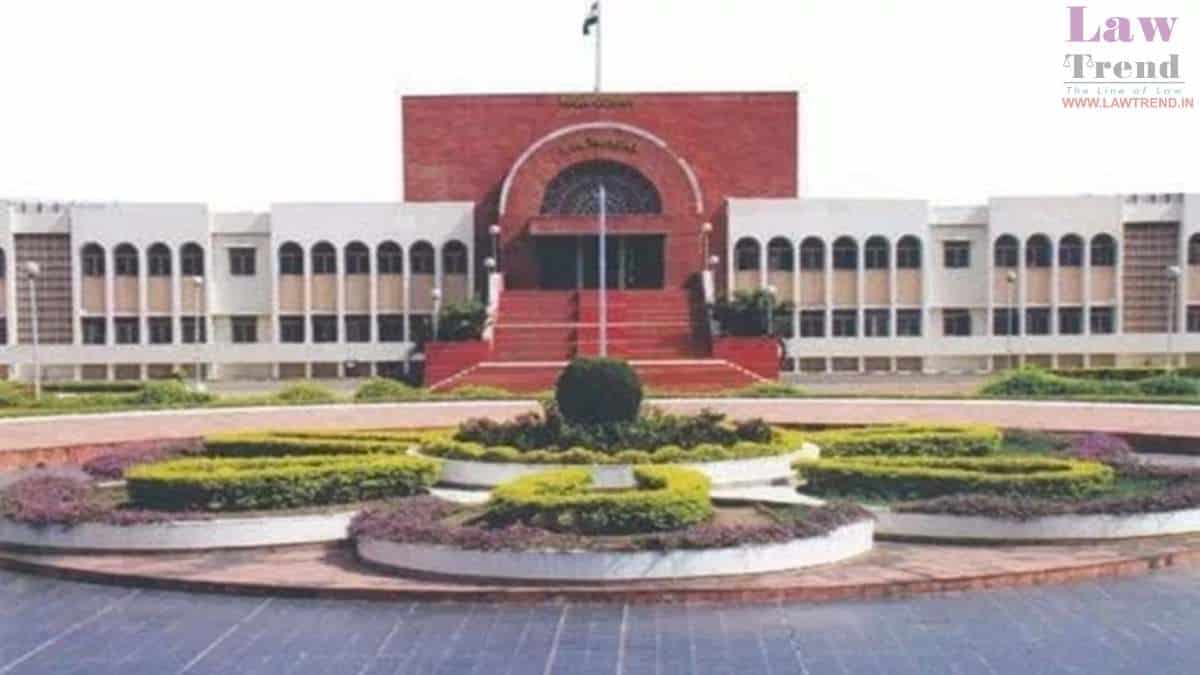

The High Court of Judicature at Bombay, Bench at Aurangabad, has modified a 2004 Motor Accident Claims Tribunal (MACT) award, significantly enhancing the compensation granted to the heirs of an accident victim. Notably, the Court held that it is under a legal obligation to award “just compensation” and can enhance the amount even in the absence of an independent appeal or cross-objection by the claimants.

The judgment, pronounced by Justice Abhay S. Waghwase on March 24, 2026, dismissed an appeal by the National Insurance Co. Ltd., which had challenged the liability and quantum of the original award while seeking a finding of contributory negligence.

Background of the Case

The matter originated from a fatal road accident on December 14, 1998. The deceased, Bebibai, was traveling in an Ambassador car (MP-09-HB-2533) when it was struck by a truck (NL-5-A-7051) coming from the opposite direction near Malaswada Shivar. The impact was so severe that the truck toppled and landed on top of the car, resulting in Bebibai’s death on the spot.

Her husband and two children filed a claim petition (No. 112 of 2001) before the MACT at Shahada. On April 27, 2004, the Tribunal awarded ₹3,09,500 with 9% interest, holding the owner and insurer of the truck jointly and severally liable. The National Insurance Co. Ltd. (the truck’s insurer) appealed this decision, while the claimants, during the appeal proceedings, urged for an enhancement of the compensation despite not filing a formal cross-appeal.

READ ALSO  Single Working Woman Can Adopt Child Under Juvenile Justice Act: Bombay HC

Arguments of the Parties

For the Appellant (Insurance Company): The Insurance Company argued that the Tribunal erred by not attributing 50% contributory negligence to the car driver. They contended that since the accident was a “head-on collision” occurring in the middle of the road, both drivers were equally responsible. Additionally, they challenged the quantum of compensation, arguing it was excessive and that the multiplier was incorrectly applied.

For the Respondents (Claimants): The claimants argued that the compensation awarded by the Tribunal was meager. They maintained that the deceased was a bread-earner involved in tailoring and cloth business, earning significantly more than what was considered by the lower court.

Court’s Analysis and Observations

The Court first addressed the issue of contributory negligence. Examining the spot panchanama (Exh.7/2P), the Court observed:

“Taking the circumstances at the scene of accident and the above position of the truck, after turning turtle, directly falling on the car, is a sufficient indicator to draw a particular inference. With such situation, unless the speed of truck would have been excessive or on the higher side, the truck would not have assumed such a position after the collision.”

The Court further noted that while the Insurance Company alleged negligence by the car driver, the truck driver did not step into the witness box to testify. Consequently, the Court drew an adverse inference against the truck driver, concluding that the truck was traveling at an excessive speed, causing the driver to lose control.

READ ALSO  Reservation Policy for SC/ST in Promotion Can Be Framed Only on the Basis of Yardstick Fixed for Collecting Quantifiable Data and As per Article 16(4A) and (4B) of the Constitution: Chhattisgarh HC

On the legal power to enhance compensation without a cross-appeal, Justice Waghwase relied on several precedents, including United India Insurance Co. Ltd. v. Kunti Binod Pande & Ors. (2020) and National Insurance Co. Ltd. v. Vaishali H. Devare & Ors. (2013). The Court quoted:

“It is thus well settled that the Tribunal/Court is under an obligation to award just compensation and there is no embargo in enhancing the compensation in the absence of appeal or cross objection.”

Regarding the quantum of income, the Court found the Tribunal’s assessment of ₹2,500 per month for a person engaged in tailoring and cloth business to be on the lower side and increased it to ₹3,000 per month.

READ ALSO  Corruption Corrodes Public Service Like Cancer: Supreme Court Restores Conviction in Bribery Case  

The Decision

Applying the principles laid down by the Supreme Court in Sarla Verma v. DTC (2009) and National Insurance Co. Ltd. v. Pranay Sethi (2017), the Court recalculated the compensation to include future prospects (25%) and higher amounts for non-pecuniary heads like loss of consortium and funeral expenses.

The Court arrived at a total “just compensation” of ₹5,70,000. Since the Tribunal had only awarded ₹3,09,500, the High Court directed the Insurance Company to pay an additional enhanced compensation of ₹2,60,500 within 12 weeks, along with 9% interest per annum from the date of the claim petition.

Case Details

Case Title: National Insurance Co. Ltd. v. Kailaschand S/o Manakchand Bhartiya & Ors.

Case Number: First Appeal No. 195 of 2011

Bench: Justice Abhay S. Waghwase

Judgment Date: March 24, 2026

Law Trend
Law Trendhttps://lawtrend.in/
Legal News Website Providing Latest Judgments of Supreme Court and High Court

Related Articles

Latest Articles

