

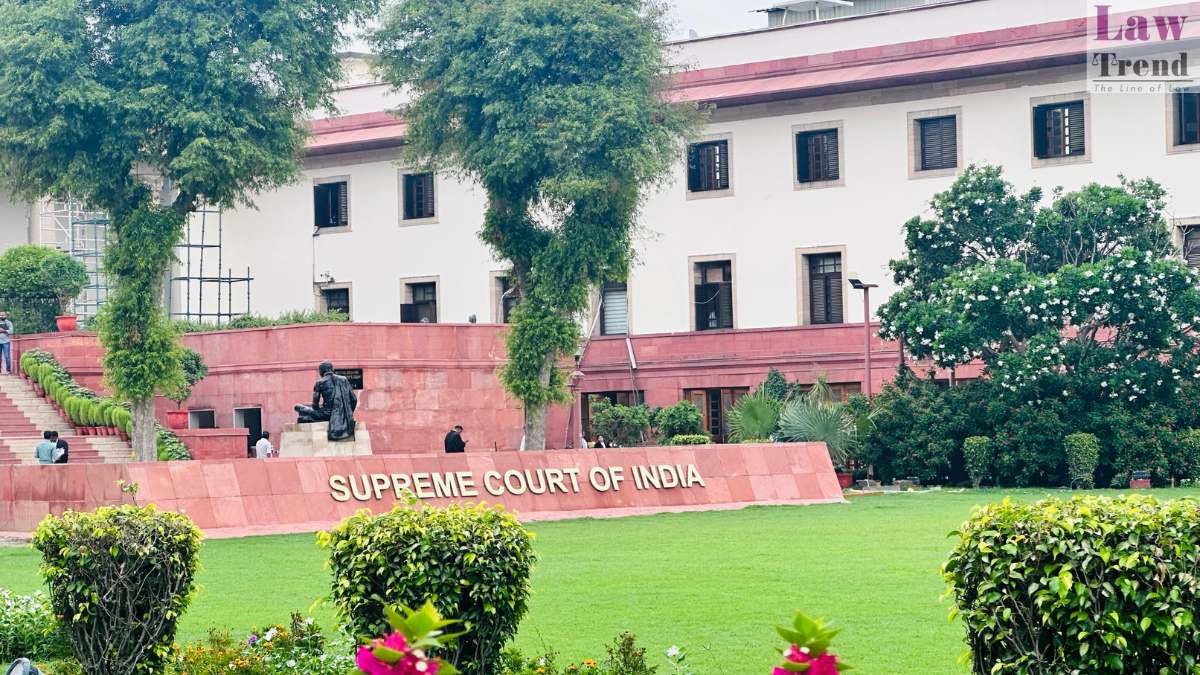
The Supreme Court of India on Monday issued a stern rebuke to the West Bengal government for stalling a critical corridor of the Kolkata Metro rail project, warning the state against “politicizing” developmental work intended for the common man.
A three-judge bench, led by Chief Justice Surya Kant and including Justices Joymalya Bagchi and Vipul M. Pancholi, dismissed the state government’s plea challenging a High Court order. The bench characterized the state’s repeated delays as a “complete dereliction of constitutional duty” and directed the Calcutta High Court to take over active monitoring of the project to ensure its timely completion.
The legal dispute centers on the Metro line connecting the IT hub of Sector V in Salt Lake to south Kolkata. Despite the project being near completion, work at the crucial Chingrighata crossing on the Eastern Metropolitan (EM) Bypass has remained stalled due to the state government’s refusal to grant necessary traffic block permissions.
“We must not politicise everything. This is a developmental issue. It is a facility for the common man. Don’t create roadblocks,” Chief Justice Surya Kant told the counsel representing the West Bengal government.
The court expressed disappointment that the state had approached the judiciary to ignore public interest. “We do not appreciate a democratically elected government knocking on the door of the court and asking for this to be ignored,” Justice Bagchi remarked during the proceedings.
The West Bengal government sought to delay the project until May 2026, citing the Model Code of Conduct (MCC) for upcoming elections and ongoing board examinations. However, the bench was unmoved, noting that the original High Court order was passed on December 23, 2025.
“What prevented the state government from complying with the directions since then?” the CJI questioned.
Justice Bagchi further clarified that the Election Commission of India (ECI) cannot object to an ongoing developmental project that predates the MCC. “We will not allow the state to use this as a bogey to stall development again,” he added.
The bench also dismissed the state’s argument that construction would block emergency vehicles and ambulances. The court noted that these concerns appeared to be an “obstinate attitude” intended to “delay and stall” the transport artery.
The Calcutta High Court had previously expressed concern over the impasse at the Chingrighata crossing. In its December 23 order, the High Court directed the state to:
- Inform Metro Railway by January 6 of the specific three days required for the traffic block.
- Ensure the construction of overhead tracks is completed by February 15, 2026.
By dismissing the state’s appeal, the Supreme Court has effectively upheld this timeline, emphasizing that the project connecting Kavi Subhash with Sector V must proceed without further interference.




