

Registrar is a Public Servant, Not a Court; Section 5 of Limitation Act Inapplicable: Allahabad High Court
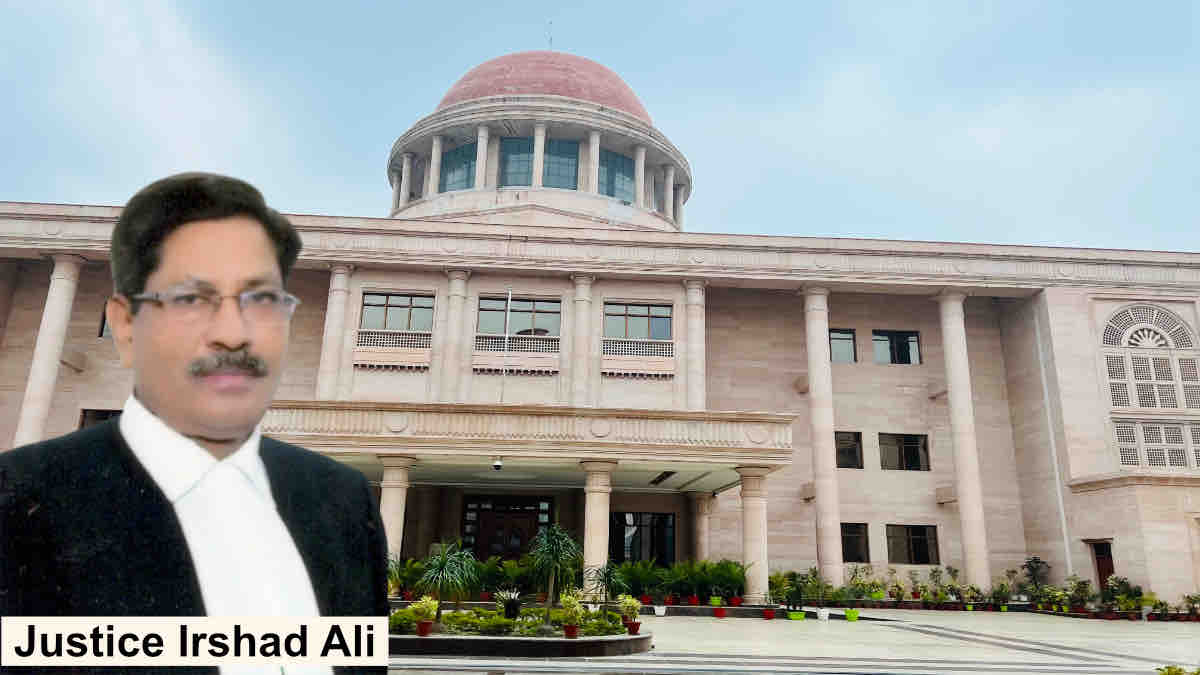

The High Court of Judicature at Allahabad (Lucknow Bench) has held that the office of the Registrar or Sub-Registrar under the Registration Act does not function as a “Court.” Consequently, the court ruled that the provisions of Section 5 of the Limitation Act, 1963, which allow for the condonation of delay, cannot be extended to proceedings before such authorities.

The decision was delivered by Justice Irshad Ali in Writ-C No. 1000572 of 2015 (Mohd. Yaqoob and another v. District Registrar/A.D.M. Fandr Bahraich and 2 others). The court quashed an order dated December 15, 2014, passed by the District Registrar, which had allowed a time-barred appeal for the registration of a sale deed.

Background of the Case

The dispute pertained to plot numbers 41 and 42 in village Meharban Nagar, District Bahraich, originally recorded in the name of Vedant Sanstha. One Pravin Kumar Sharma, claiming to be the President of the Society, executed a sale deed for plot no. 41 in favor of the respondent (opposite party no. 2).

When the deed was presented for registration on January 4, 2011, the Sub-Registrar, Nanpara, summoned the executant to record his statement. However, Praveen Kumar Sharma failed to appear, leading the Sub-Registrar to refuse registration on February 3, 2011.

READ ALSO  Vague Grounds Insufficient under Section 311 CrPC: Supreme Court Clarifies Limits of Recalling Witnesses

The respondent subsequently filed a time-barred appeal before the District Registrar along with an application under Section 5 of the Limitation Act to condone the delay. The District Registrar allowed the appeal on December 15, 2014, and directed the Sub-Registrar to register the sale deed, which was then executed. The petitioners, who had filed objections against the delay condonation, challenged this order before the High Court.

Arguments of the Parties

Appearing for the petitioners, Senior Advocate Shri M.A. Khan argued that the order of the Appellate Authority was “wholly without jurisdiction.” He contended that Section 5 of the Limitation Act applies exclusively to Courts and not to public servants or administrative authorities. He further noted that the District Registrar had proceeded to pass the final order without explicitly allowing the delay condonation application first.

The counsel for the respondent argued that since the sale deed had already been registered following the Appellate Court’s order, the petitioners should approach a Civil Court for its cancellation. It was also argued that the petitioners had not initially challenged the maintainability of the Section 5 application before the Appellate Authority.

READ ALSO  COVID19 Effect on Lucknow HC: Photo Affidavit Centre Closed, Limited Entry of Counsels and No Entry for Litigants

Court’s Analysis

The High Court focused on whether a Registrar or Sub-Registrar qualifies as a “Court” for the purposes of the Limitation Act. The court cited the judgment in Raghuvir Narain Rastogi v. State of U.P. and others [2005(2) AWC 1814 (LB)] and several Apex Court precedents.

The court observed that under Sections 5 to 15 of the Registration Act, Registrars and Sub-Registrars are appointed by the Government and perform administrative functions. Specifically, Section 84 of the Act deems every registering officer to be a “public servant” but distinguishes them from “Judicial Officers.”

Justice Irshad Ali noted:

“As provided by Section 84 of the Act, every Registering Officer shall deem to be a public servant but not a Judge or Judicial Officer… A person holding the post of Judicial Officer or a Judge is supposed to engage only to provide justice to the people. Such officer may not have responsibility which is being bore by ordinary Government servants.”

The court further emphasized the limited scope of Section 5 of the Limitation Act:

“Section 5 of the Limitation Act categorically extends the power for extension of period beyond the date of limitation provided by the Limitation Act or statute to a Court and not to other authorities.”

The court rejected the respondent’s argument that the registration was now a civil matter, stating that the registration was dependent on an order passed without jurisdiction.

READ ALSO  NDPS: Merely Because 180 Days Have Lapsed, Accused Cannot be Released Automatically on Default Bail Without Application: Full Bench of Calcutta HC

The Decision

The High Court concluded that the Sub-Registrar and the Appellate Authority do not discharge duties as the presiding officer of a Court.

The judgment stated:

“The office of Registrar, Additional Registrar or the Sub-Registrar may not be treated as a Court. Accordingly the provision contained in Section 5 of the Limitation Act shall not be applicable in a proceeding under the Registration Act.”

Holding that the impugned order suffered from a “lack of jurisdiction,” the High Court issued a writ of Certiorari quashing the District Registrar’s order dated December 15, 2014, along with all consequential actions. The writ petition was allowed.

Case Details:

  • Case Title: Mohd. Yaqoob and another v. District Registrar/A.D.M. Fandr Bahraich and 2 others
  • Case Number: WRIT-C No. – 1000572 of 2015
  • Bench: Justice Irshad Ali
  • Judgment Date: March 10, 2026

Law Trend
Law Trendhttps://lawtrend.in/
Legal News Website Providing Latest Judgments of Supreme Court and High Court

Related Articles

Latest Articles

