

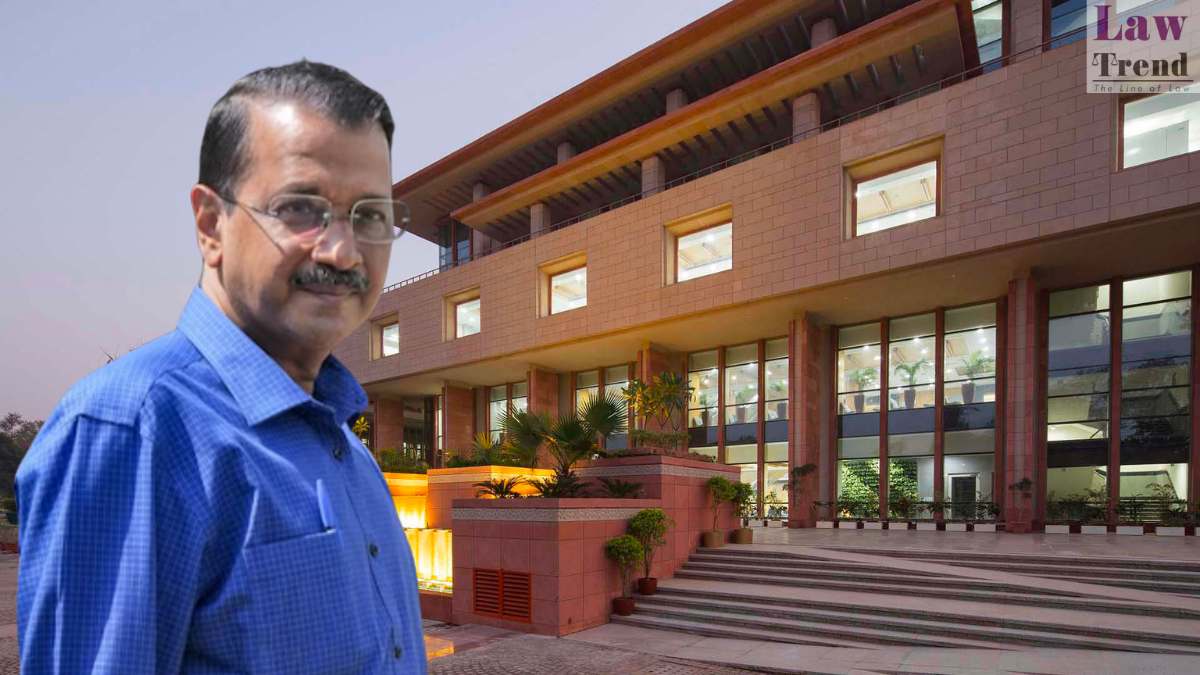
The Delhi High Court on Wednesday granted former Chief Minister Arvind Kejriwal, former Deputy Chief Minister Manish Sisodia, and 21 other accused persons until April 2 to file their responses to a petition by the Enforcement Directorate (ED). The federal agency is seeking to expunge specific remarks made by a trial court that discharged the leaders in the Delhi liquor policy case.
The ED has characterized the trial court’s observations as “unwarranted” and a case of “judicial overreach,” arguing that the remarks could cause “grave and irreparable prejudice” to its independent investigation under the Prevention of Money Laundering Act (PMLA).
During the proceedings, Justice Swarana Kanta Sharma expressed visible displeasure over the repeated requests for more time by the legal teams representing the accused.
“I don’t know why you are not filing a reply. You should have filed a reply if you think you really needed to file a reply,” Justice Sharma remarked. Addressing the defense’s request, the judge added, “By second [of April], you file your reply. Then we will fix a date for final hearing.”
The ED, represented by Additional Solicitor General (ASG) S.V. Raju, contended that the accused did not actually need to file replies as the agency’s challenge was limited strictly to the trial judge’s observations and did not impact the discharge itself. Raju argued that the request for more time was an attempt to delay the matter and urged the court to ensure the trial court’s remarks are not relied upon in related proceedings in the interim.
Defense counsel argued that a brief reply was necessary to address the complexities of the case, noting that the original discharge order spanned 600 pages. However, Justice Sharma countered that the ED’s specific plea regarding judicial remarks did not require a review of the entire 600-page document.
The dispute stems from a February 27 order by the trial court, which discharged Kejriwal, Sisodia, and others in the CBI’s case related to the liquor policy. In that ruling, the trial judge heavily criticized the prosecution’s case, describing it as a “speculative construct resting on conjecture and surmise” that was “wholly unable to survive judicial scrutiny.”
The trial court’s order raised significant constitutional concerns regarding the use of the PMLA, stating:
- The procedure permitting “prolonged or indefinite incarceration based on a provisional and untested allegation” risked “degenerating into a punitive process.”
- Individual liberty was “imperilled” when the PMLA was invoked in the absence of legally admissible material.
- There is a “disturbing inversion” where money laundering investigations proceed despite the lack of a sustainable “predicate offence.”
The ED’s petition argues that these sweeping observations were “wholly extraneous” to the CBI case being heard. The agency highlighted that it was not a party to those specific proceedings and was never given an opportunity to be heard before the remarks were recorded.
The ED’s plea states that if such “unguided, bald observations” are allowed to stand, they would unfairly prejudice the public interest and the agency’s ongoing investigations.
The High Court has now set April 2 as the deadline for the replies, at which point a final hearing date will be determined.




