

Supreme Court Rejects Mizo Chiefs’ 60-Year-Old Claim for Land Compensation; Rules No Fundamental Right to Property Violated
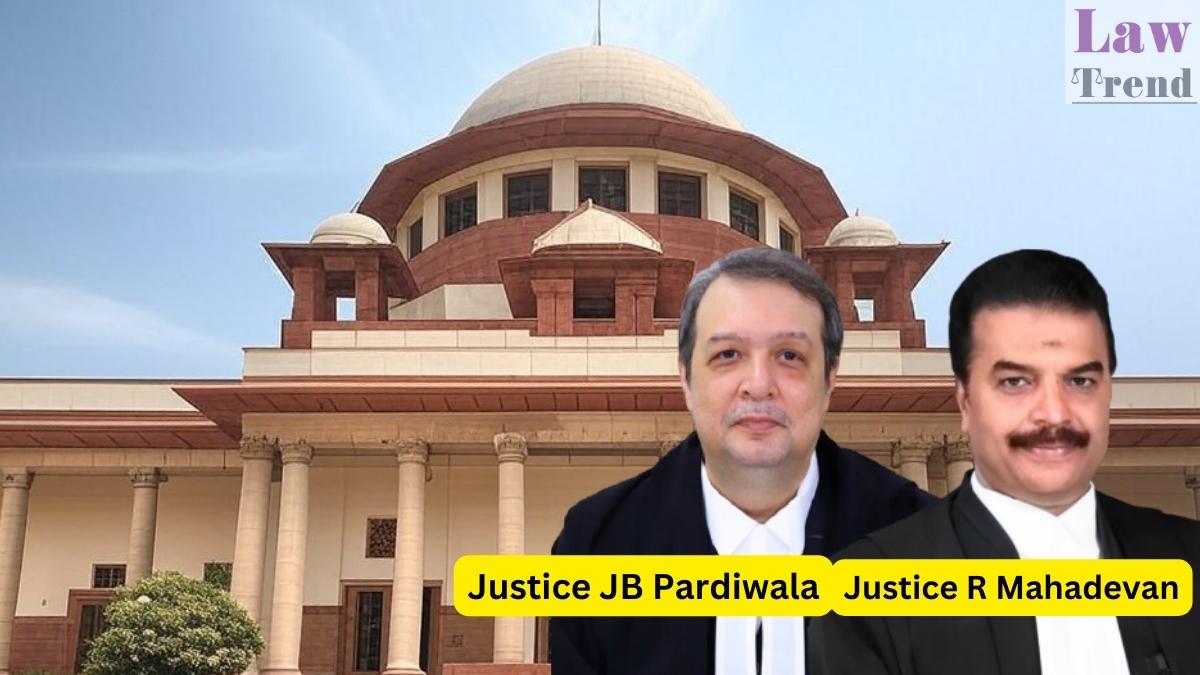

NEW DELHI — The Supreme Court of India has dismissed a writ petition filed by the Mizo Chief Council seeking compensation for lands allegedly acquired from tribal chieftains of the erstwhile Lushai Hills (modern-day Mizoram) in the 1950s. A Bench comprising Justice J.B. Pardiwala and Justice R. Mahadevan held that the petitioners failed to prove that the Mizo Chiefs held absolute ownership of the land under the British administration, a necessary prerequisite to establishing a violation of the fundamental right to property.

Background of the Case

The dispute traces back to the 1890s when the British annexed the Lushai Hills. Historically, Mizo society was organized around chiefs who administered territories known as “Ram.” Following independence, the State of Assam enacted the Assam Lushai Hills District (Acquisition of Chief’s Rights) Act, 1954, to abolish the chieftainship system and acquire the rights of the chiefs in respect of “Ram” and “Fathang” (paddy tax).

A notification issued on March 23, 1955, vested these rights in the State. While ₹14,78,980/- was paid as compensation, the Mizo Chief Council approached the Supreme Court under Article 32 in 2014, contending that the compensation was limited to the “Fathang” tax and did not cover the value of the land itself. They argued that the Chiefs were the absolute owners of the land and their deprivation without due compensation violated Articles 14, 19(1)(f), 21, and 31 of the Constitution.

Arguments of the Parties

Petitioners: Represented by the Mizo Chief Council, the petitioners argued that Mizo Chiefs were “absolute masters and monarchs” of their domains with hereditary proprietary rights. They contended that the 1954 Act only extinguished administrative privileges, and the State’s takeover of land was an executive action “devoid of statutory authority.” They further claimed the compensation paid was “illusory” and that the Chiefs should have been treated on par with rulers of erstwhile Princely States who received privy purses.

Respondents: The Union of India and the State of Mizoram countered that the petition was “hopelessly time-barred,” having been filed nearly 60 years after the 1955 notification. On merits, they argued that Chiefs were mere intermediaries under British rule and any proprietary title was extinguished when the British took control. They maintained that the 1954 Act was specifically designed to disband the system and the compensation paid was legally sufficient for the administrative rights lost.

READ ALSO  मामले को जारी करने के बाद, बेंच मामले की दोबारा सुनवाई करने में सक्षम नहीं है, जब तक कि रोस्टर के मास्टर के रूप में मुख्य न्यायाधीश द्वारा मामले को वापस बेंच को नहीं सौंपा जाता है: सुप्रीम कोर्ट

Court’s Analysis

I. Delay and Laches

The Court first addressed whether the 60-year delay barred the petition. It observed that while Article 32 is a fundamental right, it is not immune to the doctrine of laches. Citing Tilokchand and Motichand v. H.B. Munshi (1969), the Bench noted that “the law assists those who are vigilant, not those who sleep over their rights.”

However, the Court declined to dismiss the case solely on delay, noting the unique historical trajectory of Mizoram, including periods of insurgency and reorganization. The Bench found that the State of Mizoram had “held out hope for an amicable settlement” through various assurances in the Gauhati High Court and communications to the Prime Minister. The Court held:

READ ALSO  [BREAKING] Deport Rohingyas to Myanmar as per Due Procedure: Supreme Court

“To shut the doors on them at this third instance, without ever examining the substance of their claims, would be highly unjust.”

II. Alleged Violation of Fundamental Rights

On the core issue of the right to property, the Court emphasized that the burden of proof lay on the petitioners to establish “a clear title of the Mizo Chiefs over the subject lands.”

The Bench found the historical accounts and scholarly writings provided by the petitioners to be “highly ambiguous” and “legally untenable” as conclusive proof of ownership. Examining the “boundary papers” (Ramrilekha) issued by British officials, the Court noted:

“Nothing therein even remotely suggests the conferment or recognition of absolute ownership of land… the petitioners have woefully failed to discharge their burden of proving title over the subject lands.”

READ ALSO  Merely Working For Long Period on Contractual Bais Creates No Vested Right of Regularisation: SC

Regarding the claim of “illusory” compensation, the Court noted that the pleadings were “simplistic and superficial” and failed to address legal precedents defining when compensation becomes illusory.

III. Comparison with Princely States

The Court rejected the argument that Mizo Chiefs were entitled to privileges similar to Princely State rulers. The Bench clarified:

“The privy purses… were the direct outcome of specific, pre-constitutional political and contractual arrangements… Such political arrangements cannot be claimed as a matter of a legally enforceable right, much less a fundamental right.”

Decision

The Supreme Court concluded that since the petitioners could not establish ownership of the land, no violation of fundamental rights occurred. The Bench upheld the dismissal of the petition, stating:

“The inescapable conclusion is that the petitioner has not been able to establish any violation of the fundamental rights of the Mizo Chiefs in the present matter.”

The writ petition and all pending applications were accordingly dismissed.

Case Details:

  • Case Title: Mizo Chief Council Mizoram v. Union of India & Ors.
  • Case No: Writ Petition (Civil) No. 22 of 2014
  • Bench: Justice J.B. Pardiwala and Justice R. Mahadevan
  • Judgment Date: March 13, 2026

Law Trend
Law Trendhttps://lawtrend.in/
Legal News Website Providing Latest Judgments of Supreme Court and High Court

Related Articles

Latest Articles

