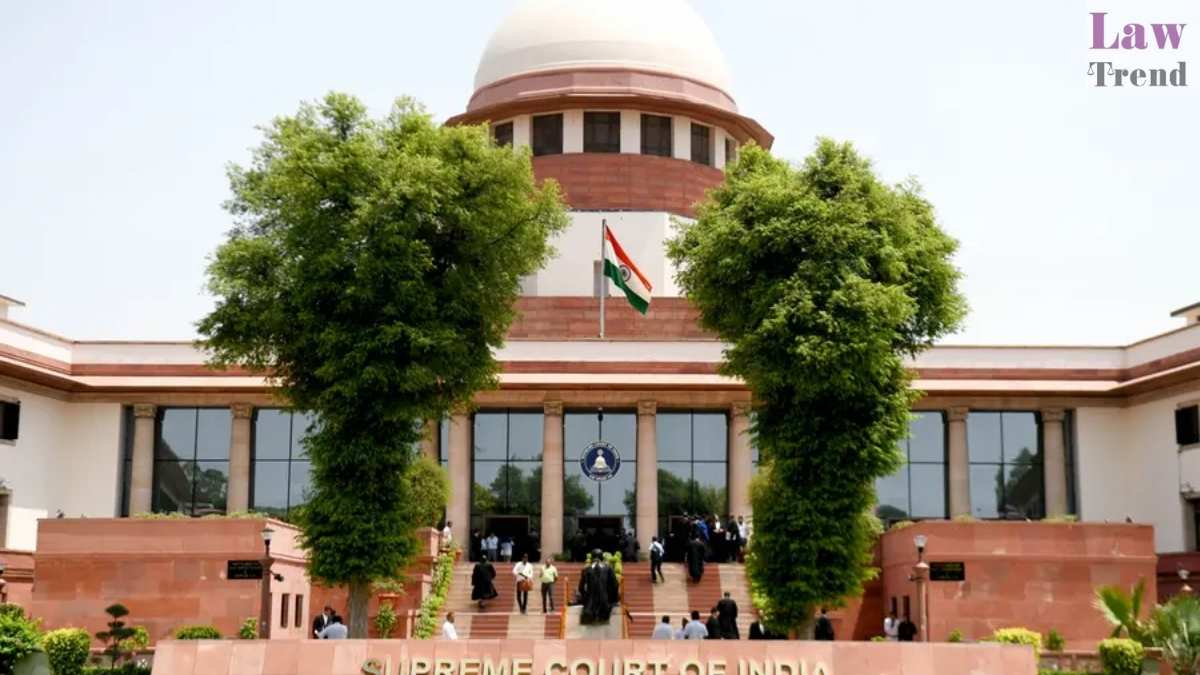
The Supreme Court of India has dismissed a batch of appeals filed by the Union of India, affirming that the salary of Public Sector Undertaking (PSU) and private sector employees cannot be the sole determinant for ‘creamy layer’ exclusion under the Other Backward Classes (OBC) category. A Bench comprising Justice Pamidighantam Sri Narasimha and Justice R. Mahadevan held that determining creamy layer status solely based on income brackets, without reference to the categories of posts and status parameters enunciated in the 1993 Office Memorandum (OM), is “clearly unsustainable in law.”
Background of the Case
The litigation arose from the Civil Services Examinations (CSE) of 2012, 2013, 2015, 2016, and 2017. Several candidates, whose parents were employed in PSUs or private organizations, were denied the benefit of OBC (Non-Creamy Layer) reservation. The Department of Personnel and Training (DoPT) had applied the “Income/Wealth Test” under Category VI of the 1993 OM, augmented by a clarificatory letter dated October 14, 2004.
Because the government had not formally established the “equivalence” of PSU posts with government posts (Class I/Group A or Class II/Group B), the DoPT computed the parents’ salary income. Since this income exceeded the prescribed ceiling (then ₹6 lakhs, now ₹8 lakhs), the candidates were treated as falling within the ‘creamy layer’ and denied service allocation under the OBC quota. The Central Administrative Tribunal (CAT) and various High Courts (Madras, Delhi, and Kerala) had ruled in favor of the candidates, leading the Union of India to appeal to the Supreme Court.
Arguments of the Parties
Union of India: The Additional Solicitor General argued that excluding the creamy layer is a constitutional imperative to ensure reservation reaches the truly backward. The Union contended that in the absence of established equivalence, Category VI (Income Test) operates as the primary filter. They argued that the 2004 Letter merely clarified that salary income is relevant when equivalence has not been determined, and that excluding salary would lead to “anomalous and absurd consequences.”
The Respondents: Learned Senior Counsel for the candidates argued that the 1993 OM, based on the Expert Committee (Ram Nandan Prasad Committee) report, expressly excluded salary and agricultural income from the “Income/Wealth Test.” They contended that the 2004 Letter was an executive instruction that could not override the 1993 OM. Furthermore, they argued that treating PSU employees differently from government servants (where Group C and D entrants are not excluded regardless of salary) constituted “hostile discrimination” under Article 14.
Court’s Analysis
The Court examined the constitutional architecture of reservation, citing Indra Sawhney v. Union of India and Ashok Kumar Thakur v. Union of India. It focused on two primary legal questions: the validity of the 2004 Letter and the issue of discrimination.
1. Primacy of the 1993 OM over the 2004 Letter The Court noted that the 1993 OM was issued after parliamentary scrutiny and expert committee recommendations. It held that a mere government letter cannot supersede an executive instruction issued under Article 162. Regarding the 2004 Letter, the Court observed:
“The Report records that the 2004 Letter did not emanate from the DoPT Secretariat and that its origin could not be traced in terms of the initial note file. It further observes that determining exclusion from reservation solely on the basis of income from salaries, as indicated in the 2004 Letter, would not be consistent with the original framework.”
2. Finding of Hostile Discrimination The Bench found that the government’s approach created an “artificial distinction” between similarly placed members of the same social class. The Court emphasized that if salary alone were used for PSU employees without reference to their posts (Group A, B, C, or D), it would lead to a situation where:
“…treating the children of those employed in PSUs or private employment, etc., as being excluded from the benefit of reservation only on the basis of their income derived from salaries, and without reference to their posts… would certainly lead to hostile discrimination between parties who are similarly placed and would amount to equals being treated unequally, thereby attracting the rigour of the equality doctrine under Articles 14, 15 and 16.”
3. Meaning of “Gross Annual Income” The Court clarified that under the 1993 OM, income from salaries and agricultural land is consciously kept outside the common pool for the Income/Wealth Test. It held that Article 16(4) is a reflection of “substantive equality” and any interpretation leading to unequal treatment of similarly placed OBC candidates is “constitutionally impermissible.”
The Decision
The Supreme Court dismissed all the Civil Appeals filed by the Union of India. Affirming the High Court judgments, the Court ruled:
- The determination of creamy layer status must be based on status and category of posts, not just income.
- Salary cannot be the sole criterion for candidates whose parents are in PSUs or the private sector.
Notably, the Court addressed the concerns of successful candidates who had been litigating for years. Recording that the DoPT had previously assured the Parliamentary Committee about the creation of supernumerary posts, the Court directed:
“In view thereof, we find no difficulty in directing the appellants to create such supernumerary posts, as required, to accommodate the candidates who satisfy the non-creamy layer criteria as clarified in the present judgment…”
The Union of India has been directed to implement these claims within six months.
Case Details:
- Case Name: Union of India and Others v. Rohith Nathan and Another, Etc. (with connected matters)
- Case No.: Civil Appeal No(s). 2827-2829 of 2018
- Bench: Justice Pamidighantam Sri Narasimha and Justice R. Mahadevan
- Date of Judgment: March 11, 2026