

Testimony of Related and Injured Witnesses Cannot Be Dismissed Solely Based on Relationship: Chhattisgarh High Court
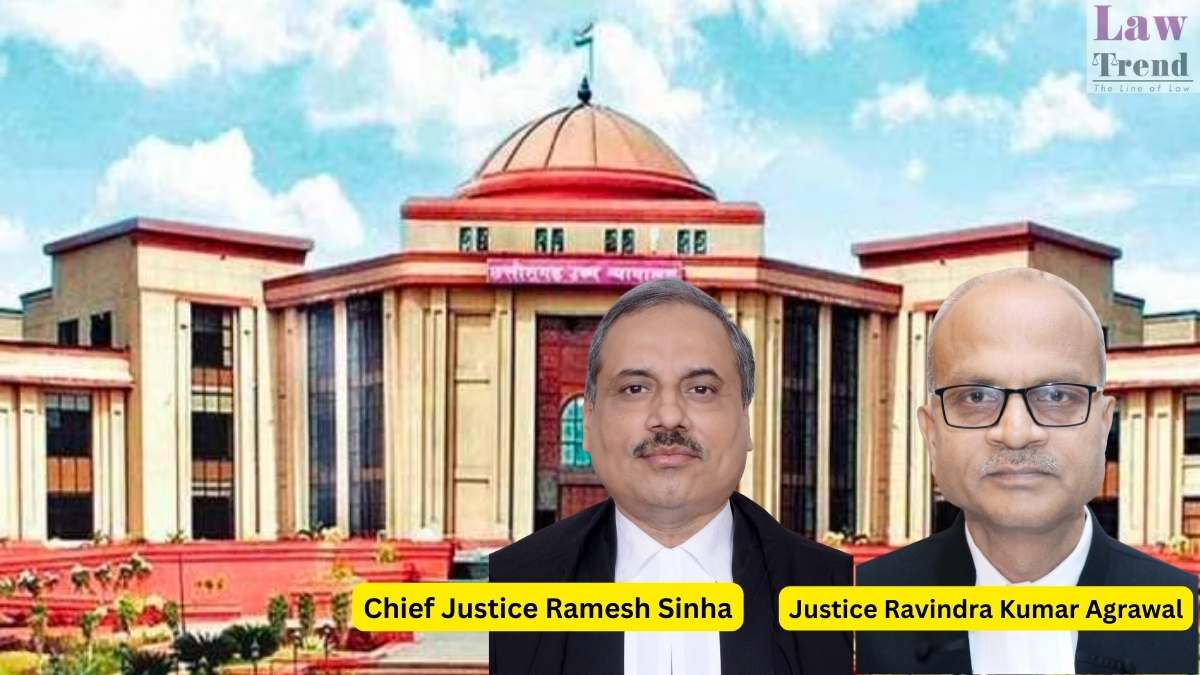

The High Court of Chhattisgarh has affirmed that the testimony of a “related” witness, who is also an injured witness naturally present at the crime scene, should not be dismissed simply because of their relationship to the victim. The Division Bench, led by Chief Justice Ramesh Sinha and Justice Ravindra Kumar Agrawal, held that courts must assess such statements based on reliability, consistency, and coherence rather than labeling them untrustworthy.

This legal principle was central to the Court’s decision to dismiss the criminal appeal of Parasram Gayakwad and Brijsen Gayakwad, who were convicted for a triple murder and multiple attempts to murder arising from a land dispute.

Background of the Case

On September 11, 2020, between 4:00 a.m. and 5:00 a.m. in Village Joba, District Mahasamund, the appellants entered the house of Oskumar Gaikwad. Following a dispute over land division, they threw chilli powder into the eyes of Oskumar and his wife, Jagriti Gaikwad, and attacked the family with a dagger and a crowbar.

The brutal assault resulted in the deaths of Jagriti Gaikwad, Tina Gaikwad, and Manish Gaikwad. Four others, including Oskumar Gaikwad and his children Oman and Geetanjali, sustained life-threatening injuries. The 1st Additional Sessions Judge, Mahasamund, convicted the appellants on June 18, 2025, under Sections 459, 302/34, and 307/34 of the IPC.

Arguments of the Parties

Appellants’ Submissions: Counsel for the appellants, Mr. H.S. Ahluwalia, argued that the prosecution’s case rested on the testimony of family members who were interested parties. He contended that:

  • The incident was impulsive, triggered by a civil land dispute, and lacked premeditated murderous intent.
  • The witness statements were inconsistent and should be viewed with skepticism due to the long-standing enmity between the families.
READ ALSO  Mere Exhortation "Maro Sale Ko" Without Overt Act Insufficient to Prove Common Intention for Murder, Allahabad High Court Acquits Man After 41 Years

State’s Submissions: Mr. Shailendra Sharma, Panel Lawyer for the State, argued that the conviction was supported by overwhelming evidence. He maintained that the presence of the witnesses was natural as the attack occurred inside their home and that their status as injured victims added significant weight to their credibility.

Court’s Analysis and Observations

The High Court focused its analysis on the reliability of the witnesses and the specific legal standing of injured family members. The Bench articulated a key headnote regarding the evaluation of such evidence:

“A ‘related’ witness, who is also an injured witness, who may be naturally present at the scene of the crime, his testimony should not be dismissed simply because of his relationship to the victim and the Court must assess the reliability, consistency, and coherence of his statement rather than labeling him as untrustworthy.”

The Court found that the testimonies of Oskumar (PW-2), Oman Kumar (PW-21), and Geetanjali (PW-22) were reliable and corroborated by forensic evidence. The Bench noted:

  • Natural Presence: The witnesses were attacked inside their own residence in the early morning hours, making their presence at the scene undisputed.
  • Corroboration: The discovery of bloodstained daggers at the appellants’ residences and the forensic confirmation of human blood supported the victims’ accounts.
  • Objective Intent: Citing Virsa Singh Vs State of Punjab and Anda and others vs. State of Rajasthan, the Court observed that the intentional infliction of injuries sufficient to cause death in the ordinary course of nature—such as slitting throats—constitutes murder regardless of the underlying land dispute.
READ ALSO  Bomb Threat Email to Chhattisgarh High Court Found to Be Hoax; Police Conduct Extensive Search, Case Registered

The Decision

The Division Bench concluded that the prosecution had successfully proven the case beyond a reasonable doubt. The Court dismissed the appellants’ claims of false implication, noting that it was inconceivable for the complainant to have murdered his own wife and children to frame the appellants.

Finding the appeal devoid of merit, the High Court upheld the conviction and life sentences, directing the appellants to serve out their remaining terms.

READ ALSO  Delay in POCSO FIR Must Be Scrutinized Closely When Facts Suggest 'Discernible Possibility of False Implication': Kerala High Court

Case Details:

  • Case Title: Parasram Gayakwad and another vs. State of Chhattisgarh
  • Case No.: CRA No. 1978 of 2025
  • Bench: Chief Justice Ramesh Sinha and Justice Ravindra Kumar Agrawal
  • Date: 24.04.2026

Law Trend
Law Trendhttps://lawtrend.in/
Legal News Website Providing Latest Judgments of Supreme Court and High Court

Related Articles

Latest Articles

