

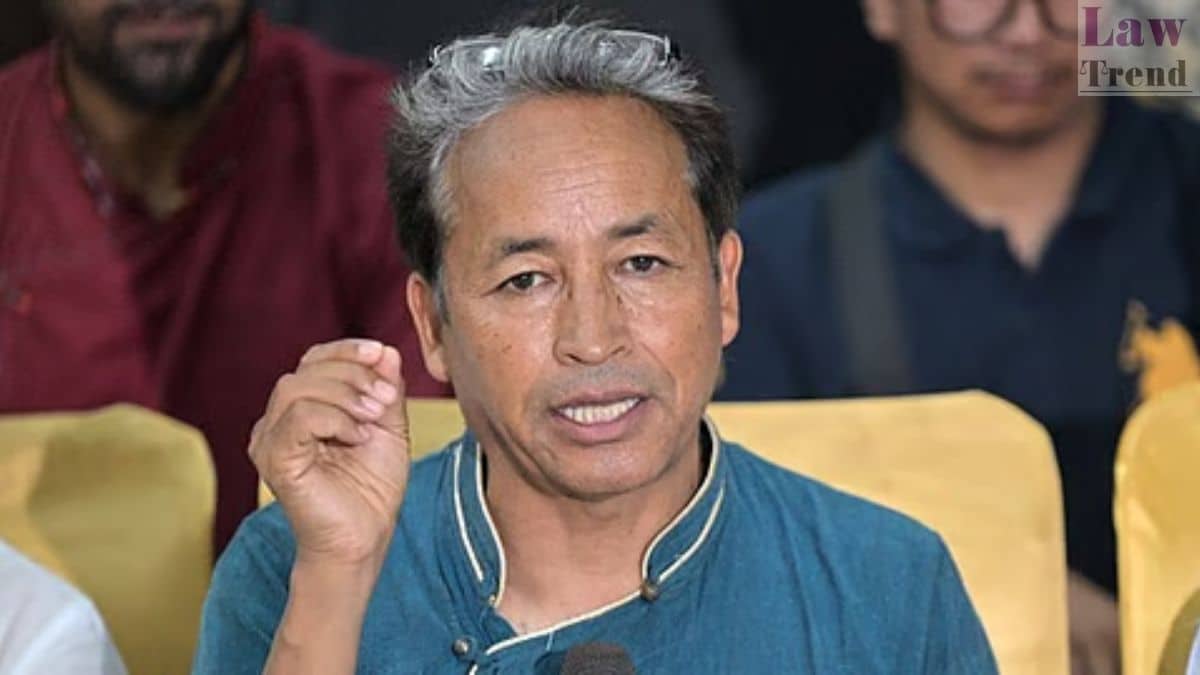
The Supreme Court on Tuesday said it will examine video recordings of speeches delivered by climate activist Sonam Wangchuk before deciding a plea challenging his detention under the National Security Act (NSA). A bench of Justices Aravind Kumar and PB Varale scheduled the matter for final hearing on March 17, stating that the court will reserve its decision that day after reviewing the videos.
During the hearing, the bench directed that arrangements be made to screen the videos of Wangchuk’s speeches later this week. Justice Aravind Kumar said the judges would first watch the recordings individually and then together before the next hearing.
“The judges will be watching the videos on Thursday. First we will watch the videos independently and then both the judges will watch the videos together,” Justice Kumar said while asking the court registry to facilitate the screening.
The plea before the court has been filed by Wangchuk’s wife, Gitanjali J Angmo, who has challenged his preventive detention under the NSA. Wangchuk has been in custody since September 26 last year.
During the proceedings, Additional Solicitor General KM Nataraj, representing the Centre and the Union Territory administration of Ladakh, informed the court that Solicitor General Tushar Mehta was unwell and had requested an adjournment. Senior advocate Kapil Sibal, appearing for Angmo, objected to repeated adjournments, saying they were sending a “wrong signal” in the country.
The bench responded by fixing March 17 for final arguments and made it clear that the hearing would conclude that day.
“We are making it absolutely clear that no matter what we will be reserving our decision on next Tuesday after the final hearing. We will not allow any new points to be argued and the Solicitor General can only argue the new points raised by Mr. Sibal in his rejoinder arguments,” Justice Kumar said.
The issue of translations of Wangchuk’s speeches had earlier come under scrutiny. During rejoinder arguments, Sibal pointed out that certain allegedly inflammatory statements cited in the detention order did not appear in the translated speech transcripts produced by the Centre.
He argued that the detention order relied on material that did not exist in the actual speeches and maintained that Wangchuk never called for overthrowing the government.
The bench had earlier asked the Centre to place the original video recordings and accurate translations on record after noticing discrepancies between the translated texts and the statements cited in the detention order.
The case has been adjourned several times earlier. On February 26, the Supreme Court postponed the hearing until after the Holi vacation. Previous adjournments were also granted due to the unavailability of lawyers representing different parties.
At an earlier stage, the court had also asked the Centre whether the government could reconsider Wangchuk’s detention in view of his health condition.
According to the Centre and the Ladakh administration, Wangchuk’s detention was ordered after he allegedly instigated protests in the border region. The government has linked his speeches to violence that erupted in Leh on September 24 last year, which left four people dead and 161 injured.
The Centre has further claimed that Wangchuk attempted to mobilise young protesters and referenced movements similar to those seen in Nepal and Bangladesh. The government also alleged that he spoke about an agitation comparable to the Arab Spring, which resulted in the overthrow of several governments in the Arab world.
Defending the detention, the Centre told the court that all procedural safeguards under the NSA were followed.
Wangchuk, currently lodged in Jodhpur Central Jail, has denied the allegations. On January 29, he told the court that he never called for overthrowing the government and asserted his democratic right to criticise government policies and participate in peaceful protests.
Sibal also argued that the authorities relied on “borrowed material” and selectively edited videos to mislead the detaining authority.
Angmo’s petition describes the detention as illegal and arbitrary, alleging that it violates Wangchuk’s fundamental rights. The plea also states that the activist had consistently advocated peaceful methods and had publicly condemned the violence in Leh.
According to the petition, Wangchuk had taken to social media to denounce the clashes, stating that violence would derail Ladakh’s “tapasya” and peaceful movement of the past five years. Angmo also said that he described the day of the violence as the saddest day of his life.
Wangchuk was detained two days after the protests in Leh, which were held to demand statehood and inclusion of Ladakh under the Sixth Schedule of the Constitution. The government has maintained that his speeches contributed to the unrest, a claim his family and legal team strongly dispute.
The Supreme Court is now expected to decide the legality of his detention after reviewing the original videos and hearing final arguments next week.




