

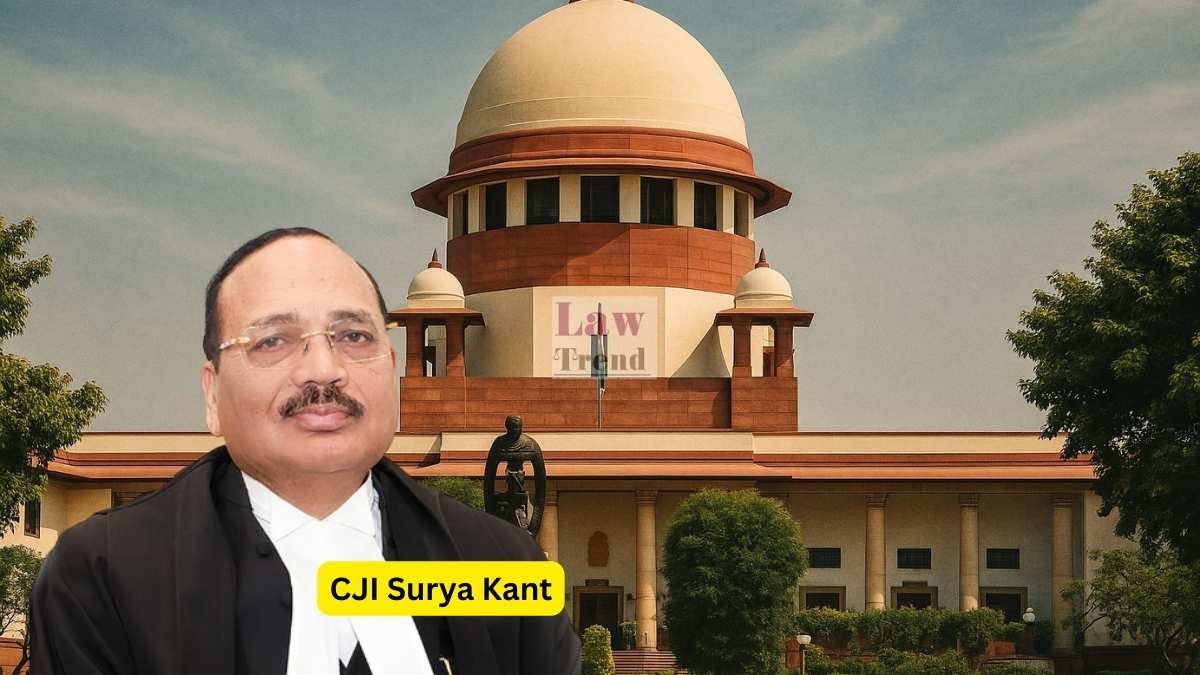
The Supreme Court on Tuesday dismissed a Public Interest Litigation (PIL) filed by a Ludhiana-based hosiery trader regarding the PM CARES Fund after a dramatic sequence of events in which the petitioner admitted to using Artificial Intelligence (AI) tools to draft the document. A bench led by Chief Justice of India (CJI) Surya Kant expressed stern displeasure over the “scripted” nature of the petition, warning the litigant that such frivolous filings would invite heavy financial penalties in the future.
The case involved a PIL filed directly in the Supreme Court by Rajnish Sidhu, a cloth merchant with a Class 12 education. While the petition ostensibly sought judicial intervention regarding the PM CARES Fund, the core legal issue shifted to the integrity and authorship of the pleadings. The court questioned whether a petitioner could maintain a plea when they failed to comprehend or explain the sophisticated legal terminology contained within their own filing.
Background of the Case
Rajnish Sidhu appeared in person before a bench comprising CJI Surya Kant, Justice Joymalya Bagchi, and Justice R Mahadevan. Suspicion arose the moment Sidhu began his oral arguments. The bench noted a stark disconnect between the petitioner’s educational background and the highly technical, academic language of the written text he was reading from. When the CJI questioned his history with the court, Sidhu claimed this was his first-ever petition and he had traveled directly from Ludhiana to file it.
Court’s Analysis and Oral Observations
The CJI challenged the petitioner’s claim of authorship with a sharp remark: “Bada bahaduri ka kaam kiya, seedha Ludhiana se chalke aagaye (Very brave of you to come straight from Ludhiana to the Supreme Court).” To test the authenticity of the plea, the CJI told the petitioner, “I will take your English exam right here. If you manage to score even 30 per cent, I will believe you drafted this plea.”
The turning point occurred when the Court asked Sidhu to define the term “Fiduciary Risk of Corporate Donors,” a complex legal concept used in his petition. Sidhu was unable to provide a definition and attempted to read from his notes.
The CJI interjected:
“Mr Sidhu, this has been written and given to you by some advocate. You are just reading the script.”
The Court initially suspected the involvement of an advocate or an unauthorized practitioner and even warned of a potential investigation by the Punjab Vigilance Bureau. Initially, Sidhu claimed a typist on the Supreme Court premises assisted him, whom he reportedly compensated with “four jackets” and a rate of ₹1,000 per hour.
Admission of AI Usage
Under further questioning, Sidhu eventually confessed that he had utilized three to four AI tools to generate the petition because he could not afford professional legal counsel. This admission led the bench to conclude that the PIL was not a bona fide expression of the petitioner’s own legal research or grievances.
CJI Surya Kant advised the trader to return to his business, stating:
“Jaao, Ludhiana mein 2-3 aur sweater becho… Jin logo ka kaam hai aisi petition file karna, woh nuksaan kardengay apka costs lagwa ke (Go and sell 2-3 more sweaters in Ludhiana… If you continue filing such petitions through others, they will end up having costs imposed upon you).”
The Decision
The bench junked the PIL, making it clear that the court’s time cannot be consumed by petitions drafted through automated tools without legal understanding. The Court issued a stern warning that any future attempts to file such “frivolous” or “scripted” petitions would invite both penal and financial consequences.
This dismissal follows a series of actions by the same bench against unsubstantiated litigation; only a day prior, the bench had dismissed five other “frivolous” PILs, including one seeking a scientific study on the “tamasic” energy of onions and garlic.




