

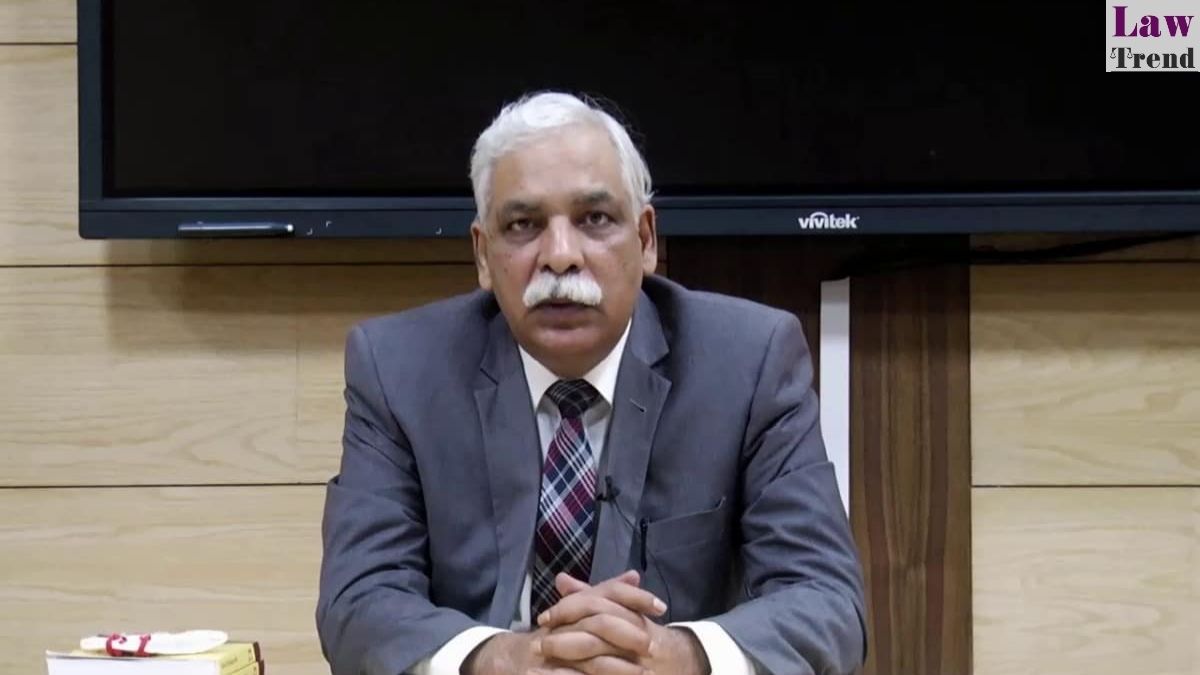
Delhi High Court Chief Justice Devendra Kumar Upadhyaya on Sunday said matrimonial disputes often extend beyond strict legal questions and require a more sensitive and creative approach from both lawyers and judges. Speaking during the ongoing India International Disputes Week 2026, he stressed that resolving such cases frequently demands “out-of-the-box thinking” because the search for justice may not always lie within the narrow boundaries of statutory law.
Delivering the keynote address at the event, Justice Upadhyaya highlighted that matrimonial conflicts are deeply rooted in social realities and therefore cannot always be addressed solely through conventional legal frameworks. According to him, courts and legal practitioners must remain mindful that these disputes often involve complex personal and family dynamics.
“It’s more of a social problem than a legal one; that has to be kept in mind,” he said, emphasizing that lawyers representing the parties as well as presiding judges should approach such matters with greater sensitivity.
The Chief Justice noted that strictly adhering to statutory provisions may sometimes fall short of delivering meaningful justice in matrimonial cases. “Many a time, the search for justice does not end within the four corners of law,” he said, adding that innovative thinking may be necessary when dealing with such disputes.
Justice Upadhyaya also discussed the growing challenges associated with cross-border matrimonial conflicts, particularly child custody battles. He pointed out that these cases often raise complex jurisdictional questions that domestic laws alone may not adequately resolve.
Referring to international legal frameworks, the Chief Justice observed that India has yet to become a signatory to certain global conventions related to cross-border family disputes, despite recommendations from the Law Commission of India. He said there has been increasing demand for India to join such international treaties.
In the absence of these agreements, he explained, courts face significant difficulties in determining where legal proceedings should be initiated and whether custody orders issued in one country will be recognised or enforced in another.
“In case of a parent seeking custody of a child, where will he bring the lawsuit? Where will he initiate the legal action, and whether or not any legal verdict given by a court here in India or abroad will be respected by the other country,” he said, describing these as some of the complex issues faced by courts.
Despite these challenges, Justice Upadhyaya acknowledged the role played by constitutional courts in addressing such disputes. He said that the Supreme Court and various High Courts have developed important case law to provide relief in cross-border custody matters even without a binding international treaty framework.
“Courts in India have done a wonderful job and given relief to such parents where child custody is sought,” he said.
The remarks came during the first edition of India International Disputes Week 2026. Earlier at the event, Chief Justice of India Surya Kant delivered a keynote address on the theme “India’s Cross-Border Disputes Services: 2026–2030 Outlook for Litigation, Mediation, & Arbitration” after inaugurating the Chandigarh International Arbitration Centre at the opening ceremony.




