

Open-Face Dacoity by Known Persons in Electric Light “Highly Suspicious”: Allahabad HC Acquits Convicts
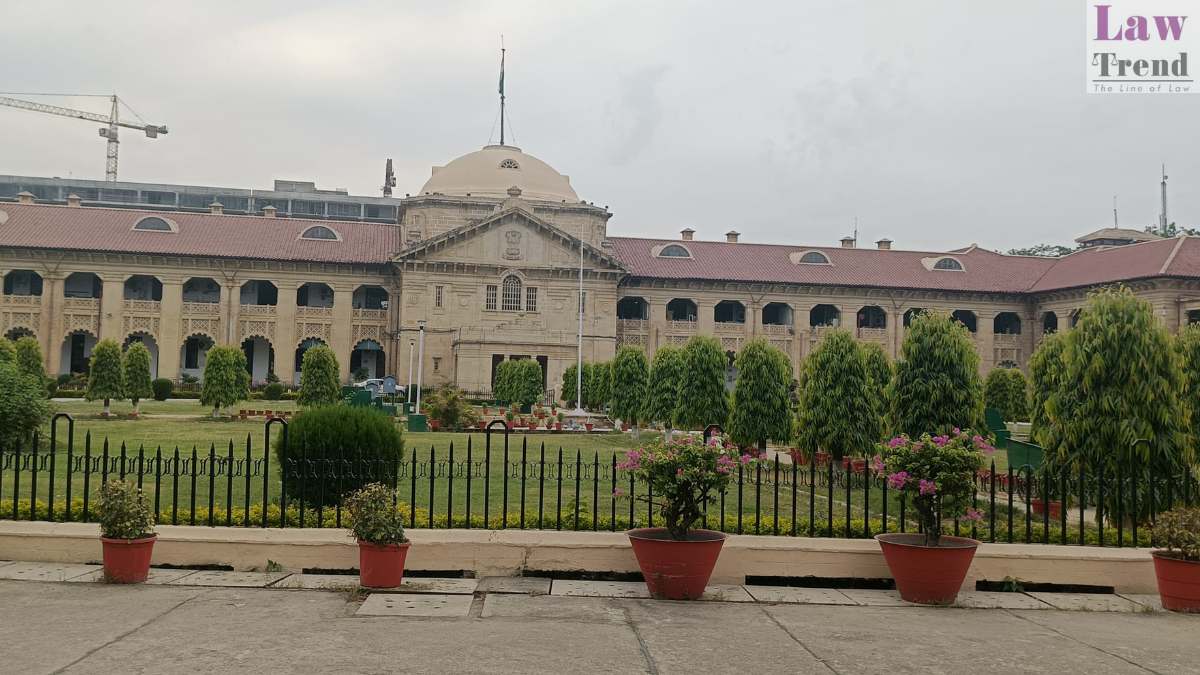

The Allahabad High Court has set aside the conviction and life sentences of several individuals in a 1985 dacoity-with-murder case, observing that the prosecution story was “concocted, artificial, and fabricated” due to previous enmity. The Division Bench of Justice J.J. Munir and Justice Vinai Kumar Dwivedi ruled that it is highly improbable for dacoits known to the victims to commit a crime in electric light without covering their faces.

Background

The case originated from an incident on the intervening night of November 10/11, 1985, in Village Sakarva, Mathura. According to the informant, Tika Ram (PW-1), 10-12 armed dacoits attacked the house of his brother, Pohap Singh. During the incident, the dacoits allegedly fired shots, leading to the death of one Summera and injuries to nine others. The informant claimed to have identified six miscreants, including the appellants (Amar Singh, Prakash @ Om Prakash, Hardayal, Bahori, and Biri Singh), in the electric light at the scene.

On December 22, 1987, the Ist Additional Sessions Judge, Mathura, convicted the appellants under Section 396 of the Indian Penal Code (IPC) and sentenced them to life imprisonment.

Arguments of the Parties

The appellants’ counsel argued that the First Information Report (FIR) was a result of false nomination due to admitted previous enmity. They highlighted that despite the dacoits being known to the witnesses, the police failed to recover any looted articles or ornaments from the appellants’ possession. It was further argued that the prosecution deliberately withheld Pohap Singh, the owner of the house where the dacoity occurred, from testifying.

The State (A.G.A.) opposed the appeal, contending that the FIR was promptly lodged and specifically named the appellants. The State maintained that the eyewitnesses (PW-1, PW-2, and PW-3) had consistently supported the prosecution’s version and that the motive was rooted in revenge following a dispute involving the appellant Hardayal.

READ ALSO  Disciplinary Inquiry Must Follow Procedure and Record Evidence, Not a 'Question-Answer' Session: Allahabad HC Quashes Terminations

Court’s Analysis and Observations

The Court focused on the inherent improbabilities of the prosecution’s narrative. It noted that while dacoits typically operate under the cover of darkness and use masks to hide their identities, the appellants—who were well known to the victims—allegedly committed the crime openly.

On Identity and Human Nature: The Court observed: “It is a well-known fact that dacoits usually commit their evil deeds by the darkness of night and cover their faces so that their identity cannot be known… the prosecution witnesses say facts that are against human nature, that all the appellants were committing the dacoity even without covering their faces.”

On Enmity and Motive: The Bench emphasized the role of previous disputes, noting that Hardayal had previously eloped with a villager’s wife (where Pohap Singh assisted the villager) and had cancelled a will made in favor of the informant’s son. Citing the Supreme Court in Sushil v. State of U.P. and State of Punjab v. Sucha Singh, the Court remarked:

“Enmity is a double edged weapon which cut both ways. It may constitute motive for the commission of the crime and at the same time it may also provide a motive for false implication.”

On Lack of Corroboration: The Court found it significant that no recovery of looted items was made. Referring to the Supreme Court decision in Iqbal & another v. State of UP (2015), the Court stated that without recovery to connect the appellants with the crime, the guilt could not be sustained. The Bench also noted the failure to examine the electricity department to verify if power was actually supplied to the village at the time of the incident.

Decision

Finding the prosecution story to be “improbable and unbelievable,” the High Court allowed the appeal. The conviction and life sentences passed in 1987 were set aside. The appeal against Hardayal had already abated due to his death during the pendency of the case. The remaining appellants were directed to be released from their bail bonds.

  • Case Name: Amar Singh and Others v. State of U.P.
  • Case Number: CRIMINAL APPEAL No. 17 of 1988

READ ALSO  इलाहाबाद हाई कोर्ट ने अपने प्रेमी की हत्या करने और उसके टुकड़े करने के आरोपी को जमानत देने से इनकार कर दिया
Ad 20- WhatsApp Banner

Law Trend
Law Trendhttps://lawtrend.in/
Legal News Website Providing Latest Judgments of Supreme Court and High Court

Related Articles

Latest Articles

