

Allahabad HC Disposes of PIL on Caste Rallies; Affirms State Ban and Limitations on Election Commission’s Power to De-register Parties
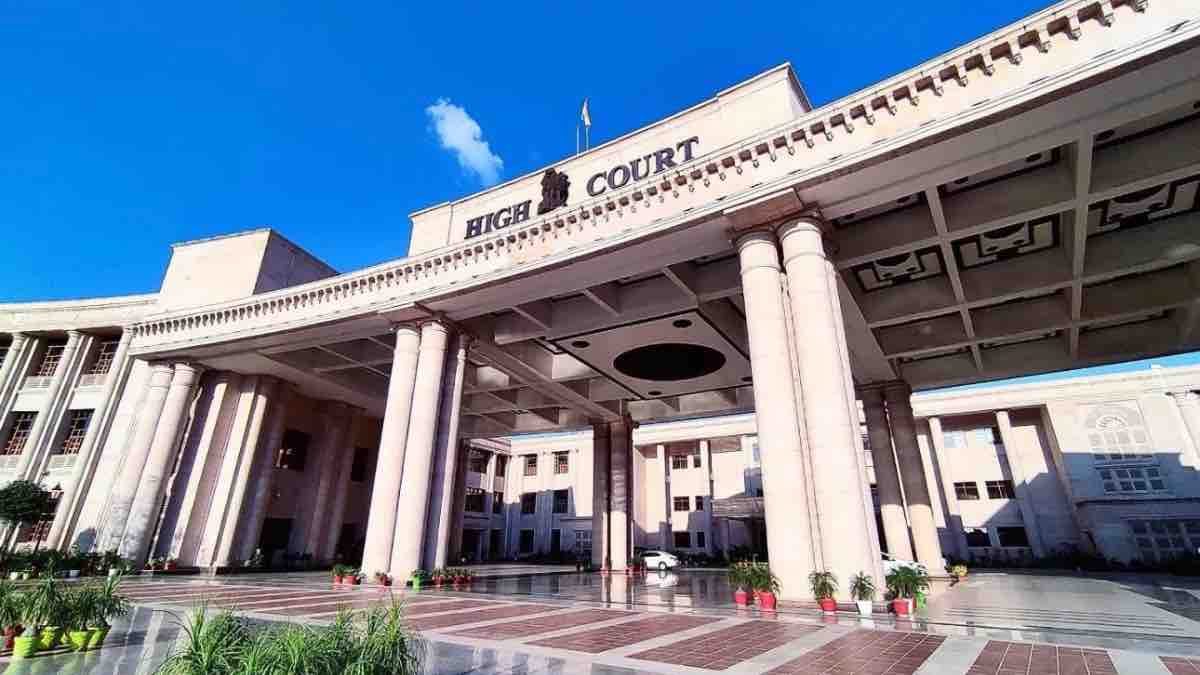

The Allahabad High Court, Lucknow Bench, has disposed of a Public Interest Litigation (PIL) filed in 2013 seeking a ban on caste-based political rallies and the de-registration of political parties indulging in divisive politics. The Division Bench, comprising Justice Rajan Roy and Justice Abdhesh Kumar Chaudhary, observed that statutory provisions and government orders are already in place to address these issues, emphasizing that the “only thing which remains is the will to implement the provisions effectively.”

The Court declined to grant the relief regarding the de-registration of political parties, citing a Supreme Court precedent that limits the Election Commission of India’s (ECI) power in this regard.

Background of the Case

The PIL, filed by Moti Lal Yadav in person, sought three main reliefs:

  1. A Mandamus commanding the Election Commission of India to ban all caste-based rallies and sammelans (such as Brahman MahaSabha Rally, Yadav Rally, Chhatriya Rally, etc.) organized by political parties.
  2. A ban on persons or parties contesting elections if they are found dividing society or voters on the basis of caste or religion.
  3. Cancellation of the registration of political parties found guilty of organizing caste or religious rallies.

Arguments and Legal Framework

The Court had appointed Advocate Rajat Rajan Singh as Amicus to assist the Court.

The Election Commission’s Stance Senior Advocate O.P. Srivastava, appearing for the Election Commission, submitted that the Commission’s role becomes active only after election notifications. During elections, the Model Code of Conduct (MCC) prohibits activities that aggravate differences or create mutual hatred between castes and communities.

READ ALSO  Accused of Heinous Offence Can’t Complaint Violation of Article 21 When he Himself is Not Cooperating in Trial- Allahabad HC Denies Bail

The Court noted that for MCC violations, action is permissible under Paragraph 16-A of The Election Symbols (Reservation and Allotment) Order, 1968, which allows the Commission to suspend or withdraw the recognition of a recognized political party. Furthermore, violations of the MCC can lead to the lodging of FIRs and other actions such as censure or bans on campaigning.

State Government’s Ban on Caste Rallies Regarding the non-election period, the Court referred to a recent Government Order (GO) dated September 21, 2025, issued by the Government of Uttar Pradesh. This GO was issued following observations made by the High Court in a separate matter (Praveen Chetri vs. State of U.P.).

Paragraph 3(8) of the said Government Order explicitly states:

“Political rallies organized with political objectives based on caste promote caste conflict in society, which is contrary to ‘public order’ and ‘national unity’. There shall be a complete ban on these in the State of Uttar Pradesh.”

The Court observed, “In view of the above discussion, provision for banning of caste based political rallies and preventing them is very much in place, whether it be during the election process or not.”

Court’s Analysis on De-registration and Disqualification

De-registration of Political Parties Addressing the petitioner’s prayer to cancel the registration of parties organizing caste rallies, the Court relied on the Supreme Court judgment in Indian National Congress vs. Institute of Social Welfare and others (2002).

The Bench quoted the Apex Court, which held that “Parliament consciously had not chosen to confer any power on the Election Commission to deregister a political party on the premise that it has contravened the provisions of sub-section (5) of Section 29-A.”

The Court noted that the ECI can only de-register a party under specific exceptions, such as when registration was obtained by fraud or forgery, or if the party ceases to have faith and allegiance to the Constitution. Consequently, the Bench held that “relief no.3 can also not be granted by us in this P.I.L.”

Disqualification of Candidates Regarding the prayer to ban candidates dividing society, the Court clarified that there is no provision for a “complete ban” on contesting elections solely on such allegations. The Court referred to Section 123(3) of the Representation of the People Act, 1951, which classifies appeals to religion, race, caste, or community as a “corrupt practice.”

The Court explained that under Section 8-A of the Act, disqualification occurs only after a person is found guilty of a corrupt practice, which is a subject matter for an Election Petition.

READ ALSO  Supreme Court Refuses to Quash Rape Case, Says Consent in Relationships Can Change Over Time

Observations on Social Values

While disposing of the petition, the Court emphasized the role of education and family values in curbing casteism, referring to Article 51-A(e) of the Constitution.

“In fact, a permanent solution to such problems is inculcation of proper values in the family system and the schooling system so that the child, when he/she grows up, should have the right values and mindset and ought not to be persuaded merely by consideration of caste or religion… Everything can’t be controlled and regulated by these statutes and laws.”

The Court also noted the suggestions for reform submitted by Amicus Curiae Rajat Rajan Singh, including legislative amendments to the Representation of the People Act to empower the ECI to act against hate speech during non-election periods. The Court stated it is open to the Legislature and Government to consider these reforms.

Decision

The Court disposed of the writ petition, directing that if the existing provisions or the Government Order dated September 21, 2025, are not implemented, it is open for the petitioner to approach the Court with relevant data.

READ ALSO  There Is Always a Limit to What a Woman Can Endure: Kerala High Court Upholds Divorce Decree Granted to Wife

Case Details:

  • Case Title: Moti Lal Yadav Vs. Chief Election Commissioner, Election Commission of India and Ors.
  • Case No.: Public Interest Litigation (PIL) No. 5889 of 2013
  • Coram: Justice Rajan Roy and Justice Abdhesh Kumar Chaudhary
  • Counsel for Petitioner: In Person, Rajat Rajan Singh (Amicus Curiae)
  • Counsel for Respondents: C.S.C., A.S.G., Anupriya Srivastava, Kaushlendra Yadav, O.P. Srivastava

Law Trend
Law Trendhttps://lawtrend.in/
Legal News Website Providing Latest Judgments of Supreme Court and High Court

Related Articles

Latest Articles

