

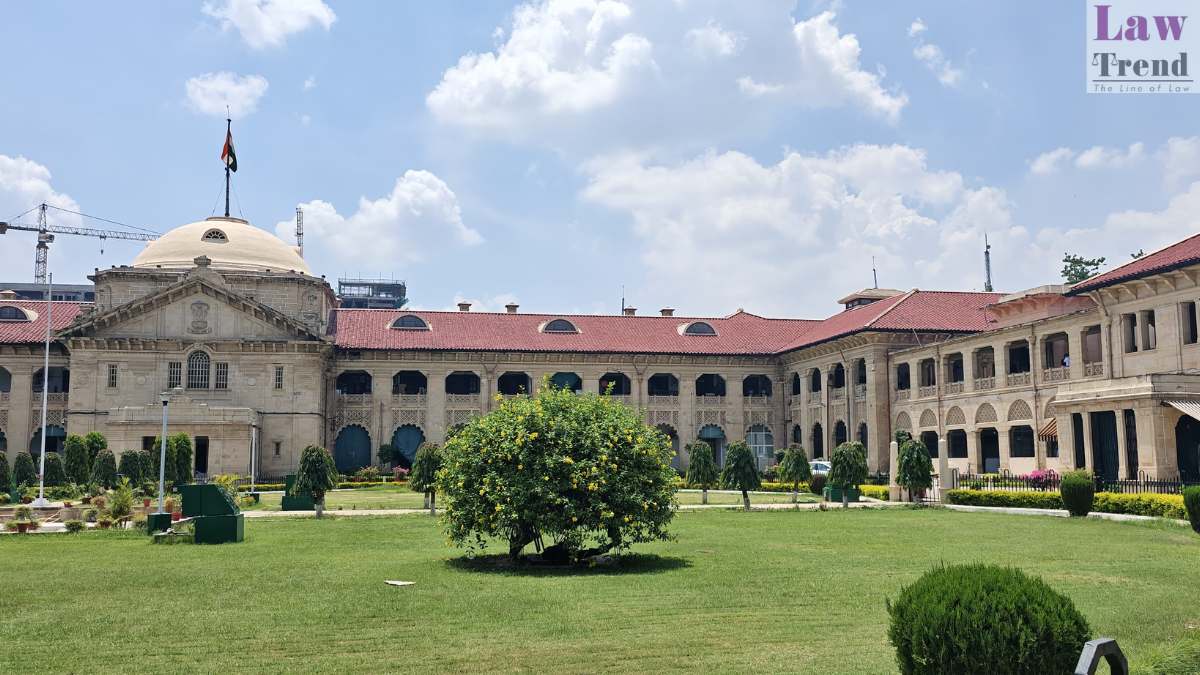
The Allahabad High Court has held that there is no legal requirement to obtain permission for holding religious prayer meetings within private premises in Uttar Pradesh. Emphasising the protection of religious freedom under Article 25 of the Constitution, the court observed that such acts fall squarely within the domain of fundamental rights and do not require prior approval from the state.
The decision came in response to two writ petitions filed by Maranatha Full Gospel Ministries and Emmanuel Grace Charitable Trust, both Christian organisations, who approached the court seeking relief after state authorities failed to act on their requests for permission to conduct prayer meetings inside their private premises.
A Division Bench of Justice Atul Sreedharan and Justice Siddharth Nandan passed the order after noting the categorical statement by the Uttar Pradesh government that no such permission is required under the law.
“Replies have come from the state government in which it is very clearly stated that there is no prohibition on the petitioner to conduct a religious prayer meeting within his private premises. It is also stated that equal protection of the law is accorded by instrumentalities of the state to all citizens across the state without discrimination with regard to religion or any other consideration,” the court observed.
The bench clarified that while prayer meetings on private property are permissible without any state permission, organisers must inform the police and comply with any legal requirements if the congregation overflows onto public roads or property.
The petitioners had submitted that their applications to conduct religious meetings were ignored, prompting them to seek judicial intervention.
Disposing of the petitions, the court stated:
“The petitioners have a right to conduct the prayer according to convenience in their private premises without any permission from the state government.”
The judgment, delivered on January 27, also left it to the discretion of the state authorities to determine the manner of police protection if such a need arises.




