

Writ Court Cannot Pass Orders Affecting Third-Party Purchasers Without Hearing Them: Andhra Pradesh High Court Sets Aside Order Restoring Gift Deed
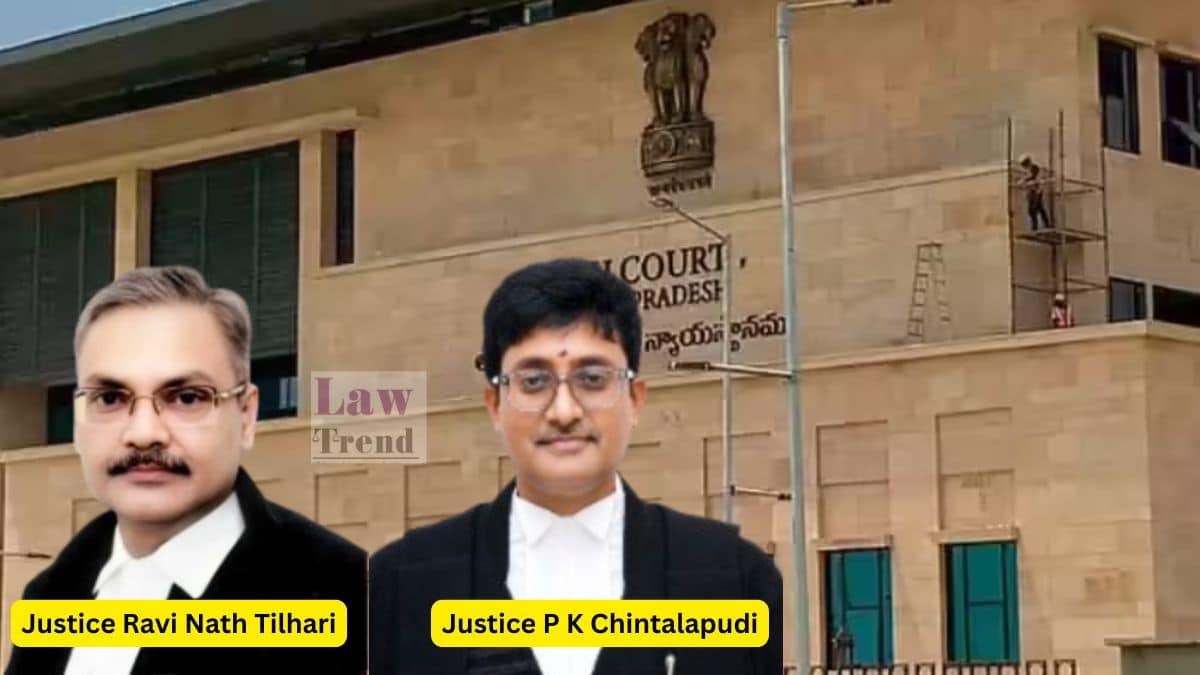

The High Court of Andhra Pradesh at Amaravati, comprising a Division Bench of Justice Ravi Nath Tilhari and Justice Purushottam Kumar Chintalapudi, has set aside a Single Judge judgment that had restored a registered gift deed, ruling that writ proceedings cannot determine rights against third-party purchasers without giving them an opportunity to be heard. The Bench restored the writ petition for a fresh decision, directing the petitioner to implead the subsequent purchasers and place details of a pending civil suit on record.

Background of the Case

The dispute involves a mother, Savari Eswaramma (the appellant), and her daughter, Parigala Anjinamma (respondent No. 1). On April 18, 2019, the mother executed a registered gift deed in favour of her daughter. Subsequently, on March 16, 2021, the mother unilaterally cancelled the gift deed through a registered cancellation deed (Doc. No. 3813 of 2021) registered at the office of the Joint Sub-Registrar, Kurnool.

Challenging the cancellation, the daughter filed Writ Petition No. 23334 of 2021. A Single Judge allowed the writ petition on March 31, 2026, holding that the unilateral cancellation violated Rule 26(i)(k) of the A.P. Registration Rules, 1960, and relied upon the Supreme Court judgment in N.P.Saseendran v. N.P.Ponnamma. The Single Judge directed the Joint Sub-Registrar to issue consequential proceedings to cancel the cancellation deed and restore the gift deed dated April 18, 2019.

Following the unilateral cancellation of the gift deed, the mother had created third-party rights by executing title deeds in favour of subsequent purchasers. In response, the daughter instituted a civil suit, O.S. No. 447 of 2022, in the Court of the I Additional Junior Civil Judge, Kurnool, against her mother (defendant No. 1) and four subsequent purchasers (defendant Nos. 2 to 5). In that suit, the daughter sought a declaration of her title, a declaration that document No. 11325/2021 executed in favour of defendant Nos. 2 and 4 was null and void, and a permanent injunction.

However, neither the mother nor the daughter disclosed the pendency of O.S. No. 447 of 2022 or the execution of title deeds in favour of third parties to the Single Judge during the writ proceedings. Furthermore, the subsequent transferees were not impleaded as parties in the writ petition.

READ ALSO  Supreme Court Collegium Considering This Change in Judicial Appointment Process

Arguments of the Parties

Before the Division Bench, counsel for the appellant mother submitted that genuine grounds existed to cancel the gift deed and raised factual challenges against the Single Judge’s order.

Counsel for respondent No. 1 (the daughter) supported the Single Judge’s judgment, arguing that a completed gift deed could not be unilaterally revoked without a revocation clause or circumstances specified under Section 126 of the Transfer of Property Act, 1882. Reliance was placed on judgments including N.P.Saseendran v. N.P.Ponnamma, P.Pranjali v. The State of Andhra Pradesh, Thota Ganga Laxmi v. Government of Andhra Pradesh, and V.Subba Ramanaidu v. The State of Andhra Pradesh.

Upon specific queries from the Bench regarding the civil suit, counsel for the daughter conceded that O.S. No. 447 of 2022 was filed during the pendency of the writ petition, that its pendency was not disclosed to the writ court, and that no affidavit bringing the suit on record had been filed. Counsel also acknowledged that defendant Nos. 2 to 5 in the suit were not impleaded in the writ petition and had no opportunity of hearing before the Single Judge.

Court’s Analysis

The Division Bench refrained from entering into the merits of the unilateral cancellation, choosing instead to allow the appeal on procedural grounds concerning non-impleadment and suppression of facts.

READ ALSO  Delhi High Court Urges Caution in Freezing Bank Accounts

The court observed that restoring the gift deed directly impacted third parties who were not made parties to the writ petition. Addressing the issue of passing orders behind the back of affected persons, the Bench stated:

“Though the subsequent transferees are not before us, but any right or interest of 3rd party, which is effected by any decision of this Court for the reason of the order being passed behind his back, we cannot ignore such aspect and cannot allow the writ appellant or the writ petitioner to take the benefit of the judgment of this Court against 3rd parties, in a pending suit.”

Highlighting the non-disclosure of material facts, the court held:

“We cannot allow any party to abuse the process of this Court by suppression of material facts and use the order of this Court against a person obtained behind his back.”

The Bench noted that setting aside the revocation deed in the writ petition effectively pre-judged the outcome of the civil suit without hearing the defendants, observing:

“In other words, we may say that and it appears to us prima facie that O.S.No.447 of 2022 stands automatically decreed against those defendant Nos. 2 to 5 pursuant to the order of the writ Court. In the writ petition they were not made parties and the order in the writ petition is without their knowledge and certainly behind their back.”

Decision of the Court

The Division Bench allowed the writ appeal and set aside the Single Judge’s judgment dated March 31, 2026. Writ Petition No. 23334 of 2021 was restored to its original number for fresh consideration.

The court directed the writ petitioner to place the details of O.S. No. 447 of 2022 on record and to implead defendant Nos. 2 to 5 from the civil suit as party respondents in the writ petition. All merits and legal submissions were left open for the parties to argue before the writ court. Additionally, the court condoned a 30-day delay in filing the appeal by allowing I.A. No. 1 of 2026.

READ ALSO  Karnataka court grants bail to two accused in assembly ticket cheating case

Case Details:

Case Title: Savari Eswaramma v. Parigala Anjinamma & 2 others
Case No.: Writ Appeal No. 734 of 2026
Bench: Justice Ravi Nath Tilhari and Justice Purushottam Kumar Chintalapudi
Date: July 14, 2026

Law Trend
Law Trendhttps://lawtrend.in/
Legal News Website Providing Latest Judgments of Supreme Court and High Court

Related Articles

Latest Articles

