

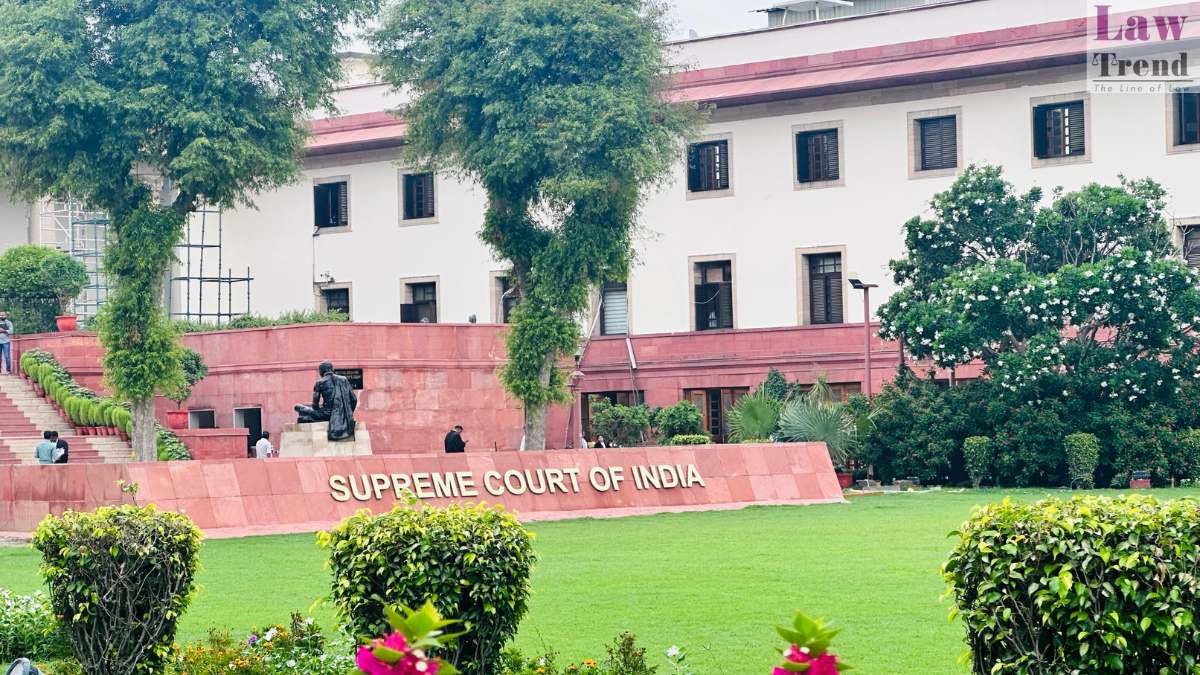
The Supreme Court on Monday said the issue of unpredictable airfare fluctuations and ancillary charges by private airlines was a “very serious concern” and granted the Centre four weeks to complete its deliberations on framing regulatory guidelines.
A bench of Justices Vikram Nath and Sandeep Mehta recorded the submission of the Union government that the Ministry of Civil Aviation is actively examining the issues raised in a public interest litigation (PIL) seeking binding norms to curb arbitrary pricing and hidden charges in the aviation sector. The matter has been listed for further hearing on March 23.
Appearing for the Centre, Additional Solicitor General Anil Kaushik sought at least three weeks to file a response, stating that the concerned ministry was considering the concerns flagged in the petition. Accepting the request, the bench granted four weeks for completion of the exercise.
Terming the issue “very serious”, the court observed, “Otherwise, we don’t entertain Article 32 petitions,” indicating that the plea raised substantial questions affecting the public at large.
On January 19, the top court had indicated its willingness to examine the issue of “unpredictable fluctuations” in airfares and had described steep fare hikes during festival seasons as “exploitation”. It had then sought replies from the Centre and the Directorate General of Civil Aviation (DGCA) on the demand for binding regulatory guidelines.
Earlier, on November 17, notices were issued to the Centre, the DGCA and the Airports Economic Regulatory Authority of India (AERA) on the PIL filed by social activist S. Laxminarayanan, who has sought the creation of a robust and independent regulatory mechanism to ensure transparency and passenger protection.
The petition alleges that private airlines have reduced the free check-in baggage allowance for economy passengers from 25 kg to 15 kg without any corresponding fare reduction, converting an earlier included service into an additional revenue stream. It also challenges the “single-piece” check-in policy and the absence of rebates for passengers who do not use baggage.
According to the plea, there is currently no authority empowered to review or cap airfares or ancillary fees, allowing airlines to impose hidden charges and adopt dynamic pricing without regulatory oversight.
The petitioner contends that opaque pricing, arbitrary fare hikes, lack of grievance redressal mechanisms and unilateral service reductions violate citizens’ rights to equality, freedom of movement and life with dignity. The plea argues that surge pricing during festivals, emergencies or weather disruptions disproportionately affects economically weaker passengers who are compelled to travel at short notice.
It further asserts that access to emergency transport on fair and non-exploitative terms forms part of the right to dignity, and that unregulated fare algorithms amount to a failure of the State’s constitutional duty to protect consumers.
Recording the Centre’s submission that the Ministry of Civil Aviation has taken note of the concerns, the bench deferred further consideration to March 23, when the government is expected to place its stand on whether regulatory guidelines or institutional mechanisms will be introduced to address airfare volatility and ancillary charges.




