

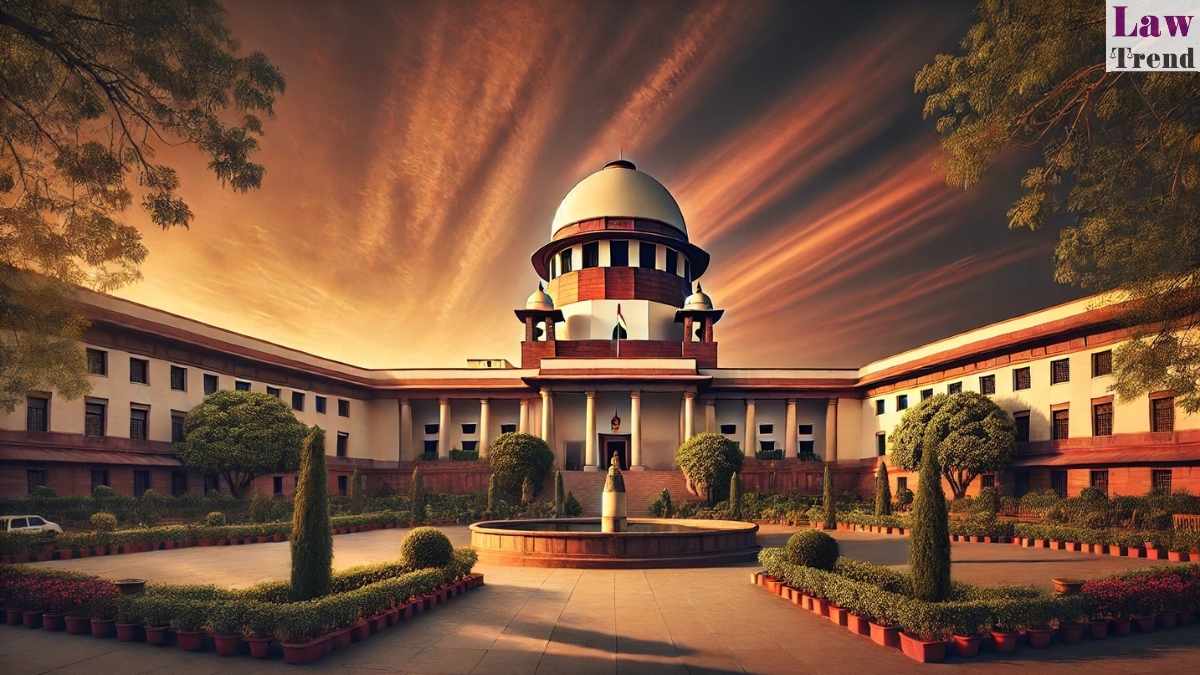
The Union government has submitted a proposal to the Ministry of Finance seeking approval for an umbrella scheme aimed at modernising police forces nationwide, the Supreme Court was informed on Wednesday.
Appearing before a bench comprising Justices Vikram Nath and Sandeep Mehta, Additional Solicitor General Rajkumar Bhaskar Thakare stated that the proposal was sent to the Department of Expenditure on July 8 and remains under active consideration.
Thakare also informed the court that the existing financial assistance program for installing closed-circuit television (CCTV) systems in police stations across the country has been extended through March 31, 2027.
Following the submissions, the apex court directed the law officer to present the umbrella scheme for review, granting two weeks to file additional documentation. The matter has been scheduled for its next hearing on September 1.
Progress on CCTV Installation
The court was hearing a batch of petitions, alongside a self-initiated proceeding, regarding the operational status of CCTV cameras in police stations.
During a prior hearing on July 22, the bench noted positive developments in the case. Senior advocate Siddhartha Dave, serving as amicus curiae to assist the court, confirmed that substantial progress had been achieved.
The court previously identified two primary focal points for the initiative: extending the central funding framework and establishing adequate maintenance protocols for installed equipment. On May 13, the amicus reported that most states were advancing in the right direction with installation efforts.
Under the current funding structure, the central government fully funds CCTV installation costs in Union Territories. For hilly states, the Centre provides 90 percent of the funding, while in all remaining states, the Centre covers 60 percent and the respective state governments contribute the remaining 40 percent.
Background and Mandatory Guidelines
The Supreme Court initially ordered the installation of security cameras in police stations in 2018 to prevent human rights violations. It later registered a suo motu case after taking cognisance of a media report highlighting non-functional cameras.
In December 2020, the apex court expanded the mandate, requiring the Union government to install CCTV cameras and recording devices in the offices of federal investigative bodies, including the Central Bureau of Investigation, the Enforcement Directorate, and the National Investigation Agency.
Under these directions, state governments and Union Territories must ensure total camera coverage at every police station, including all entry and exit gates, main access points, lock-ups, corridors, lobbies, reception areas, and zones immediately outside lock-up facilities. The regulations mandate that all installed systems possess night-vision capabilities, record both audio and video, and maintain data storage for at least one year.




