

Unexplained Delay in Deciding Representation Renders Preventive Detention Under PIT NDPS Act Illegal: Andhra Pradesh High Court
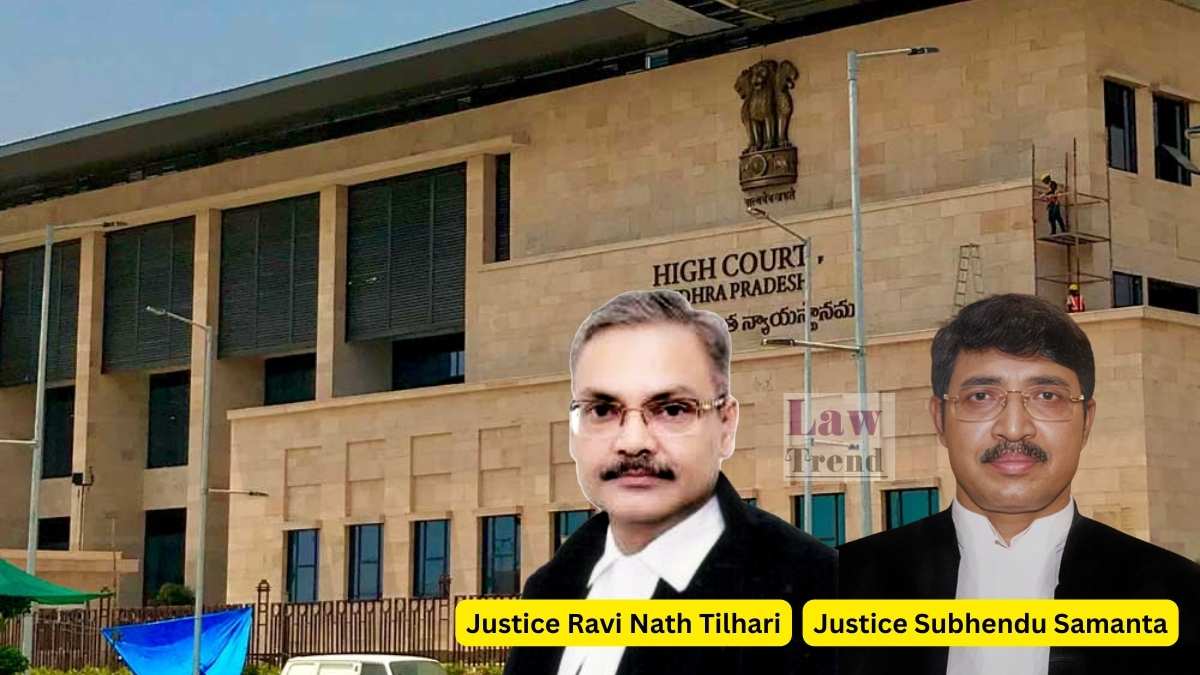

The High Court of Andhra Pradesh at Amaravati, comprising a Division Bench of Justice Ravi Nath Tilhari and Justice Subhendu Samanta, has held that an inordinate and unexplained delay in considering a detenu’s representation violates the constitutional mandate under Articles 21 and 22(5) of the Constitution of India, rendering continued preventive detention illegal. Allowing a writ of Habeas Corpus filed by the detenu’s wife, the Court set aside both the preventive detention order passed under the Prevention of Illicit Traffic in Narcotic Drugs and Psychotropic Substances Act, 1988 (PIT NDPS Act) and its confirmation order, directing the immediate release of the detenu.

Background of the Case

The case arose from a habeas corpus petition filed by Vandalam Domini challenging the preventive detention of her husband, Vandalam Balu Baddar. The State government had issued a detention order vide G.O.Rt.No.708, Revenue (Excise.III) Department, dated July 9, 2025, under Section 3(1) of the PIT NDPS Act, relying on three pending criminal cases against the detenu. This detention order was subsequently confirmed by the State vide G.O.Rt.No.1231 dated October 10, 2025, for a duration of twelve months.

On January 5, 2026, the detenu submitted a representation to the authorities seeking revocation of the detention order and his release. The representation was received by the government on January 7, 2026. Having received no timely decision, the petitioner approached the High Court. During the pendency of the writ petition, the State rejected the representation on March 18, 2026.

Arguments of the Parties

Counsel for the petitioner, D. Purna Chandra Reddy, submitted that there was an inordinate and unexplained delay of over two months in deciding the detenu’s representation. He argued that neither the rejection order dated March 18, 2026, nor the counter affidavit filed by the state authorities provided any explanation for this delay, which vitiated the continued detention of the detenu.

Appearing on behalf of the respondents, Kirthi Teja Kondaveeti, learned Government Pleader attached to the office of the Additional Advocate General, acknowledged the timeline of receipt on January 7, 2026, and rejection on March 18, 2026. The state counsel fairly admitted that neither the rejection order nor the counter affidavit contained any explanation for the period taken to deal with the representation, beyond reciting the dates of receipt and disposal.

READ ALSO  जिला सर्वेक्षण और पुनर्भरण अध्ययन के बिना पर्यावरण मंजूरी अवैध: आंध्र प्रदेश हाईकोर्ट ने सिलिका खदान के खिलाफ NGT के आदेश को सही ठहराया

Court’s Analysis and Observations

Examining the timeline and counter affidavit, the Court observed that the representation remained pending for over two months without any explanation for the delay. Referring to the constitutional framework under Article 22(5), the Bench emphasized the legal obligation imposed on the state to deal with representations expeditiously.

The Court relied on the Constitution Bench judgment of the Supreme Court in K.M. Abdulla Kunhi and B.L. Abdul Khader v. Union of India and others (1991), highlighting the following observation:

_ The representation relates to the liberty of the individual, the highly cherished right enshrined in Article 21 of our Constitution. Clause (5) of Article 22 therefore, casts a legal obligation on the government to consider the representation as early as possible. It is a constitutional mandate commanding the concerned authority to whom the detenu submits his representation to consider the representation and dispose of the same as expeditiously as possible. The words “as soon as may be” occurring in clause (5) of Article 22 reflects the concern of the Framers that the representation should be expeditiously considered and disposed of with a sense of urgency without an avoidable delay. However, there can be no hard and fast rule in this regard. It depends upon the facts and circumstances of each case. There is no period prescribed either under the Constitution or under the concerned detention law, within which the representation should be dealt with. The requirement however, is that there should not be supine indifference, slackness or callous attitude in considering the representation. Any unexplained delay in the disposal of representation would be a breach of the constitutional imperative and it would render the continued detention impermissible and illegal._

The Bench further discussed paragraphs 19 and 20 of K.M. Abdulla Kunhi, noting that even if a representation is submitted after the confirmation of a detention order, the government remains bound to consider it independently and without delay:

READ ALSO  "काम नहीं तो वेतन नहीं" का सिद्धांत वहाँ लागू नहीं होता जहां नियोक्ता कर्मचारी को काम करने से रोकता है: हाईकोर्ट ने विकलांग कर्मचारी के बकाया वेतन जारी करने को कहा

There is no constitutional mandate under cl. (5) of Article 22, much less any statutory requirement to consider the representation before confirming the order of detention. As long as the Government without delay considers the representation with an unbiased mind there is no basis for concluding that the absence of independent consideration is the obvious result if the representation is not considered before the confirmation of detention…

…so long as the representation is independently considered by the government and if there is no delay in considering the representation, the fact that it is considered after the confirmation of detention makes little difference on the validity of the detention or confirmation of the detention. The confirmation cannot be invalidated solely on the ground that the representation is considered subsequent to confirmation of the detention.

The High Court also referred to its recent decision in Cheemparthi Shaheen v. State of Andhra Pradesh (W.P. No. 34357 of 2025), which reviewed established precedents including Rajammal v. State of Tamil Nadu, Pabitra N. Rana v. Union of India, Rashid Kanadia v. Medha Gadgil, Abdul Nasar Adam Ismail v. State of Maharashtra, and Icchu Devi Choraria v. Union of India. Reaffirming the core principle from Cheemparthi Shaheen, the Court cited:

It is thus well settled in law that the detenu has a fundamental right to make the representation against his detention order and has a right for its consideration as expeditiously as possible with a sense of urgency without an avoidable delay. Though there is no hard and fast rule with respect to the time and delay but it depends upon the facts and circumstances of each case. In case of delayed disposal of representation the delay must be explained and such explanation must stand the test of reasonableness to the satisfaction of the Court.

The representation, even if not filed against the order of detention at the initial stage but is filed after the order of detention has been confirmed by the State still the detenu will have a right to make the representation which survives even after the confirmation of the detention order. The same principle for expeditious disposal of the representation without delay continues to be the fundamental right of the detenu in terms of the law as laid down in the aforesaid judgments in view of Articles 21 and 22 (5) of the Constitution of India. So delay in disposal of the representation even after the order of detention has been confirmed by the State must be justified by giving proper and sufficient explanation. If there is no sufficient explanation or a Court finds delay unreasonable and is not satisfied on the grounds for delay, the continued detention would become illegal. The order of detention on such ground would not be illegal or void but pursuant to that order of detention, the detenu cannot be detained any further. Any unexplained delay in the disposal of representation would be a breach of the constitutional imperative and it would render the continued detention impermissible and illegal.

Applying these principles, the High Court noted that the delay of over two months between January 7, 2026, and March 18, 2026, remained entirely unexplained by the respondents, leading to the conclusion that the delay was without cause.

READ ALSO  Andhra Pradesh HC Resolves Dispute Of Performing Decoration At Sri Durga Malleswara Swamy Varla Devastana

Court Decision

The High Court held that the continued detention of Vandalam Balu Baddar was illegal. Allowing the writ petition, the Bench set aside the detention order G.O.Rt.No.708 dated July 9, 2025, and the confirmation order G.O.Rt.No.1231 dated October 10, 2025. The Court ordered that the detenu be released and set free forthwith, provided he is not required in any other case.

Case Title: Vandalam Domini v. The State of Andhra Pradesh and others
Case No.: Writ Petition No. 3507 of 2026
Bench: Justice Ravi Nath Tilhari, Justice Subhendu Samanta
Date: July 3, 2026

Law Trend
Law Trendhttps://lawtrend.in/
Legal News Website Providing Latest Judgments of Supreme Court and High Court

Related Articles

Latest Articles

