

Undertaking to Infuse Funds Not a ‘Guarantee’ Under Contract Act; Resolution Plan Approval Does Not Ipso Facto Extinguish Third-Party Liability: Supreme Court

The Supreme Court has held that a promoter’s undertaking to arrange for the infusion of funds into a borrowing company to ensure compliance with financial covenants does not constitute a “Contract of Guarantee” under Section 126 of the Indian Contract Act, 1872. Consequently, such an undertaking cannot be the basis for initiating Corporate Insolvency Resolution Process (CIRP) under Section 7 of the Insolvency and Bankruptcy Code, 2016 (IBC) against the promoter.

Simultaneously, the Court clarified that the approval of a Resolution Plan for a Corporate Debtor does not ipso facto discharge the liability of third-party security providers or guarantors, especially when the plan explicitly reserves rights against them.

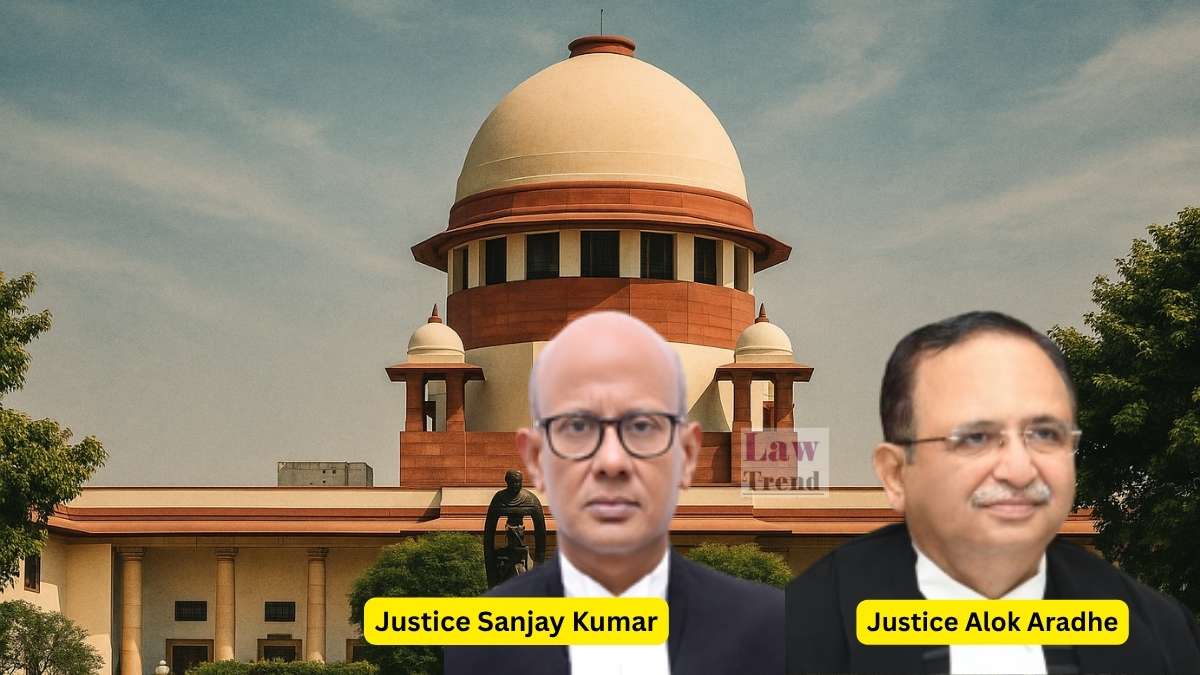
The Bench, comprising Justice Sanjay Kumar and Justice Alok Aradhe, delivered this significant judgment while dismissing cross-appeals filed by UV Asset Reconstruction Company Limited (UV ARC) and Electrosteel Castings Limited (ECL).

Brief Summary

The Supreme Court adjudicated two appeals arising from the same dispute. In the first appeal (UV Asset Reconstruction Company Limited vs. Electrosteel Castings Limited), the Court upheld the National Company Law Appellate Tribunal’s (NCLAT) finding that ECL was not a corporate guarantor for the loan availed by Electrosteel Steels Limited (ESL). In the second appeal (Electrosteel Castings Limited vs. UV Asset Reconstruction Company Limited), the Court affirmed that the approval of the Resolution Plan for ESL did not extinguish the debt liability against third-party security providers like ECL. Both appeals were dismissed, and the NCLAT’s judgment dated January 24, 2024, was affirmed.

Background of the Case

Electrosteel Steels Limited (ESL) availed financial assistance of ₹500 crores from SREI Infrastructure Finance Limited (SREI) vide a sanction letter dated July 26, 2011. The sanction letter did not stipulate a personal or corporate guarantee from ECL, the erstwhile promoter of ESL. However, ECL was required to furnish an undertaking.

READ ALSO  सुप्रीम कोर्ट ने मुवक्किल से बलात्कार के आरोपी दो वकीलों को जमानत दी

On July 27, 2011, ECL executed a “Deed of Undertaking,” where Clause 2.2 stated:

“In the event the Borrower is not in a position to comply with the Financial Covenants in the Financing Documents, or has breached such Financial Covenants, the Obligors will arrange for the infusion of such amount of fund into the Borrower such that the Borrower is in a position to comply with the abovementioned Financial Covenants.”

Subsequently, ESL underwent CIRP, and a Resolution Plan by Vedanta was approved on April 17, 2018. Under the plan, financial creditors received a mix of cash and equity, converting a significant portion of the “unsustainable debt” into equity shares. SREI assigned its residual debt rights to UV ARC.

UV ARC filed an application under Section 7 of the IBC against ECL, claiming that ECL was a corporate guarantor. The National Company Law Tribunal (NCLT) rejected the application, holding that ECL was not a guarantor and that the debt was extinguished upon the resolution plan’s approval. The NCLAT affirmed the rejection of the Section 7 application but clarified that the debt extinguishment under the resolution plan applied only to the Corporate Debtor (ESL), not necessarily third parties.

Both parties approached the Supreme Court against the NCLAT’s findings.

Arguments of the Parties

UV ARC’s Arguments: The appellant contended that Clause 2.2 of the Deed of Undertaking satisfied the requirements of a guarantee under Section 126 of the Indian Contract Act. They argued it was a “See to it” guarantee, involving a two-step process: funding ESL and eliminating the breach of default. They relied on English precedents (Moschi vs. Lep Air Services Ltd.) and claimed ECL had admitted its status as a guarantor in prior pleadings.

Electrosteel Castings Limited’s (ECL) Arguments: ECL argued that Clause 2.2 only imposed an obligation to “arrange for infusion of funds” into the borrower, which does not amount to a guarantee to discharge the borrower’s liability to the creditor. They emphasized that the sanction letter explicitly excluded a corporate guarantee. Regarding the second appeal, ECL contended that the conversion of debt into equity under the Resolution Plan resulted in the “irrevocable discharge” of the debt, leaving no subsisting debt to enforce against a third party.

Court’s Analysis

1. On the Nature of the Undertaking (Is it a Guarantee?)

READ ALSO  कावेरी जल विवाद: सुप्रीम कोर्ट ने कर्नाटक को तमिलनाडु के लिए 5,000 क्यूसेक पानी छोड़ने के आदेश में हस्तक्षेप करने से इनकार किया

Justice Alok Aradhe, writing for the Bench, analyzed Section 126 of the Indian Contract Act, noting that a guarantee requires three essential ingredients: a principal debt, a default, and a promise by the surety to discharge the liability of the principal debtor.

Referring to Clause 2.2, the Court observed:

“The clause neither records an undertaking to discharge the debt owed to the creditor nor does it contemplate payment to the lender in the event of the default. The clause contains a promise, not to the creditor to pay the debt upon default, but to the borrower to facilitate compliance with Financial Covenants.”

The Court held that a mere covenant to ensure financial discipline or infusion of funds “does not satisfy the statutory requirements of Section 126 of the Act.” The Court also distinguished the concept of a “See to it” guarantee, stating that an obligation to enable the principal debtor to perform its own obligation does not constitute a guarantee under the Act.

The Court further noted that contemporaneous documents, including the information memorandum and assignment agreement, did not list ECL as a guarantor.

2. On Extinguishment of Debt against Third Parties

Addressing ECL’s appeal, the Court examined whether the approval of ESL’s Resolution Plan extinguished claims against third-party security providers. The Court noted that under the plan, financial creditors took a “haircut” on the unsustainable debt, which was converted into equity.

The Court relied on Clause 3.2 (ix) of the Resolution Plan, which explicitly stated:

READ ALSO  Supreme Court’s Triple Talaq Judgement Would Apply Retrospectively, Rules Andhra Pradesh HC

“…all rights/remedies of the creditors shall stand permanently extinguished except any rights against any third party (including the Existing promoter) in relation to any portion of Unsustainable Debt secured or guaranteed by third parties.”

The Court observed that the plan unequivocally provided that rights against security providers would not be extinguished. Citing well-settled law, the Bench held:

“It is well settled that approval of the Resolution Plan does not ipso facto discharge a security provider of her or his liabilities under the contract of security.”

Decision

The Supreme Court dismissed both appeals.

  1. Civil Appeal No. 9701 of 2024 (UV ARC vs ECL): The Court affirmed that ECL was not a guarantor. “Clause 2.2 of the Deed of Undertaking does not constitute a contract of guarantee and that ECL cannot be treated as guarantor for the financial facilities availed by ESL.”
  2. Civil Appeal No. 12367 of 2025 (ECL vs UV ARC): The Court held that the “approval of the Resolution Plan of ESL does not result in extinguishment of entire debt, so as to bar any claim against the ECL as a security provider/third-party surety.”

The NCLAT’s judgment was upheld in its entirety.

Case Details

  • Case Title: UV Asset Reconstruction Company Limited vs. Electrosteel Castings Limited (and connected appeal)
  • Case No.: Civil Appeal No. 9701 of 2024 & Civil Appeal No. 12367 of 2025
  • Coram: Justice Sanjay Kumar and Justice Alok Aradhe

Law Trend
Law Trendhttps://lawtrend.in/
Legal News Website Providing Latest Judgments of Supreme Court and High Court

Related Articles

Latest Articles

