

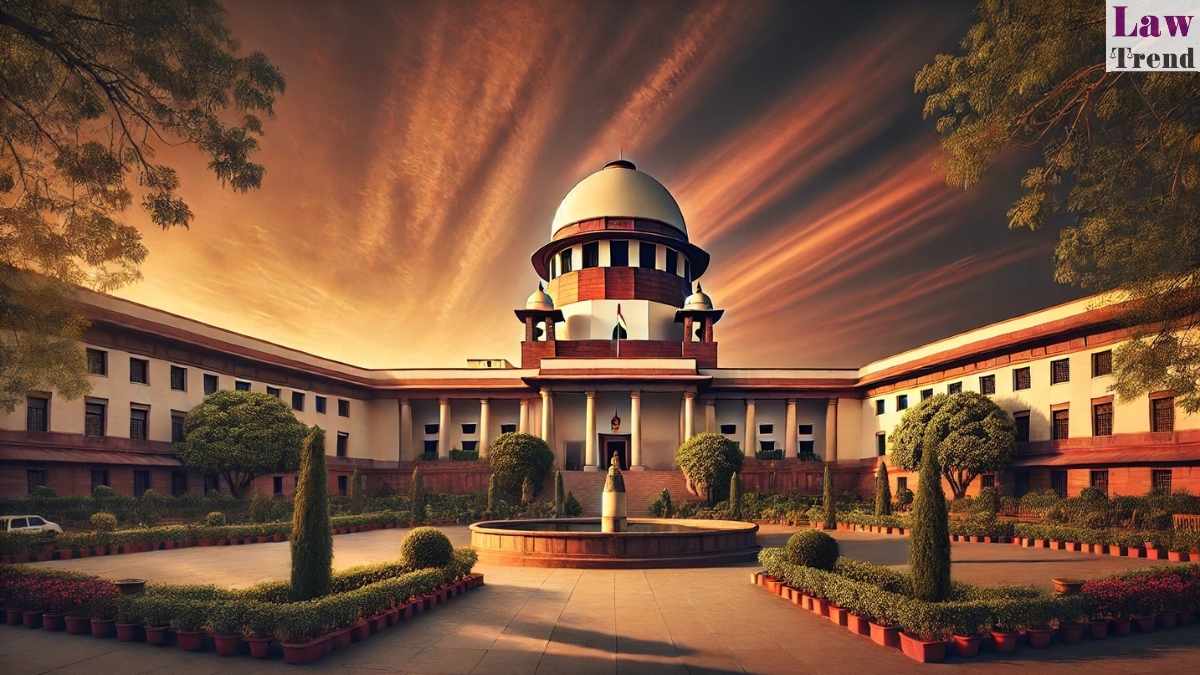
The Supreme Court on Wednesday firmly declined to entertain a petition challenging the regulation that prohibits former members of the National Company Law Tribunal (NCLT) and the National Company Law Appellate Tribunal (NCLAT) from practicing before these very forums.
A three-judge bench, comprising Chief Justice Surya Kant and Justices Joymalya Bagchi and Vipul M Pancholi, emphasized that the restriction is fundamental to preserving the integrity and independence of the judiciary.
The Core Conflict: A Complete Ban vs. A Cooling-Off Period
The petition was filed by Vijai Pratap Singh, a former technical member of the NCLAT. Singh challenged the statutory regulation that imposes a lifetime ban on retired judicial and technical members, preventing them from appearing, acting, or pleading as advocates or consultants before the NCLT and NCLAT.
During the hearing, Singh argued that a complete, permanent prohibition was overly restrictive, suggesting instead that the regulatory framework should implement a temporary “cooling-off period.”
Protecting Public Perception and Judicial Integrity
However, the Supreme Court bench was entirely unreceptive to this argument, highlighting how such appearances could compromise the perceived fairness of the tribunals.
“You have to think about independence of judiciary,” the bench observed, addressing the petitioner. “You have been a member of the tribunal. It is a super special tribunal. Imagine you appear before another member who was working when you were there. What perception would it create in the mind of an ordinary litigant?”
By framing the issue around the trust of the ordinary litigant, the court made it clear that the professional boundary must remain absolute to prevent any appearance of bias or conflict of interest.
Dismissal of the Plea
Faced with the bench’s strong disinclination to grant any relief or entertain the challenge, Singh chose to withdraw his petition. Consequently, the Supreme Court dismissed the matter as withdrawn, leaving the strict post-retirement practice prohibition fully intact.




