

Test Identification Parade Merely Corroborative, Cannot Substitute Dock Identification: Supreme Court Acquits Man in POCSO Case
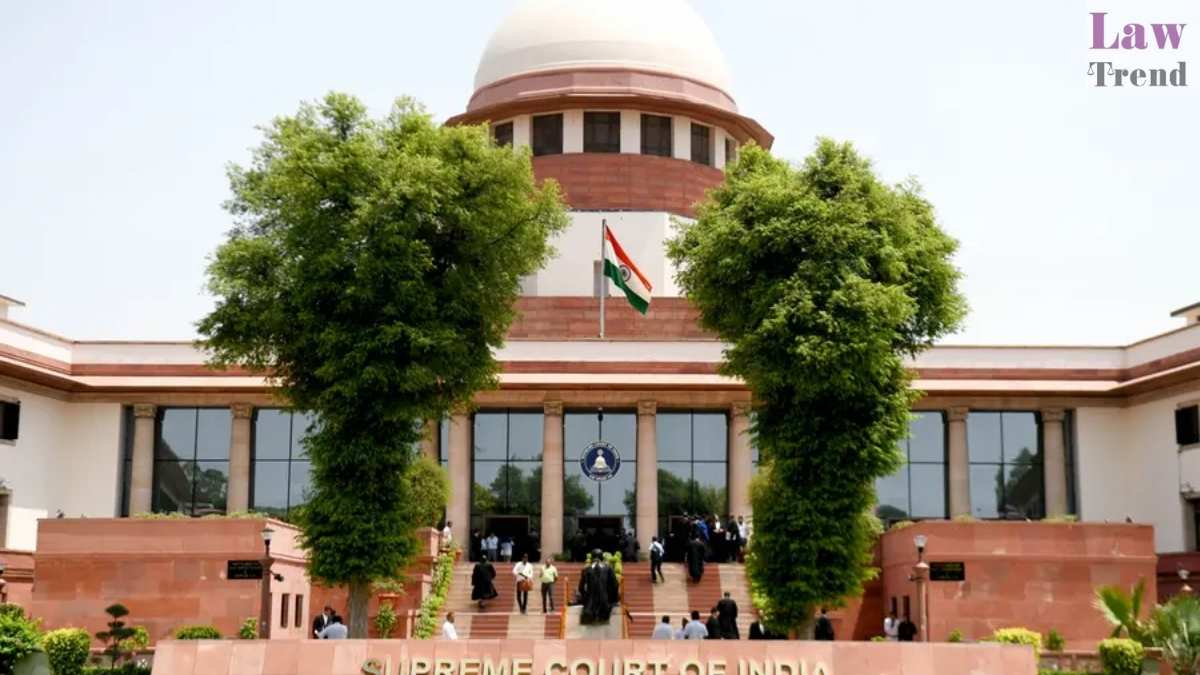
Holding that identification during police investigation is not substantive evidence and cannot replace dock identification in court, the Supreme Court Bench comprising Justice Sandeep Mehta and Justice Manmohan acquitted a man sentenced to life imprisonment under the Indian Penal Code, 1860 (IPC) and the Protection of Children from Sexual Offences Act, 2012 (POCSO Act). Setting aside the concurrent convictions recorded by the Special Court (POCSO), Ajmer, and affirmed by the Rajasthan High Court, the Court ruled that the prosecution fundamentally failed to establish the identity of the assailant and highlighted irreconcilable contradictions between medical evidence and the alleged timeline of the crime.

Background of the Case

The case stems from a written report lodged on December 7, 2016, at Police Station Kekri, District Ajmer, by the father of a five-year-old girl. According to the complainant, on December 5, 2016, his wife and two children had gone to attend a function at a relative’s house, where the child went missing. Announcements were made via the mosque loudspeaker, and villagers launched a search. Shortly after, two villagers brought the child home, where her mother noticed bleeding from her private parts. The victim stated that an unknown boy lured her near a school, pushed her into bushes, sexually assaulted her, gagged her when she tried to scream, and fled.

The family initially took the child to a hospital in Juniya but delayed reporting the matter to the police due to fear of societal embarrassment. An FIR was registered on December 7, 2016, against an unknown person under Section 376 of the IPC and Sections 3/4 of the POCSO Act.

Nearly two months later, on February 5, 2017, the appellant, Dhanraj, was arrested based on an alleged informer’s report. He was subjected to a Test Identification Parade (TIP), where the victim identified him. Following the investigation, a chargesheet was filed, and the Special Court framed charges under Sections 363, 366A, 323, 376, and 376(2)(i)(j) of the IPC, alongside Sections 3/4 and 5(m)/6 of the POCSO Act. The appellant denied the charges, pleaded alibi stating he was with his wife in Gangoj on the day of the incident, and alleged false implication due to political enmity with a local MLA.

On September 5, 2019, the trial court convicted the appellant and sentenced him to life imprisonment for the remainder of his natural life, along with rigorous imprisonment under Sections 363 and 323 of the IPC. The Rajasthan High Court dismissed his appeal on August 20, 2025, leading to the appeal before the Supreme Court.

READ ALSO  Lawyers Must Not Pressure Courts for Favourable Rulings to Protect Their Fees: Madhya Pradesh High Court

Arguments of the Parties

Appearing for the appellant, Advocate Namit Saxena argued that the prosecution’s case rested on a non-existent foundation. He pointed out that the appellant was not named in the FIR and no physical description was provided initially. Though the child stated during trial that she could identify the assailant, no dock identification was ever conducted in court. Furthermore, during cross-examination, the victim admitted that the police had told her Dhanraj’s name and had assembled persons, including the accused, at the police station prior to the TIP.

The defense also emphasized that a sketch prepared in Jaipur with the victim’s assistance was deliberately withheld from the trial court, no DNA or serological profiling connected the appellant to the biological samples, and complaints alleging political victimization were never investigated by the police.

In response, Advocate Kartikeya Asthana, representing the State of Rajasthan, supported the conviction. He submitted that the child victim had no motive to falsely implicate the accused and had correctly identified him during the TIP. He argued that the absence of a specific in-court pointing out from the witness box was a minor omission of a trivial nature that should not overshadow an otherwise consistent case, especially given the victim’s tender age. The State further contended that direct oral and medical testimony sufficiently proved sexual assault, rendering DNA confirmation unnecessary.

The Court’s Analysis

The Supreme Court examined the record and identified serious infirmities in the investigation and trial proceedings:

1. Discrepancy in Medical Evidence

The medical jurist who examined the child on December 7, 2016, found a one-inch wound extending from the perianal region to the vagina, with foul-smelling pus and maggots, opining that the injuries were 5 to 7 days old. The Bench observed that if the examination took place on December 7, the assault could not have occurred on December 5 as alleged, but at least two to three days earlier. This significant gap remained unreconciled and created a substantial dent in the prosecution’s narrative.

2. Flaws in the Investigation and Withholding of Primary Evidence

The Court noted that the two witnesses who first brought the child home turned hostile. Moreover, the Investigating Officer admitted receiving complaints supported by affidavits alleging the appellant’s false implication due to political rivalry, yet conducted no inquiry into them. The officer also admitted that while a sketch of the suspect had been prepared at Jaipur with the child’s assistance, it was never produced before the court, depriving the judicial forum of an objective benchmark to verify the suspect’s physical features. Additionally, the prosecution failed to conduct DNA profiling or serological matching to connect the accused with the sperm detected during forensic examination.

READ ALSO  Board Resolution Filed During Evidence Stage Can Be Accepted: Andhra Pradesh High Court Upholds Special Court Order in Commercial Suit

3. Fatal Omission of Dock Identification

The primary ground that vitiated the conviction was the complete absence of substantive identification during trial. The victim acknowledged in cross-examination: “It is correct that the police told me Dhanraj’s name.” Although the appellant was present in court on November 2, 2018, when the victim deposed, neither the Public Prosecutor nor the Presiding Officer took steps to have the victim identify the accused in the dock.

Addressing the evidentiary nature of identification, the Bench reiterated the settled law laid down in Rameshwar Singh v. State of J&K:

“The identification during police investigation, it may be recalled, is not substantive evidence in law and it can only be used for corroborating or contradicting evidence of the witness concerned as given in Court. The identification proceedings, therefore, must be so conducted that evidence with regard to them when given at the trial, enables the court safely to form appropriate judicial opinion about its evidentiary value for the purpose of corroborating or contradicting the statement in Court of the identifying witness.”

The Court held that the Test Identification Parade cannot serve as substantive proof of identity; substantive proof is the identification of the accused by the witness on oath in court. Relying on Zahira Habibulla H. Sheikh v. State of Gujarat, the Bench emphasized that under Section 165 of the Indian Evidence Act, 1872 (corresponding to Section 168 of the Bharatiya Sakshya Adhiniyam, 2023) and Section 311 of the CrPC (corresponding to Section 348 of the Bharatiya Nagarika Suraksha Sanhita, 2023), courts cannot act as mere recording machines or mute spectators, but must actively elicit facts necessary to discover the truth. The Bench attributed the absence of dock identification to “sheer negligence on the part of the Public Prosecutor concerned and the gross ignorance exhibited by the learned Presiding Officer.”

Decision of the Court

The Supreme Court concluded that the cumulative impact of the irreconcilable medical evidence, the prior disclosure of the accused’s name by the police, the non-production of the sketch, and the fatal failure to elicit dock identification demolished the prosecution’s case.

Noting that the appellant had already suffered incarceration for more than nine years since his arrest on February 5, 2017, the Court declined to remand the matter for a de novo trial. Allowing the appeal, the Court set aside the judgments of the trial court and the High Court, acquitted Dhanraj of all charges, and ordered his immediate release from prison.

READ ALSO  Sterling Witness Must Be of Unimpeachable Caliber Whose Testimony Can Be Accepted Without Hesitation: Chhattisgarh High Court

Case Title: Dhanraj v. State of Rajasthan

Case No.: Criminal Appeal No(s). 135 of 2026

Bench: Justice Sandeep Mehta and Justice Manmohan

Date: September 07, 2026

Law Trend
Law Trendhttps://lawtrend.in/
Legal News Website Providing Latest Judgments of Supreme Court and High Court

Related Articles

Latest Articles
