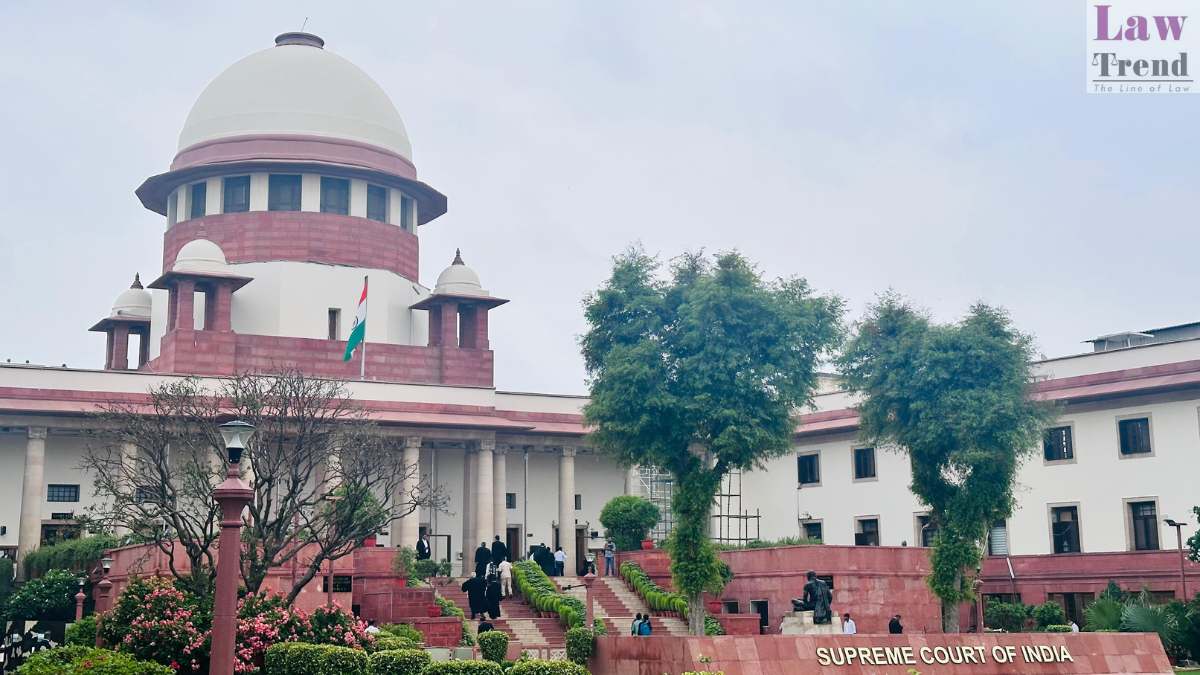
The Supreme Court on Friday took a firm stance against the use of temple funds to bolster financially distressed cooperative banks, making it clear that money belonging to a temple deity must be protected and cannot be treated as a lifeline for banks struggling to survive.
A bench led by Chief Justice Surya Kant, sitting with Justice Joymalya Bagchi, was hearing appeals filed by Mananthawady Co-operative Urban Society Ltd and Thirunelly Service Cooperative Bank Ltd challenging a Kerala High Court order directing cooperative banks to return the deposits belonging to Thirunelly Temple Devaswom.
You want to use the temple money to save the bank? the CJI asked, questioning why the funds should remain in banks that are “breathing with great difficulty” when they could instead be placed in a healthy nationalised bank offering better returns.
The bench emphasised that temple funds are the property of the deity and must be safeguarded and utilised strictly for the temple’s benefit. The court underlined that such funds cannot become a “source of income or survival” for cooperative banks.
The Kerala High Court had ordered five cooperative banks to close the Devaswom’s fixed deposits and refund the entire sum within two months, after repeated refusals to release the matured deposits. Those instructed to return the funds include Thirunelly Service Cooperative Bank Ltd, Susheela Gopalan Smaraka Vanitha Cooperative Society Ltd, Mananthawady Cooperative Rural Society Ltd, Mananthawady Co-operative Urban Society Ltd, and Wayanad Temple Employees Cooperative Society Ltd.
Unimpressed by the argument that the high court’s timeline caused hardship, the Supreme Court said that credibility must be earned.
If you are unable to attract the customers and deposits, that is your problem, the bench remarked while refusing to interfere with the order.
However, the court granted liberty to the banks to approach the Kerala High Court seeking more time to comply.
The dispute began after Thirunelly Devaswom approached the court when multiple cooperative banks allegedly refused to return its fixed deposits despite repeated requests. The Supreme Court’s decision effectively upholds the Kerala High Court’s directive, reinforcing that temple money cannot be diverted to sustain unstable banking institutions.