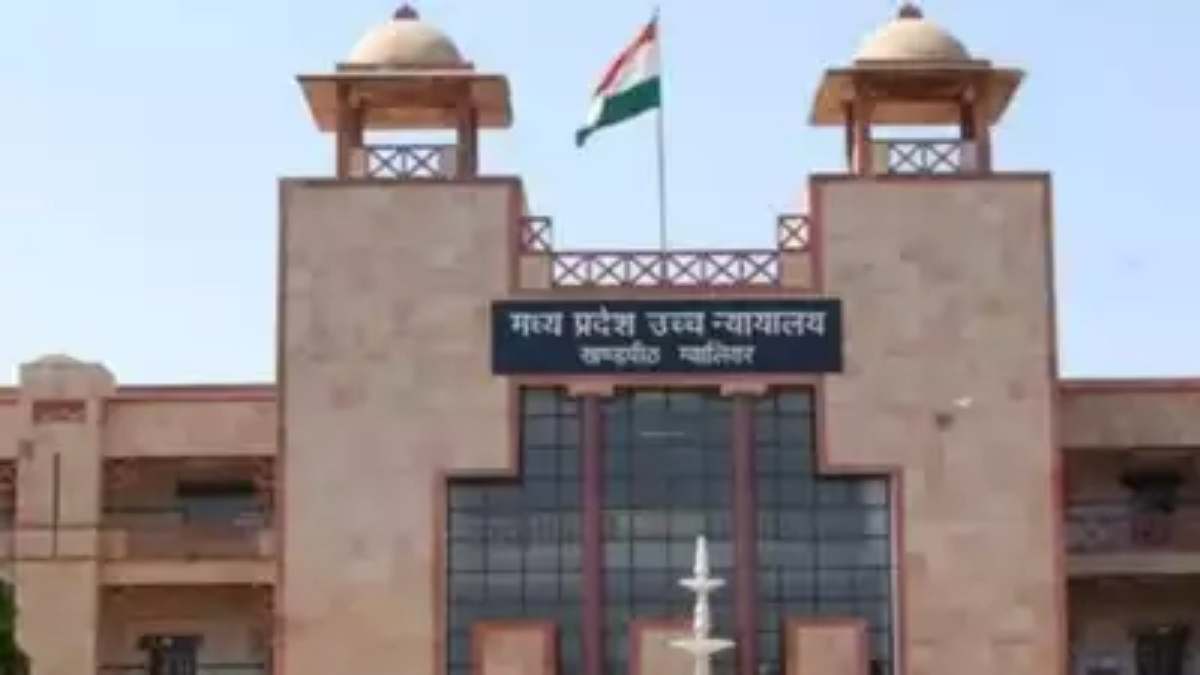
The High Court of Madhya Pradesh at Gwalior has ruled that an employee is entitled to full salary and consequential benefits for the period of suspension if the suspension culminates in complete exoneration in both criminal and departmental proceedings. Justice Anand Singh Bahrawat quashed a government order that denied salary on the principle of “no work, no pay,” ruling that when a criminal prosecution is initiated at the behest of the department itself and results in acquittal, the denial of salary is legally unsustainable.
Background of the Case
The petitioner, Govind Prasad Sharma, was appointed as an Assistant Grade-III. While posted at Government Boys Higher Secondary School, Ganjbasoda, he was suspended on June 28, 1997. The suspension was based on a criminal case (Criminal Case No. 291/96) registered against him for the alleged misappropriation of scholarship money, which was filed at the behest of the school’s Principal.
During his suspension, Sharma was attached to the office of the Block Education Officer, Ganjbasoda. After more than ten years, upon his representation, the suspension was revoked on January 18, 2008. Subsequently, the petitioner was acquitted in the criminal case by the Judicial Magistrate First Class (J.M.F.C.) on March 11, 2011. A parallel departmental proceeding initiated on the same set of charges was also dropped by the authorities on February 25, 2014, without imposing any penalty.
Despite his acquittal and exoneration, the State authorities treated his suspension period (from June 28, 1997, to February 13, 2008) on the principle of “no work, no pay” and denied him his full salary via an order dated February 25, 2014. Aggrieved by this denial, the petitioner approached the High Court.
Arguments of the Parties
Counsel for the petitioner argued that the denial of salary was contrary to the provisions of Fundamental Rule 54-B(3) and (4). It was contended that since the disciplinary proceedings were dropped by the respondents without any penalty and the petitioner was acquitted in the criminal case, he was entitled to his full salary. The petitioner relied on the judgments in Kanhaiya Lal Parmar v. State of M.P. & Others and Y.S. Sachan v. State of M.P. & Others.
Conversely, the Government Advocate representing the State argued that the petitioner had been rightfully suspended due to the pending criminal case. The State defended the impugned order, asserting that as a consequence of the suspension, the petitioner was not entitled to salary for that period based on the established principle of “no work, no pay.”
Court’s Analysis
The Court meticulously examined the distinction between an employee getting involved in a criminal case as an independent citizen versus a prosecution initiated by the employer. Justice Bahrawat drew assistance from the Supreme Court decisions in Ranchhodji Chaturji Thakore vs. Superintendent Engineer (1996) and Union of India and others vs. Jaipal Singh (2004).
Relying on Jaipal Singh, the Court observed that “if prosecution, which ultimately resulted in acquittal of the person concerned was at the behest of or by the department itself, perhaps different considerations may arise.” Meaning thereby that if the employer initiates the prosecution, the employee may claim pecuniary benefits for the suspension period.
The Court further noted the precedent set by the coordinate bench in Y.S. Sachan, which held that even if a minor penalty is imposed, depriving an employee of their salary for the suspension period is unjustified as per Government of India circulars. Applying this to the present case, the Court observed:
“In the present case in hand as department has initiated the inquiry but it was not concluded and upon acquittal of the petitioner in criminal case the departmental inquiry has also been dropped set aside so petitioner is on better footing as the case of Y.S. Sachan (supra) as the minor or major penalty has not been imposed upon petitioner.”
The Court rejected the State’s reliance on “no work, no pay,” stating:
“The suspension having culminated in the complete exoneration of the petitioner, both in the criminal as well as departmental proceedings, the entire suspension period is liable to be treated as duty.”
Concluding the analysis, Justice Bahrawat recorded:
“As the disciplinary authority has not imposed any punishment upon the petitioner by way of departmental proceedings and the petitioner has also been acquitted in the criminal case registered against him, therefore, the suspension against him is wholly unjustified.”
Decision
The High Court allowed the writ petition and quashed the impugned order dated February 25, 2014, to the extent that it denied the petitioner full salary for the suspension period.
The Court directed the State respondents to treat the period from June 28, 1997, to February 13, 2008, as “duty period.” The State has been ordered to pay the difference in salary and allowances to the petitioner, along with all consequential benefits and arrears, within three months from the date of receipt of the certified copy of the order. The Court further stipulated that if the respondents fail to make the payment within the three-month timeframe, the petitioner shall be entitled to interest at the rate of 6% per annum from the date of entitlement until actual payment.
Case Details:
- Case Title: Govind Prasad Sharma vs. The State of Madhya Pradesh and Others
- Case Number: Writ Petition No. 559 of 2015
- Coram: Justice Anand Singh Bahrawat