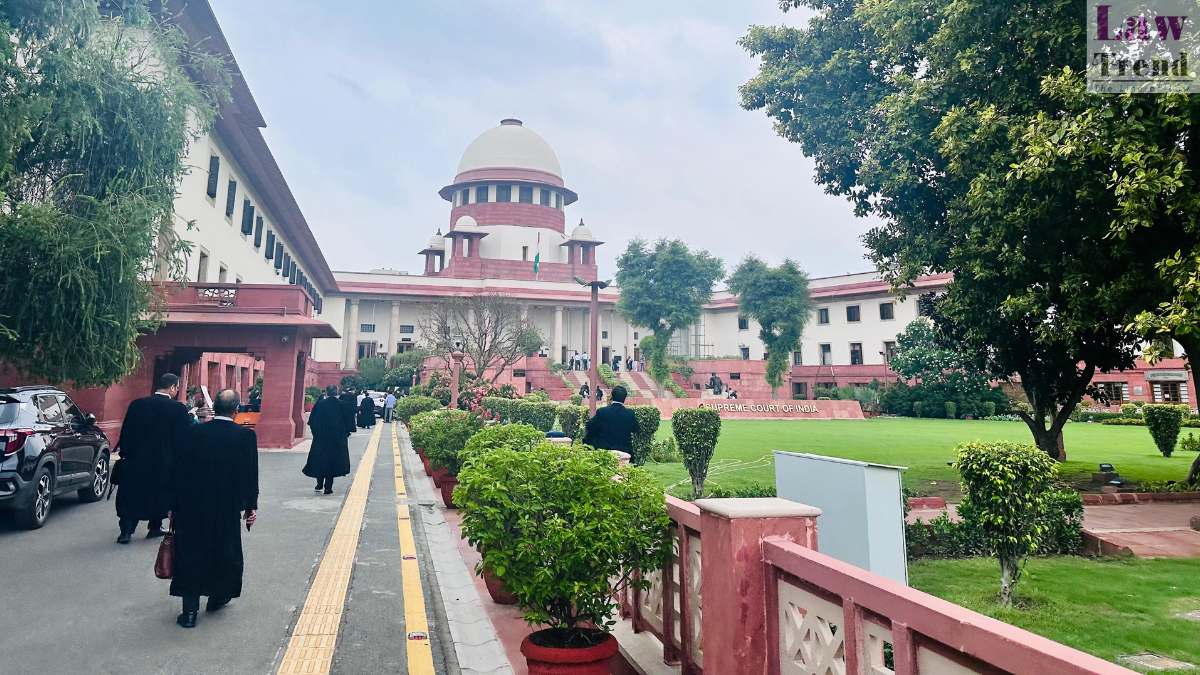
The Supreme Court on Monday agreed to examine a fresh plea filed by individuals whose names were removed from electoral rolls during the ongoing Special Intensive Revision (SIR) exercise in West Bengal. A bench led by Chief Justice of India Surya Kant and Justice Joymalya Bagchi said it would hear the matter on Tuesday after senior advocate Maneka Guruswamy raised concerns over the deletion of voters who had previously participated in elections.
During the brief hearing, senior advocate Maneka Guruswamy submitted that the petition concerns the removal of existing voters from the electoral rolls despite their earlier participation in elections. She argued that documents submitted by these individuals were not being accepted during the verification process.
“These are electors. They had voted earlier and now their documents have not been taken,” Guruswamy told the bench.
Responding to the submissions, Chief Justice Surya Kant noted the limits of the court’s role in reviewing the decisions taken by judicial officers handling the revision exercise.
“But in the scheme of things, we cannot sit on appeal over the decisions of the judicial officers,” the CJI observed.
When the senior counsel maintained that appeals were maintainable in such cases, the bench agreed to list the matter for hearing on Tuesday.
The plea arises amid the large-scale Special Intensive Revision of electoral rolls being conducted in West Bengal. Earlier, on February 24, the Supreme Court permitted the deployment of West Bengal civil judges along with around 250 district judges to deal with approximately 80 lakh claims and objections filed by individuals whose names face deletion from the rolls.
The court also allowed judicial officers from Jharkhand and Odisha to be requisitioned to assist in the exercise, considering the scale of the verification process.
While passing those directions, the bench took note of a letter dated February 22 from the Chief Justice of the Calcutta High Court, Justice Sujoy Paul. The letter indicated that even with 250 district judges assigned to the task, it would take nearly 80 days to process all claims and objections arising from the revision exercise.
Many of these objections stem from what authorities describe as “logical discrepancies” in the electoral records. These include mismatches between a voter’s details and those of their parents listed in the 2002 voter list, such as differences in names or unusual age gaps where the difference between a voter and their parent is less than 15 years or more than 50 years.
The Supreme Court had also taken note that even if each judicial officer disposed of around 250 claims or objections per day, the entire exercise would still take about 80 days to complete. The deadline set for the West Bengal SIR process was February 28.
Earlier, on February 9, the apex court had made it clear that it would not allow any obstruction to the completion of the revision process. The bench also directed the West Bengal Director General of Police to file an affidavit regarding allegations by the Election Commission that some individuals had burnt official notices issued during the exercise.