

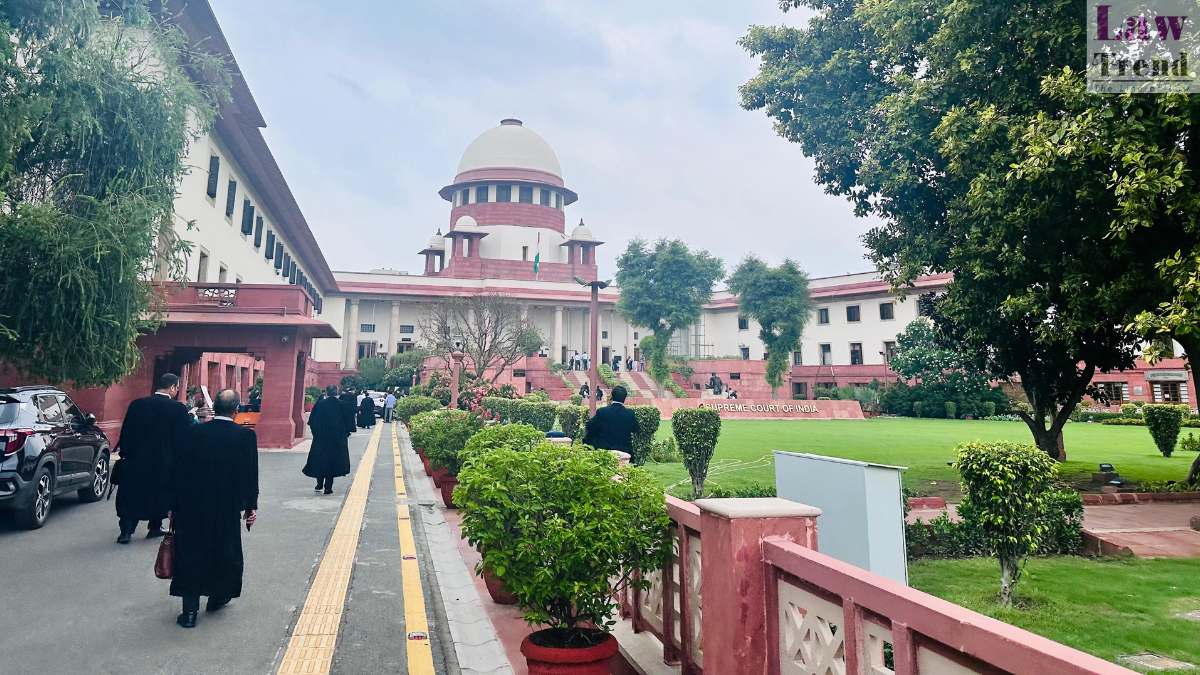
The Supreme Court of India on Tuesday agreed to examine a significant legal challenge to the constitutional validity of the National Investigation Agency (NIA) Act, 2008. Terming the questions raised as being of “vital importance,” a bench comprising Justices Vikram Nath and Sandeep Mehta issued notices to the Union Government and the National Investigation Agency (NIA) seeking their formal responses.
The petition seeks to strike down the 2008 Act, which established the NIA as the country’s premier counter-terrorism agency following the 26/11 Mumbai attacks. The challenge primarily rests on the argument that the Centre exceeded its legislative powers by creating a federal agency with police powers, as ‘Police’ is a subject that falls under the State List of the Indian Constitution.
During the proceedings, Senior Advocate Siddharth Dave, representing the petitioner, argued that the Act is “violative” of Article 14 (Equality before law) and lacks legislative competence. He specifically pointed toward the structural authority of the agency, questioning how an entity can function with police powers when the Constitution reserves those powers for individual states.
A central point of contention raised during the hearing was the agency’s power to register First Information Reports (FIRs) and take over cases without state consent. Referring to Section 3 of the Act, which governs the constitution of the NIA, the bench pointedly asked Additional Solicitor General Aishwarya Bhati:
“Without being a police station, can the NIA register an FIR?”
The Court also highlighted Section 6(5) of the Act, which allows the Central Government to suo motu (on its own motion) direct the NIA to investigate any scheduled offence if it deems it necessary. The bench directed the law officer to assist the court specifically on the legality of this suo motu registration of FIRs.
The Supreme Court has granted the respondents four weeks to file their counter-affidavits. Following this, the petitioner will have two weeks to file a rejoinder.
The matter has been scheduled for its next hearing on July 14. The outcome of this case could have far-reaching implications for the federal structure of Indian law enforcement and the Centre’s role in investigating internal security matters.


