

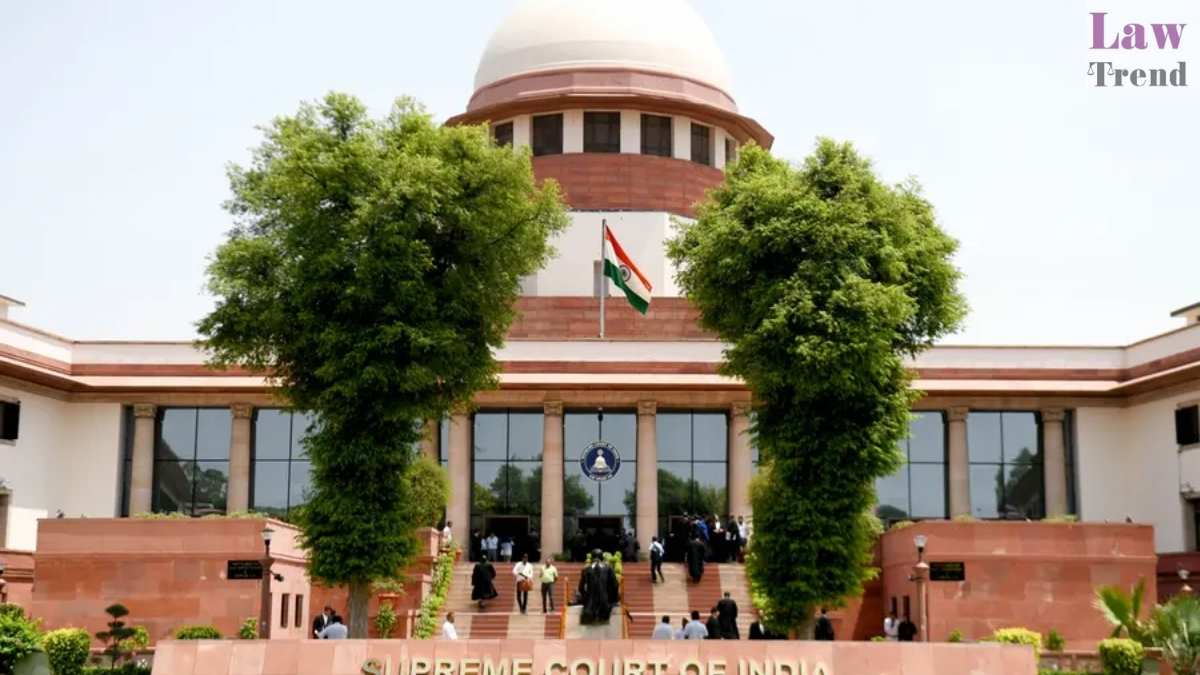
The Supreme Court has disposed of a public interest litigation filed by journalist Sucheta Dalal over unclaimed money lying with banks and financial institutions. The Court held that the principal concerns raised in the petition have been substantially addressed by measures the regulators and the Centre took while the case was pending, so no further mandatory directions are needed.
A Bench of Justice Vikram Nath and Justice R. Mahadevan said that keeping the writ petition pending to monitor the reforms would serve no useful purpose. It noted that any specific grievance about unclaimed financial assets can be taken to the competent authority.
Background: Unclaimed Funds Worth Thousands of Crores
The petitioner, Managing Editor of Moneylife magazine, filed the petition under Article 32. It concerned three statutory funds that receive unclaimed money: the Depositor Education and Awareness Fund (DEAF), the Investor Education and Protection Fund (IEPF) and the Senior Citizens’ Welfare Fund (SCWF).
According to the petition, DEAF held about ₹39,264.25 crore as on March 31, 2021, up from ₹18,381 crore in 2019. The amount with IEPF had reached about ₹4,100 crore by March 2020. The petitioner sought a centralised database of unclaimed deposits, insurance proceeds and post-office deposits, and simpler procedures for nominees and legal heirs. She alleged that banks often insisted on succession certificates or probate even where entitlement was undisputed.
Arguments and Measures Placed on Record
Advocate Prashant Bhushan, appearing for the petitioner, submitted that the measures taken were still inadequate. He argued that there was still no single platform for tracing assets across institutions, and that unclaimed insurance, post-office and provident fund amounts had not been adequately addressed.
Additional Solicitor General N. Venkataraman appeared for the Union of India, through the Department of Financial Services, and for the Ministry of Corporate Affairs. Senior Counsel Dama Seshadri Naidu represented the RBI, and Advocate Amarjit Singh Bedi represented SEBI. Through their affidavits, the respondents placed several developments on record:
- RBI: launched the UDGAM portal in August 2023, which by September 2023 covered 30 banks holding about 90% of DEAF’s unclaimed deposits by value.
- IEPF Authority: introduced an integrated claims portal in August 2025.
- SEBI: reformed the nomination and transmission rules, and launched the MITRA platform for tracing unclaimed mutual fund folios.
- Banking Laws (Amendment) Act, 2025: now allows up to four nominees.
- RBI guidelines of November 28, 2025: require death claims to be settled within fifteen days of receiving complete documents.
- “Aapki Poonji, Aapka Adhikar” campaign: had helped return about ₹6,453 crore to rightful claimants as on April 18, 2026.
Court’s Findings
The Court said the issues were of considerable public importance. It held that the right to property continues to enjoy constitutional protection under Article 300A, and that “The transfer of unclaimed financial assets to statutory funds does not, by itself, extinguish the rights of persons lawfully entitled thereto.”
The Bench added: “The existence of a statutory right to reclaim money would be of little practical value if the persons entitled thereto are unable to trace the assets or are confronted with unnecessarily cumbersome procedures for establishing their claims.”
The Court declined to order another centralised mechanism for bank deposits, saying UDGAM substantially meets the demand. It also refused to mandate a single portal for all financial assets. It reasoned that banking, securities and insurance operate under distinct frameworks, and that such a platform involves questions of regulatory policy, technical feasibility and administrative coordination.
The Court issued no directions on SCWF because the Ministry of Social Justice and Empowerment, which administers the fund, had not been made a party. It gave the petitioner liberty to approach that Ministry. The Court also declined to order a general investigation into unclaimed deposits of government bodies and charitable institutions, or a general direction to penalise banks, saying there was no material establishing specific illegality. It left it open to RBI to examine any defaults.
Explaining why it would not keep supervising the matter, the Bench observed: “Where substantial corrective measures have been undertaken and effective mechanisms established, the possibility of further administrative improvements cannot, by itself, justify continuing judicial supervision.”
Outcome
The Court took on record the statements and assurances in the respondents’ affidavits. It said it expected the authorities to keep improving the accessibility, efficiency and transparency of the recovery mechanisms. The writ petition and all pending applications were disposed of.
The Bench also recorded its appreciation for the petitioner, observing that “The concerns raised were genuine and the pursuit of appropriate institutional measures to address them reflects a responsible exercise of public interest litigation.”
Case Title: Sucheta Dalal v. Union of India & Ors.
Case No.: Writ Petition (Civil) No. 185 of 2022
Bench: Justice Vikram Nath and Justice R. Mahadevan
Date: November 27, 2026
SEO
Meta description: Supreme Court disposes of Sucheta Dalal’s PIL on unclaimed deposits, holding that reforms such as UDGAM, MITRA and simplified claim rules substantially address the concerns raised.
URL slug: supreme-court-sucheta-dalal-pil-unclaimed-deposits-disposed
Tags: Supreme Court, Unclaimed Deposits, DEAF, IEPF, UDGAM, SEBI, RBI, Article 300A
Category: Supreme Court News / Banking and Finance


