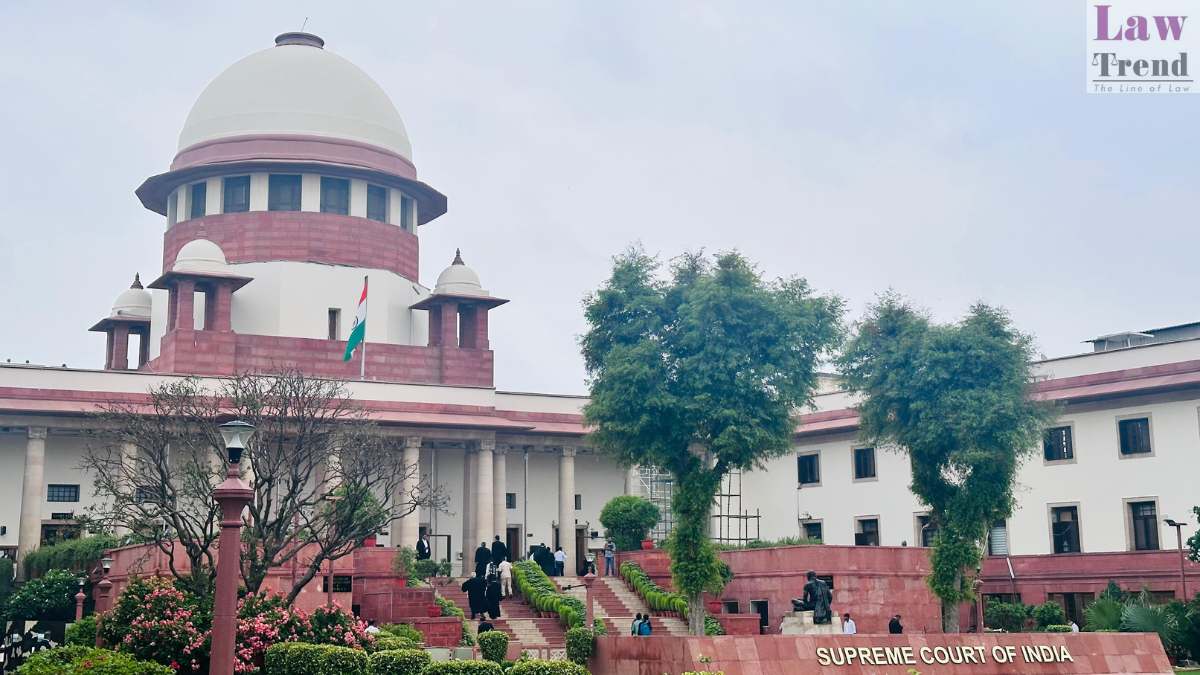
The Supreme Court on Friday came down sharply on a petition that sought to reopen its 2014 judgment granting minority educational institutions exemption from the Right of Children to Free and Compulsory Education Act. The bench made it clear that filing such pleas strikes at the very foundation of the judicial system.
A bench of Justices BV Nagarathna and R Mahadevan dismissed the plea and imposed a cost of ₹1 lakh on the petitioner, United Voice for Education Forum.
The court said the penalty should serve as a warning.
“Let this be a message to others,” the bench remarked.
During the hearing, the judges expressed deep displeasure at the very nature of the petition.
“You cannot do this to the Supreme Court. We are enraged. This is against the entire system of judiciary in this country if you start filing such cases. You don’t know the seriousness of your case. We are restraining ourselves to 1 lakh cost,” the bench told the petitioner’s counsel.
The court also rebuked the advocate for advising the petitioner to challenge a final judgment of the apex court by filing a writ petition under Article 32.
“Don’t bring down the judiciary in this country by filing such cases. What is happening here? Advocates are giving such advice? We will have to penalise the advocates,” the court said.
Calling it a “grossest abuse”, the bench reminded the petitioner that Article 32 cannot be invoked to challenge a Supreme Court judgment.
“You are law-knowing citizens, professionals, and you file a writ petition challenging the judgment of this Court under Article 32? Grossest abuse! We are restraining ourselves. We are not issuing contempt. You want to crumble the judiciary of this country,” the bench remarked.
The NGO had sought directions declaring that the exemption granted to minority educational institutions under the Right to Education Act was unconstitutional, arguing that it provided them absolute immunity from complying with RTE obligations.
In its 2014 judgment, the Supreme Court held that the RTE Act does not apply to minority schools, noting that Article 30(1) protects the rights of religious and linguistic minorities to establish and administer educational institutions.
The bench on Friday refused to entertain any attempt to revisit that settled position.