

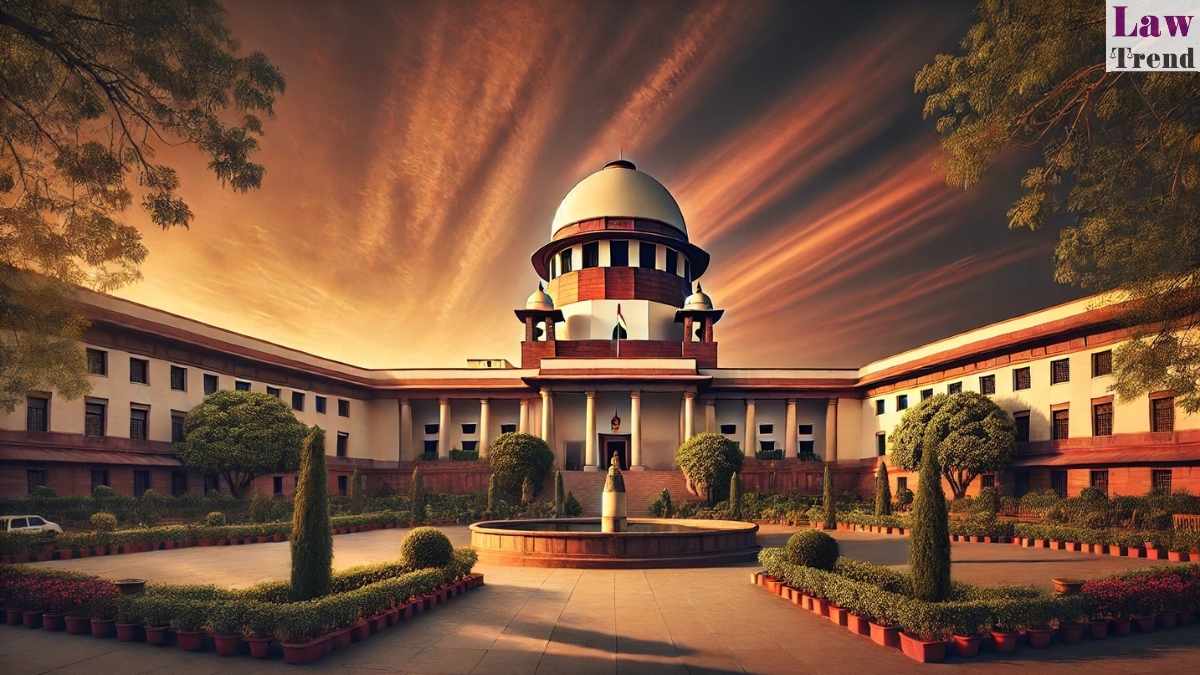
The Supreme Court on Monday pulled up the Union of India for contributing to judicial backlog through “unnecessary litigation,” imposing a cost of ₹25,000 on the Centre for challenging a Punjab and Haryana High Court order that had set aside the dismissal of a Central Industrial Security Force (CISF) official.
A bench comprising Justices B.V. Nagarathna and Ujjal Bhuyan upheld the High Court’s ruling, which found the official’s punishment disproportionate to the alleged misconduct. In addition to dismissing the Centre’s challenge, the apex court granted the official back wages.
During the proceedings, Justice Nagarathna expressed strong displeasure over the government’s decision to appeal the lower court’s well-reasoned order.
“We fail to understand why the Union of India has challenged the order of the High Court division bench. We hear pendency, pendency. Who is the biggest litigant? Cost should be imposed,” Justice Nagarathna remarked.
The Court questioned the lack of internal review before filing such appeals, suggesting that the government should accept High Court reliefs when punishments are clearly disproportionate. Justice Nagarathna further referenced her recent address at a Supreme Court Bar Association (SCBA) conference, where she highlighted the government’s role in the mounting case backlog.
“It was not just to go to some resort and come back. We made preparations, we did homework. We spoke. Not to forget,” she added, emphasizing that the court takes the issue of government-induced pendency seriously.
The CISF official originally faced two primary charges that led to his dismissal:
- Unauthorized Absence: A period of 11 days.
- Indiscipline: Allegedly “conniving” with a woman—the daughter of a fellow CISF constable—to flee Mumbai so she could marry the official’s younger brother.
The Punjab and Haryana High Court had previously scrutinized these charges and found them wanting. Regarding the 11-day absence, the High Court noted the official was actually on sanctioned medical leave.
On the second charge involving the elopement, the High Court found that the woman herself had testified during disciplinary proceedings, stating she had no grievance against the official. Furthermore, the fact that the woman did indeed marry the official’s brother was undisputed.
The High Court concluded that “there was no misconduct on the part of the respondent for which he could be removed from service.”
The Supreme Court concurred with the High Court’s assessment, noting that the official had to deal with a complex family situation involving an elopement while also managing his own health. By dismissing the Centre’s petition and imposing financial costs, the bench sent a clear signal against the habit of filing routine appeals in cases where relief has already been justly granted by High Courts.




