

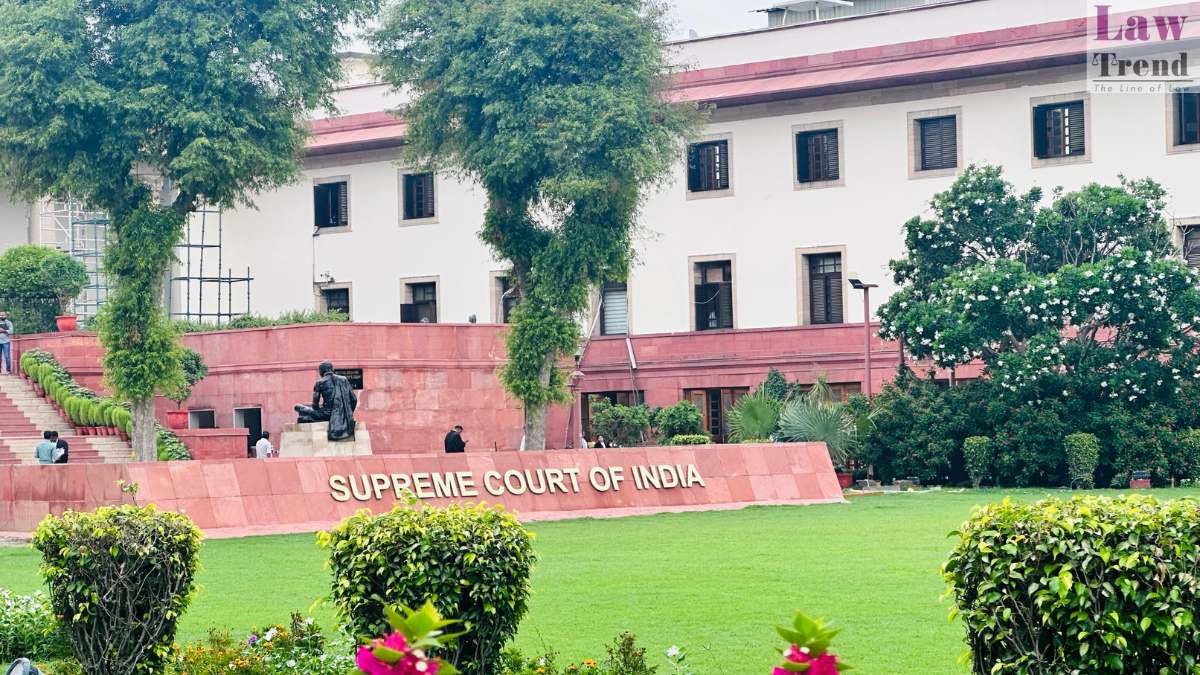
The Supreme Court has asked the central and state governments to respond to a petition seeking the confiscation of movable and immovable properties belonging to individuals accused of leaking examination question papers and their family members.
A bench comprising Justices P.S. Narasimha and Alok Aradhe issued notices to the Union of India and all states on Tuesday. The bench set September 25 as the date for the next hearing in the matter.
The public interest litigation, submitted by advocate Ashwini Kumar Upadhyay through advocate Ashwani Kumar Dubey, asks authorities to evaluate the assets of paper leak perpetrators and their family members. It urges the court to order the application of key financial and anti-corruption statutes, including the Prevention of Corruption Act, the Money Laundering Act, the Benami Property Act, and the Black Money Act.
Strict Penalties and Legislative Context
To prevent future instances of paper leaks, the plea requests a judicial declaration that sentences handed down for such offenses be served consecutively rather than concurrently. Alternatively, the petitioner requested that the Law Commission of India be tasked with studying international practices and submitting a comprehensive report on paper leaks within three months.
During the hearing, Upadhyay informed the court that he would not press his request for mandatory time-bound investigations and trials. He cited the recent passage of the Public Examinations (Prevention of Unfair Means) Amendment Bill, 2026, which introduced stricter provisions to combat examination malpractice.
Impact on Students
The petition contends that repeated failures by state and central authorities to prevent, investigate, and prosecute paper leak cases breach students’ fundamental constitutional rights under Articles 14, 16, 19, and 21.
While the Public Examinations (Prevention of Unfair Means) Act was enacted in June 2024, the petition asserts that the law retains significant gaps, particularly regarding the absence of fixed timelines for completing investigations and court proceedings.
The submission highlighted the broader human cost of examination leaks, noting that recurring disruptions cause severe psychological distress to candidates, destroy educational and career prospects, leave families burdened with unpaid loans, and contribute to student suicides.




