

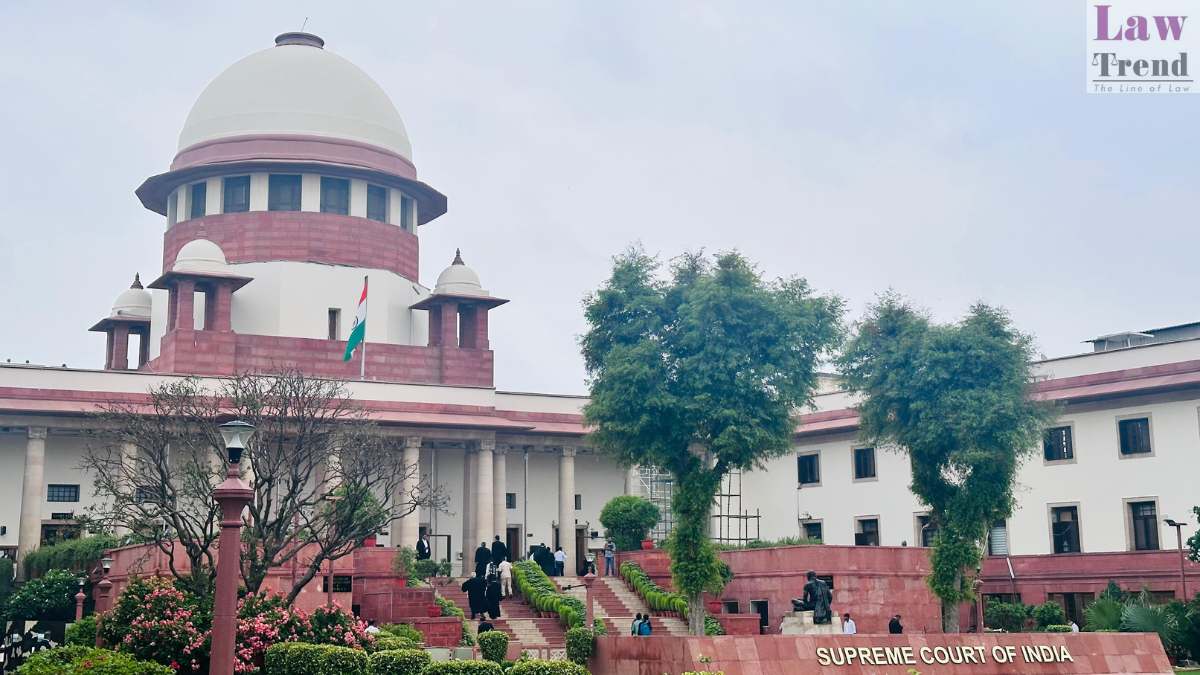
The Supreme Court has set aside a Rajasthan High Court order that required the wife of a software engineer accused of rape on the alleged false promise of marriage to remain in India as a condition for his travel abroad for employment.
A bench of Justices Sanjay Kumar and Alok Aradhe passed the order after taking on record the engineer’s undertaking that he would attend every hearing through video conferencing and appear physically before the trial court whenever directed. The top court made absolute its earlier interim order dated August 8, 2025, which had stayed the high court’s condition and permitted foreign travel subject to the deposit of Rs 2 lakh as surety.
The controversy arose after the trial court in Ajmer dismissed the accused’s request to travel overseas for a job. While the Rajasthan High Court later allowed the travel, it imposed a condition that the man’s wife must remain in India during his absence. The wife is neither an accused nor a party to the criminal case.
Appearing for the engineer, advocate Ashwani Dubey told the Supreme Court that the condition was imposed without hearing or impleading the wife, who was employed in the United States and was not even in India when the order was passed. The plea challenged the direction as procedurally improper and violative of Article 21 of the Constitution, arguing that it affected the fundamental rights of a person who had no connection with the criminal proceedings.
In its order, the bench noted that the appellant had complied with the August 8 direction and reiterated his assurance to cooperate with the trial. The court recorded that he would attend all hearings in Sessions Case No. 12 of 2024 before the Additional Sessions Judge (Women Atrocities Court), Ajmer, via video conferencing and would appear in person whenever required. On that basis, the court found no reason to alter its earlier order and set aside the high court’s condition tied to the wife’s presence in India.
The Supreme Court was also told that the accused intended to travel abroad for a specific period on a work visa, that he remained an Indian citizen holding an Indian passport, and that there was no risk of absconding. The plea maintained that the accused would be under the control of the Indian consulate while abroad and that the trial would not be delayed.
The criminal case stems from a complaint lodged at Ajmer’s Christianganj police station, where a woman alleged that she met the accused on a matrimonial website and remained in a close relationship with him for four years on a promise of marriage. The offence is registered under Section 69 of the Bharatiya Nyaya Sanhita, which addresses sexual intercourse by deceitful means, including false promises related to marriage.
The accused had earlier secured anticipatory bail and then sought permission to travel abroad for employment. With the Supreme Court’s ruling, the condition requiring his wife to stay in India has been removed, while safeguards to ensure his participation in the trial remain in place.




