

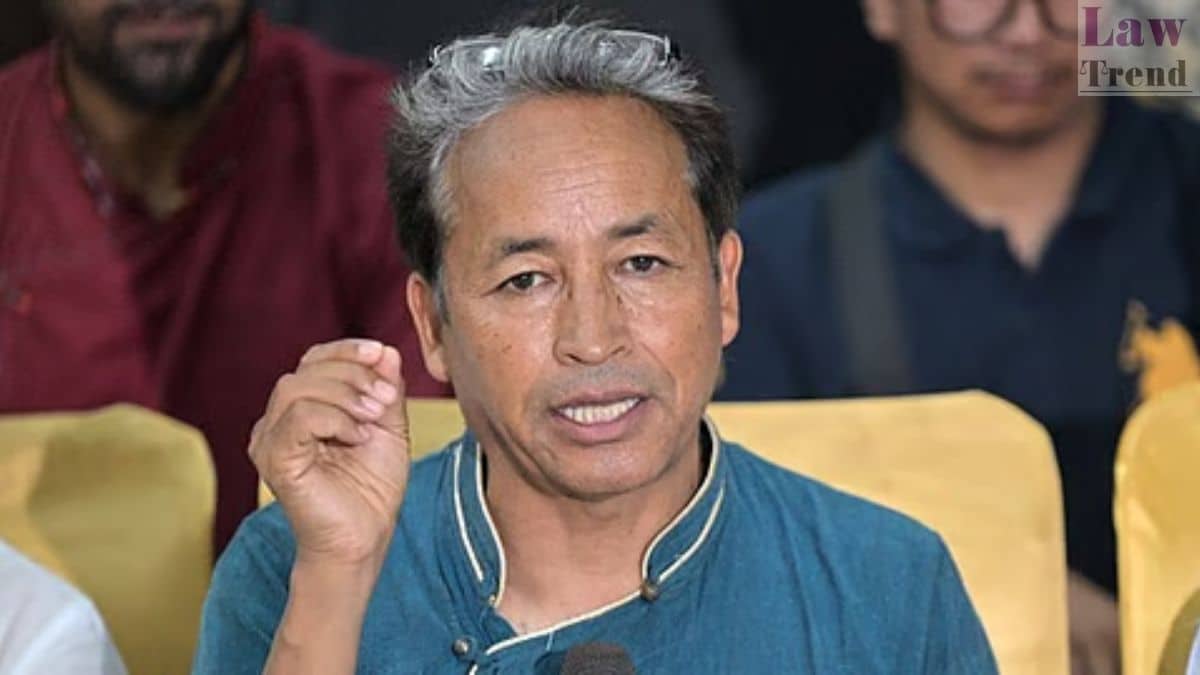
The Supreme Court on Thursday heard a petition filed by Gitanjali J Angmo, wife of jailed climate activist Sonam Wangchuk, challenging his preventive detention under the National Security Act (NSA). The hearing remained inconclusive and will continue on January 12.
Angmo, represented by senior advocate Kapil Sibal, contended that Wangchuk’s detention was not only unjust but also procedurally flawed. She told the top court that the true tenor of her husband’s speech was to discourage violence and not incite it, contrary to the allegations made by the authorities.
Sibal argued that Wangchuk’s September 24, 2025 speech—delivered while breaking his hunger strike—was a clear call for non-violence. Playing a video of the speech in court, Sibal quoted Wangchuk as saying:
“I said I cannot accept this violence, and we should stop this violence, and I am appealing to you to stop this violence.”
Drawing a historical parallel, Sibal told the bench of Justices Aravind Kumar and Prasanna B Varale that Wangchuk’s appeal resembled Mahatma Gandhi’s condemnation of violence during the Chauri Chaura incident.
Sibal alleged that the detaining authority relied on four videos dated September 10, 11, and two from September 24 to justify the detention. However, these videos were not provided to Wangchuk along with the grounds of detention, which is a constitutional requirement under Article 22. He further pointed out that while a pen drive with certain documents was supplied on September 29, 2025, it did not include the four critical videos.
“The grounds of detention were supplied after a delay of 28 days,” Sibal said, asserting that such delay and selective disclosure amounted to a denial of Wangchuk’s right to make an effective representation against his detention.
In response, the Leh District Magistrate had earlier submitted an affidavit denying any illegality in Wangchuk’s detention. The administration maintained that the grounds of detention and the supporting material had been duly communicated to Wangchuk.
The government has alleged that Wangchuk engaged in activities prejudicial to the security of the state, maintenance of public order, and essential services—warranting his detention under the NSA.
Wangchuk was detained on September 26, 2025, just two days after violent protests broke out in Ladakh, demanding statehood and inclusion under the Sixth Schedule of the Constitution. The unrest led to four deaths and injuries to 90 others. The administration has held Wangchuk responsible for inciting the violence.
Angmo has rejected this narrative in her plea, stating that the events of violence cannot be linked to her husband’s actions or statements. She told the court that Wangchuk had publicly condemned the violence and called it the “saddest day of his life,” warning that such unrest would derail the region’s peaceful struggle.
The NSA allows the central and state governments to detain individuals to prevent them from acting in any manner prejudicial to the defence of India or the maintenance of public order. The maximum period of detention can extend up to 12 months.
Article 22 of the Constitution mandates that any person detained under preventive detention laws must be informed of the grounds of detention and be given the earliest opportunity to make a representation.
Sibal argued that failure to provide the full material relied upon for the detention vitiates the entire process, making the order unconstitutional.
The Supreme Court will resume the hearing on January 12.




