

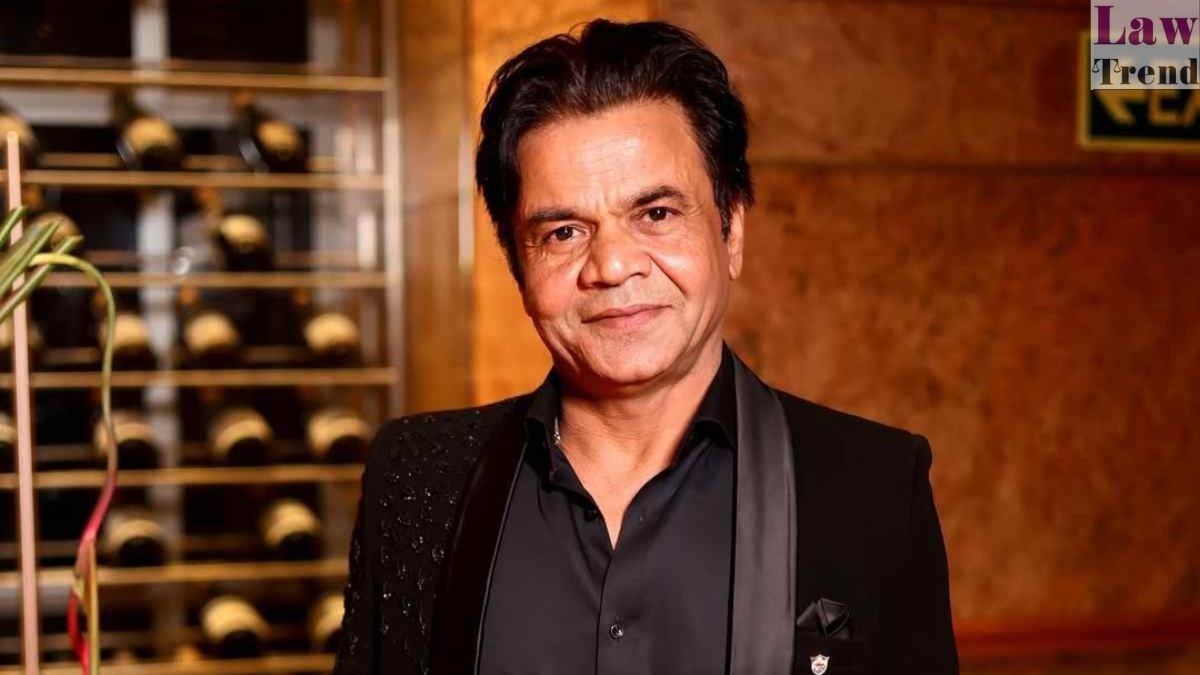
The Supreme Court on Tuesday granted actor Rajpal Yadav a final two-week window to furnish a concrete proposal for clearing his outstanding financial liabilities to a private firm, directing him to deposit Rs 2 crore with the court registry in the interim.
A three-judge bench comprising Chief Justice Surya Kant, Justice Joymalya Bagchi, and Justice V. Mohana extended Yadav’s protection from surrendering until October 5, when the matter will be taken up for its next hearing. While granting the relief, the bench observed that the actor’s past conduct did not inspire confidence because earlier court directions had gone unheeded, remarking that while he is skilled at theatrical performances, court proceedings require genuine compliance.
Submissions Before the Apex Court
Appearing on behalf of Yadav, senior advocate P. S. Patwalia requested two weeks to formulate a firm settlement blueprint and confirmed that the actor would deposit Rs 2 crore to establish his bona fides. The counsel stated that Yadav had already spent four and a half months in custody and was relying on assistance from acquaintances within the entertainment industry to help resolve his financial liabilities.
Senior advocate Ajit Sinha, representing the complainant firm M/s Murali Projects Pvt Ltd, told the court that the company is strictly focused on recovering its dues, highlighting that the actor had consistently failed to honour his financial commitments.
The order follows an earlier directive on September 8, when the top court issued notice on Yadav’s petition and granted him temporary exemption from surrender conditional upon depositing Rs 5 crore with the registry.
Origins of the Financial Dispute
The underlying litigation traces back to 2010, when Yadav secured financial assistance of Rs 5 crore from Murali Projects for a film venture. According to the complainant, a subsequent agreement executed in 2012 stipulated that Yadav, his wife Radha Rajpal Yadav, and their company would reimburse approximately Rs 11 crore, an amount inclusive of interest.
In 2013, Yadav issued seven cheques of Rs 1.05 crore each toward settling the liability. All seven instruments were subsequently dishonoured upon presentation, prompting the lender to initiate criminal proceedings under cheque-bounce provisions.
A magisterial court convicted Yadav in April 2018, awarding a six-month prison term. That verdict was subsequently upheld by a sessions court in 2019.
High Court Ruling and Penalties
On July 10, the Delhi High Court dismissed revision petitions filed by Yadav and his wife, declining to condone an extraordinary delay of 1,894 days—amounting to more than five years—in challenging their conviction.
In its 108-page judgment, the high court rejected Yadav’s request for release on probation and upheld the conviction, while reducing his substantive sentence from six months to three months of imprisonment. The court observed that despite extensive judicial efforts to broker an amicable resolution, Yadav had repeatedly breached his undertakings and ultimately refused to remit further funds.
The high court instructed Yadav to pay compensation exceeding Rs 1 crore in each of the seven complaints—specifically Rs 1.04 crore to the complainant and Rs 25,000 to the state per case—subject to the adjustment of approximately Rs 2 crore previously deposited by the actor.
Additionally, the high court penalised his wife, Radha Rajpal Yadav, ordering her to pay a fine of approximately Rs 5.5 lakh per complaint to the lender, with a default sentence of three months’ simple imprisonment. The high court had placed the sentence in abeyance for two months to enable the petitioners to seek appellate recourse.




