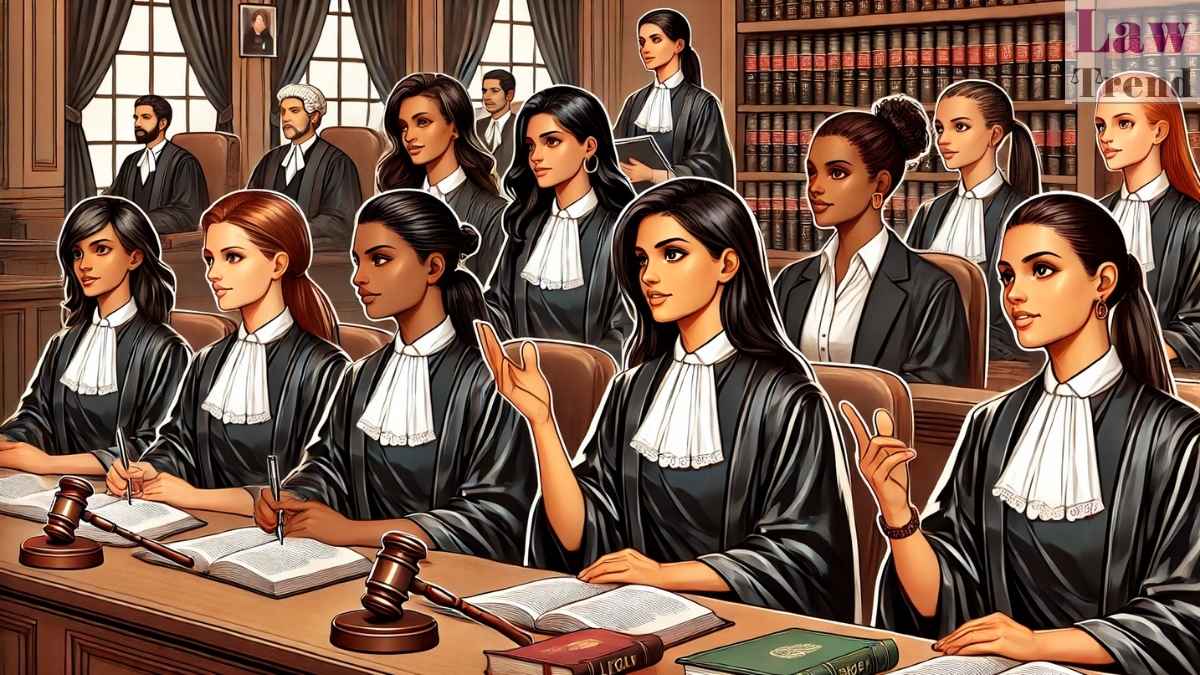
The Supreme Court on Friday directed that 30 per cent of the seats in the upcoming elections to the Punjab and Haryana Bar Council must be reserved for women advocates, taking a significant step towards gender representation in legal institutions. The court clarified that the reservation directive would apply as the election process in the state had not yet formally commenced.
A bench led by Chief Justice Surya Kant and Justice Joymalya Bagchi passed the order while hearing an application in an ongoing petition seeking broader reforms to ensure adequate representation of women in state bar councils across India.
The bench held that all state bar councils where election notifications are still pending must ensure 30 per cent representation for women — 20 per cent through direct election and an additional 10 per cent via co-option. Specifically regarding Punjab and Haryana, the bench noted that only the final voter list had been issued and no election notification had been published, making it appropriate to impose the reservation rule at this stage.
“We are satisfied that our direction in paragraph 4 of the order dated 8 December 2025, to the extent of the words ‘Punjab & Haryana’, is liable to be deleted, as the election process is yet to commence and only the voter list has been finalised,” the bench said in its order.
The court clarified that its earlier exemption of Punjab and Haryana from the mandatory reservation — on grounds that elections had commenced — no longer held.
In its earlier order dated December 8, 2025, the apex court had directed that state bar councils provide 30 per cent representation for women members. However, four states — including Andhra Pradesh and Punjab & Haryana — were initially excluded from the mandate due to ongoing election processes. Upon review, the court found that the Punjab and Haryana Bar Council elections had not formally begun and modified its stance.
The court has asked for proposals for co-option of women members to meet the 30 per cent threshold in states where elected representation falls short.
The bench also sought the assistance of Attorney General R Venkataramani and Additional Solicitor General Aishwarya Bhati on a broader submission seeking proportional increase in the number of elected members in state bar councils in view of the exponential rise in the number of advocates across states.
During the hearing, senior advocate Meenakshi Arora, appearing for the Maharashtra Bar Council, pointed out that with over 2.7 lakh advocates in the state, proportional representation would mean electing about 35 women members — 20 per cent by election and 10 per cent by co-option.
She further urged the court to consider proportional representation based on the size of membership in each state. However, the bench exercised restraint and flagged the dangers of judicial overreach.
“Any blanket order in perceived exercise of power under Article 142 will have very, very chilling effects,” Chief Justice Kant remarked, adding that such policy decisions should be left to the legislature or executive in consultation with stakeholders like the Bar Council of India.
The court has sought the Centre’s response on the larger issue of expanding elected membership in state bar councils and scheduled the matter for further hearing. The Attorney General has been requested to assist the court in the upcoming proceedings.
Senior advocates Manan Kumar Mishra, Chairman of the Bar Council of India, Shobha Gupta, and others also appeared during the hearing. The petition continues to be a vehicle for examining structural reforms in legal representation and governance of the bar.