

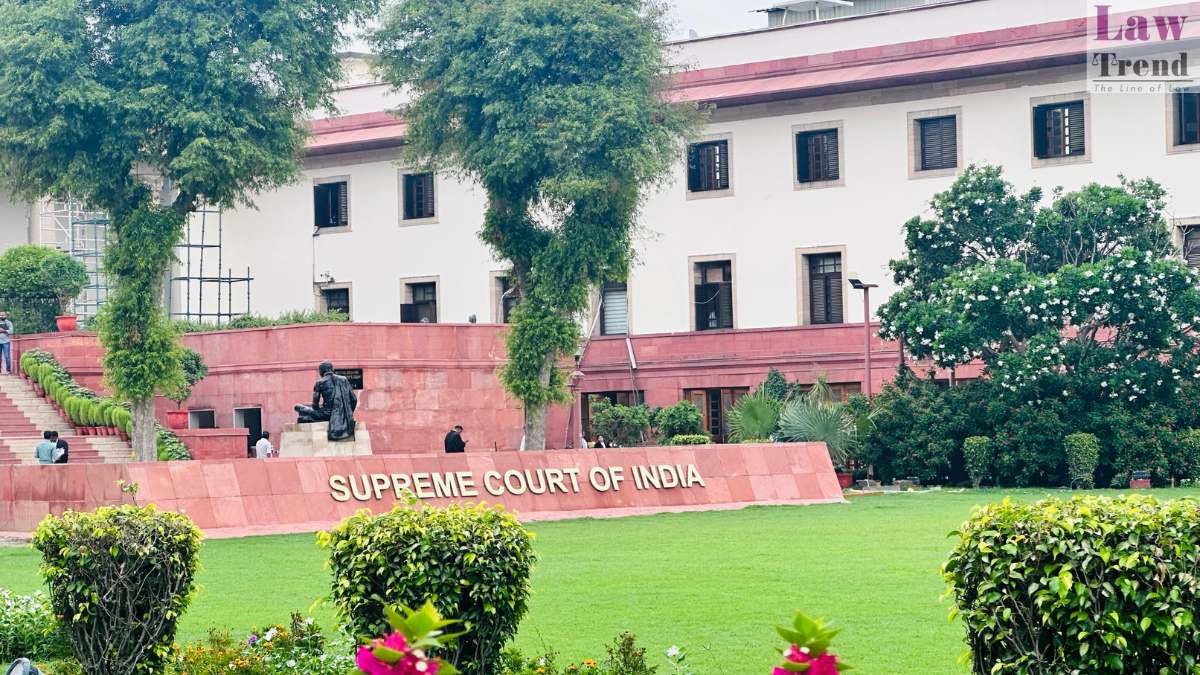
The Supreme Court on Wednesday adjourned the hearing on a plea concerning the Krishna Janmabhoomi-Shahi Idgah mosque dispute in Mathura until August 12. The postponement was granted after the court was informed that various Hindu plaintiffs are engaged in private discussions to resolve which of their individual lawsuits should be designated as the lead representative case.
A division bench consisting of Justices Sanjay Kumar and Sanjeev Sachdeva deferred the proceedings following submissions that off-the-record talks are currently underway among the plaintiffs. The apex court is reviewing a petition filed by a Hindu litigant challenging a July 18, 2025, order by the Allahabad High Court. That High Court order had designated another Hindu plaintiff, who filed suit number 17 of 2023, as the official representative of all devotees of Lord Krishna, effectively prioritizing that specific suit to be heard and decided first.
The petitioner before the Supreme Court argues that their own lawsuit had initially been treated as the lead case after all related civil suits were transferred to the High Court. They contend that the High Court erred in subsequently designating a different plaintiff as the sole representative for all devotees.
During Wednesday’s proceedings, the bench questioned advocates Vishnu Shankar Jain and PV Yogeswaran, who represent different Hindu factions in the dispute, about the status of their internal discussions. Justice Kumar indicated that the bench would only grant an adjournment because active negotiations were taking place, noting that the case has already been deferred multiple times. While Yogeswaran requested that the court refrain from documenting these private discussions in its formal order, Justice Kumar remarked that there was no harm in recording the development and clarified that the court would not bind the parties to the outcome of their talks.
Background Of The Mathura Litigation
The legal dispute centers on the Shahi Idgah mosque, which stands adjacent to the Krishna Janmabhoomi temple in Mathura, a major religious site for Hindus. Hindu litigants claim that the mosque was built during the reign of Mughal emperor Aurangzeb after the demolition of a temple at the birthplace of Lord Krishna. Litigants also assert that the premises still contain physical signs suggesting a temple once existed on the site.
Supreme Court Interventions And Ongoing Appeals
The Supreme Court is currently managing several related petitions filed by both the mosque committee and various Hindu parties. Among these is a challenge to a May 26, 2023, High Court order that transferred more than 20 civil suits regarding the dispute from a local Mathura court to itself. The Hindu side has requested the High Court to conduct the original trial in a manner similar to the Babri Masjid-Ram Janmabhoomi land dispute.
Separately, on January 16, 2024, the Supreme Court stayed a December 14, 2023, High Court directive that had authorized a court-monitored survey of the Shahi Idgah mosque complex and approved the appointment of a court commissioner to oversee the process. The bench headed by Justice Kumar had previously noted that the overall issues in the dispute require a detailed examination and instructed all parties to prepare their arguments for future sessions.




