

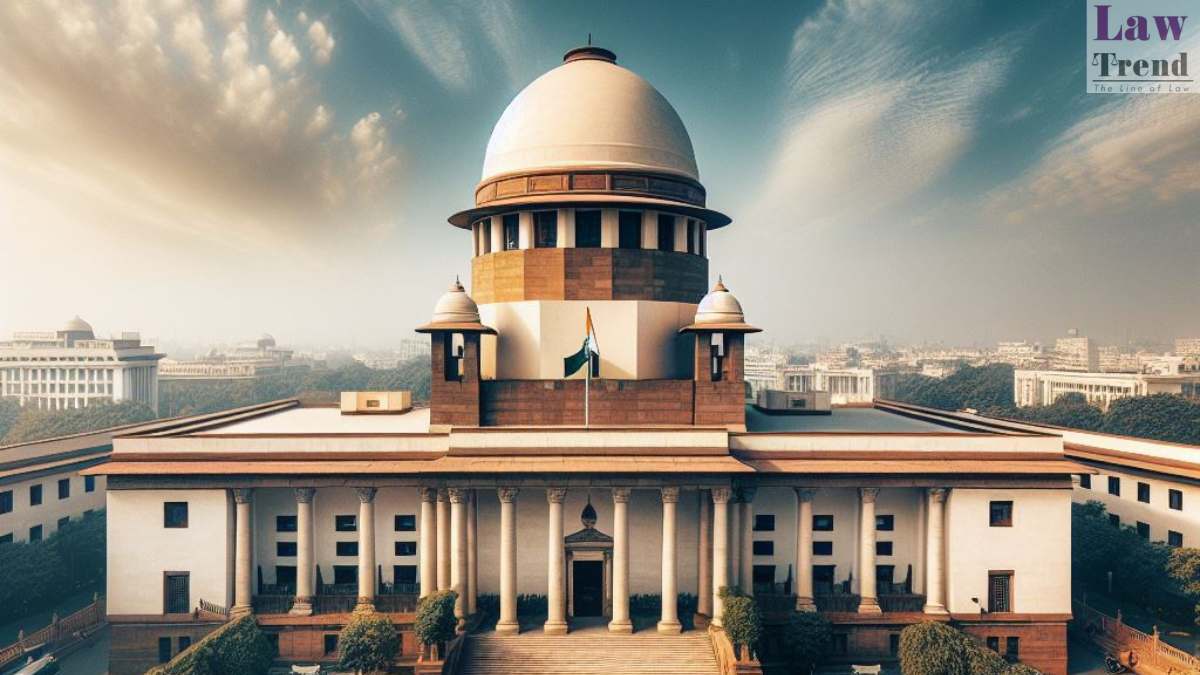
The Supreme Court on Tuesday declined to call for a response from the Election Commission (EC) on the basis of a media report alleging large-scale irregularities during the Special Intensive Revision (SIR) of electoral rolls in Bihar, saying courts cannot act on newspaper reports unless the claims are formally placed on record.
A Bench headed by Chief Justice of India Justice Surya Kant, along with Justice Joymalya Bagchi, made it clear that seeking replies solely on the strength of media reports would set a wrong precedent. The court instead asked the petitioner NGO, Association for Democratic Reforms (ADR), to file an affidavit bringing concrete facts on record before asking for the EC’s response.
The issue arose during the hearing of ADR’s petition challenging the constitutional validity of the Election Commission’s June 24 notice initiating the SIR exercise in Bihar. The NGO relied on a newspaper report which claimed that lakhs of pre-filled notices seeking deletion of voters’ names had been centrally issued by the EC, rather than by local electoral authorities.
Senior advocate Prashant Bhushan, appearing for ADR, told the court that the report contained “disturbing” and “serious” allegations suggesting that statutory norms were violated during the SIR process. He argued that under the Representation of the People Act, only local electoral registration officers are empowered to issue such notices.
However, the Bench refused to be swayed by the report in the absence of a formal affidavit. Chief Justice Surya Kant underscored that courts cannot direct parties to file replies merely on the basis of media reports, which may rely on unnamed sources and could be partly or wholly inaccurate.
The court also noted that the newspaper article itself used the word “learnt,” indicating that the information was source-based and not independently verified.
Senior advocate Rakesh Dwivedi, representing the Election Commission, strongly objected to the reliance on the media report and denied the allegations outright. He submitted that all notices during the Bihar SIR exercise were issued by district election officers, not centrally by the EC.
Dwivedi argued that the EC should not be “abruptly called” to court to respond to media reports, particularly when substantial hearings on the broader SIR challenge were already underway. If the NGO wished to pursue the allegation, he said, it must place supporting material on record through an affidavit.
He also expressed concern that the petition relied heavily on unverified newspaper reports, which, according to him, had led to prolonged arguments based on material that had not been independently checked.
Bhushan maintained that the information did not surface suddenly and that he had earlier been alerted to the alleged irregularities by a “responsible” political leader from Bihar.
At this point, Solicitor General Tushar Mehta, appearing in a separate SIR-related matter for the Assam government, remarked that when a public-spirited person is approached by a senior political leader, the proper course is to advise that leader to approach the court directly instead of acting through intermediaries.
Echoing the sentiment, the Chief Justice observed that the person who had approached Bhushan would “certainly come forward to file a petition” if there was substance in the grievance.
After closing the issue relating to the media report, the court asked Dwivedi to proceed with arguments on the core challenge to the SIR process being conducted in various states.
Earlier, during hearings on December 11, the Supreme Court had been told that the Election Commission cannot act like a “suspicious neighbour” or a “policeman” by treating voters with inherent distrust. Senior advocate Raju Ramachandran, appearing for some of the petitioners, had argued that the EC’s constitutional role is to facilitate and enable voting rights, not to create hurdles, particularly during roll revision exercises in states such as Tamil Nadu.
The court has been examining the broader question of whether the EC is empowered to adopt an inquisitorial approach while dealing with doubtful voters, or whether such a process falls outside its constitutional mandate.
The matter remains pending, with the court continuing to hear arguments on the legality and scope of the Special Intensive Revision of electoral rolls.




