

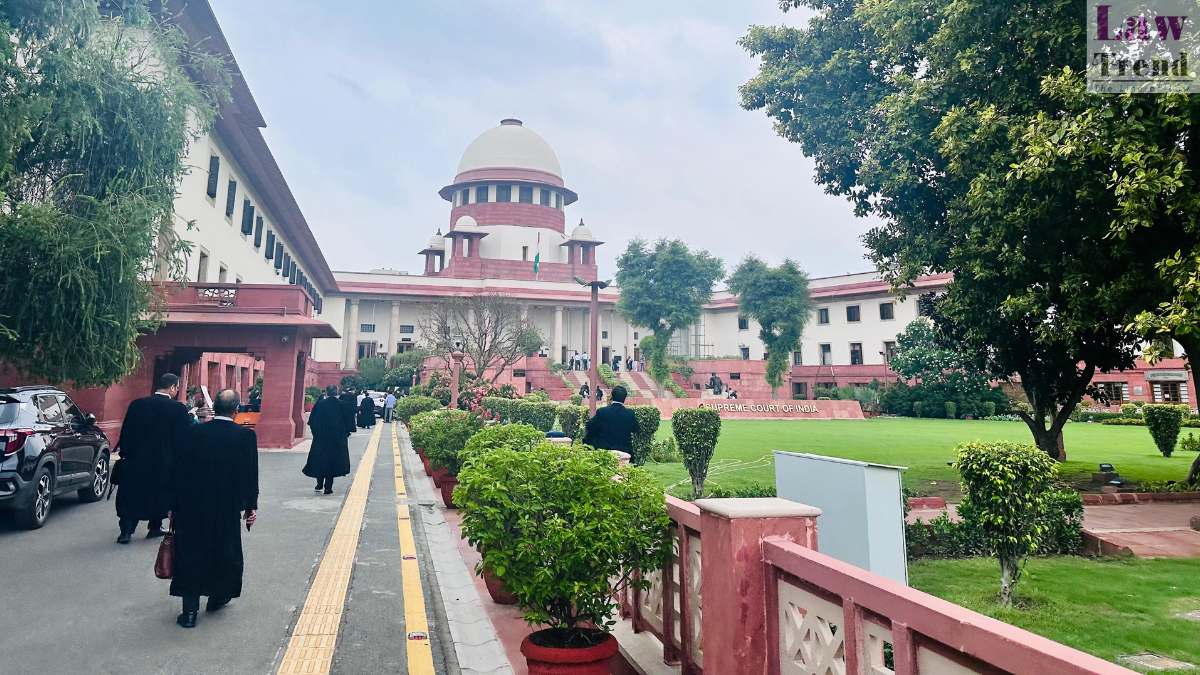
The Supreme Court on Wednesday refused to entertain a public interest litigation seeking directions to the central government and major digital platforms to identify, take down, and block memes and posts featuring anti-national slogans and speeches.
A three-judge bench comprising Chief Justice Surya Kant, Justice Joymalya Bagchi, and Justice V. Mohana dismissed the petition after declining to accept arguments made on behalf of the petitioner. The court also turned down a request to tag the matter with a pending case related to social media content, observing that the petitioner was free to pursue alternative legal remedies.
Petitioner Cites Threat to Communal Harmony and Public Order
The petition was filed by Ahmedabad resident Hitendra Kumar Parsottambhai Gadhiya, represented by advocate Barun Sinha.
In the petition, Gadhiya submitted that the unrestricted circulation of provocative statements, slogans, and memes against the sovereignty and integrity of India across social platforms posed an acute risk to national stability. The plea stated that the spread of fabricated reports and hostile rhetoric disrupted public peace and created widespread civil unrest.
The filing further contended that unruly mobs operating under the banner of the so-called “CJP,” combined with the dissemination of false messages through SMS and various digital networks, had previously brought the national capital and several state capitals to a standstill.
Relief Sought Against Tech Intermediaries and Union Ministries
The petitioner sought a writ of mandamus ordering authorities and social networks to actively monitor and purge posts that could incite the public, destabilize communal harmony, compromise national integrity, or threaten judicial independence. The plea also claimed such online material had a tendency to undermine constitutional functionaries through mob mobilization.
The petition had named several prominent social media platforms as respondents, including X Corp, YouTube, Facebook, Instagram, and WhatsApp. In addition to the private platforms, the Union Ministry of Home Affairs and the Ministry of Electronics and Information Technology were made parties to the case.




