

The Supreme Court has held that a High Court cannot regulate elections to a Bar Association through judicial orders under Article 226, especially in a public interest litigation filed by an advocate. The Court made the observation while closing a special leave petition filed by the Elders Committee of the Oudh Bar Association. The petition challenged the Allahabad High Court’s directions on the Association’s elections.
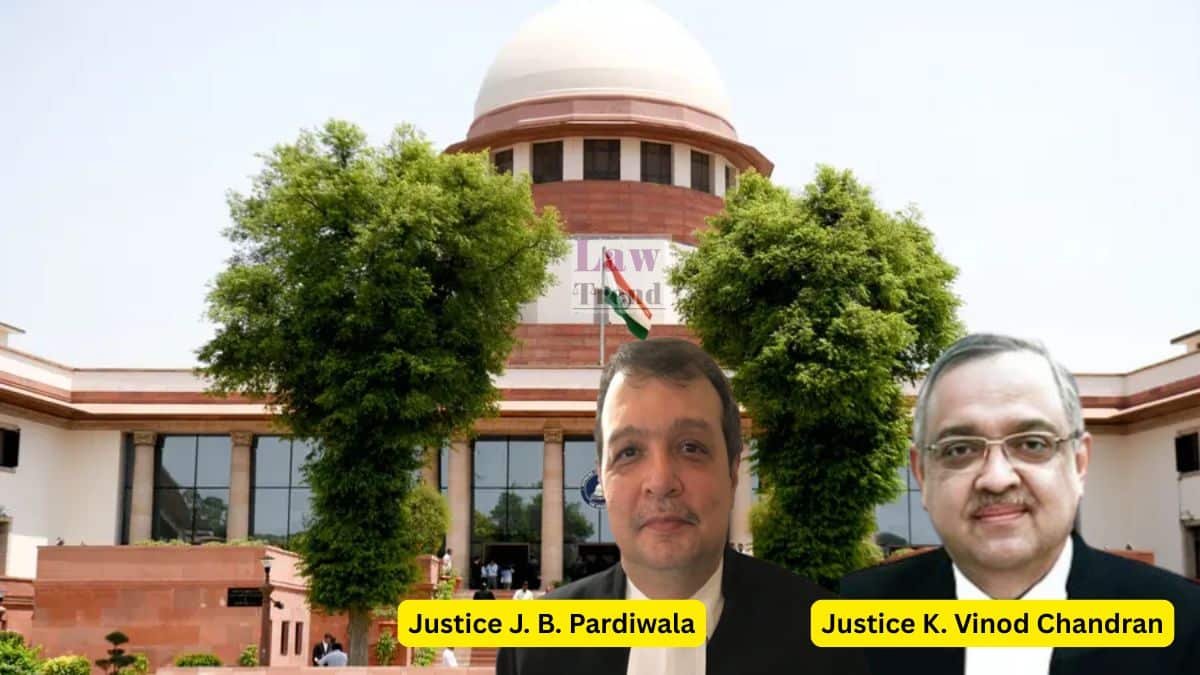
A Bench of Justice J.B. Pardiwala and Justice K. Vinod Chandran recorded the petitioner’s submission that the elected office bearers have taken charge. It rejected all intervention applications that sought to raise disputes over individual candidates and votes.
Background
The Elders Committee challenged a judgment of the Allahabad High Court at Lucknow dated October 26, 2026, passed in PIL No. 996 of 2026. The High Court had directed that certain persons who did not hold a certificate of practice be eliminated. It also directed the High Court on the administrative side to take cognizance of the elections and ensure that outsiders and persons not entitled to vote were kept out of the polling area.
Opening its order, the Bench remarked: “We were surprised as to how a Public Interest Litigation was taken up by the High Court of Judicature at Allahabad, at Lucknow to regulate the elections to the Governing Body of the Oudh Bar Association.”
Submissions
Senior Advocate Jaideep Gupta, appearing for the Elders Committee, said that the petitioners had acknowledged the Association’s election held on October 28, 2026, whose results were declared on October 29, 2026. He said the elected members had taken charge after the Elders Committee distributed certificates.
He submitted that although the High Court’s directions could not be sustained, the Elders Committee had resolved that, while not giving up its challenge to the order itself, it would not challenge the election. Advocates-on-Record Balaji Srinivasan, Mohit Singh and Garima Jain appeared for the respondents.
Supreme Court’s Observations
The Bench expressed surprise that the High Court had issued directions to eliminate certain persons without a certificate of practice, especially without hearing them. It held:
“First of all, the elections to the Bar Association could not have been regulated by the judicial orders passed by the High Court under Article 226 of the Constitution of India; especially in a PIL, when the petitioner, who is an Advocate cannot be said to be representing the cause of people who are marginalized or who do not have access to the Courts.”
The Court said it was about to close the proceedings when some interveners appeared and raised objections against individual candidates and the votes polled. Declining to entertain them, the Bench observed: “We were of the opinion that nothing of that sort could be entertained by this Court; especially when we find the entertainment of the PIL itself to be misplaced.”
Outcome
All intervention applications were rejected. With these observations, the Court closed the SLP, recording the petitioner’s submission that the elected office bearers of the Association have taken charge. Pending applications were also rejected.
Case Title: Elders Committee, Oudh Bar Association v. Girdhari Lal Yadav & Ors.
Case No.: Special Leave Petition (Civil) No. 38143 of 2026
Bench: Justice J.B. Pardiwala and Justice K. Vinod Chandran
Date: November 26, 2026


