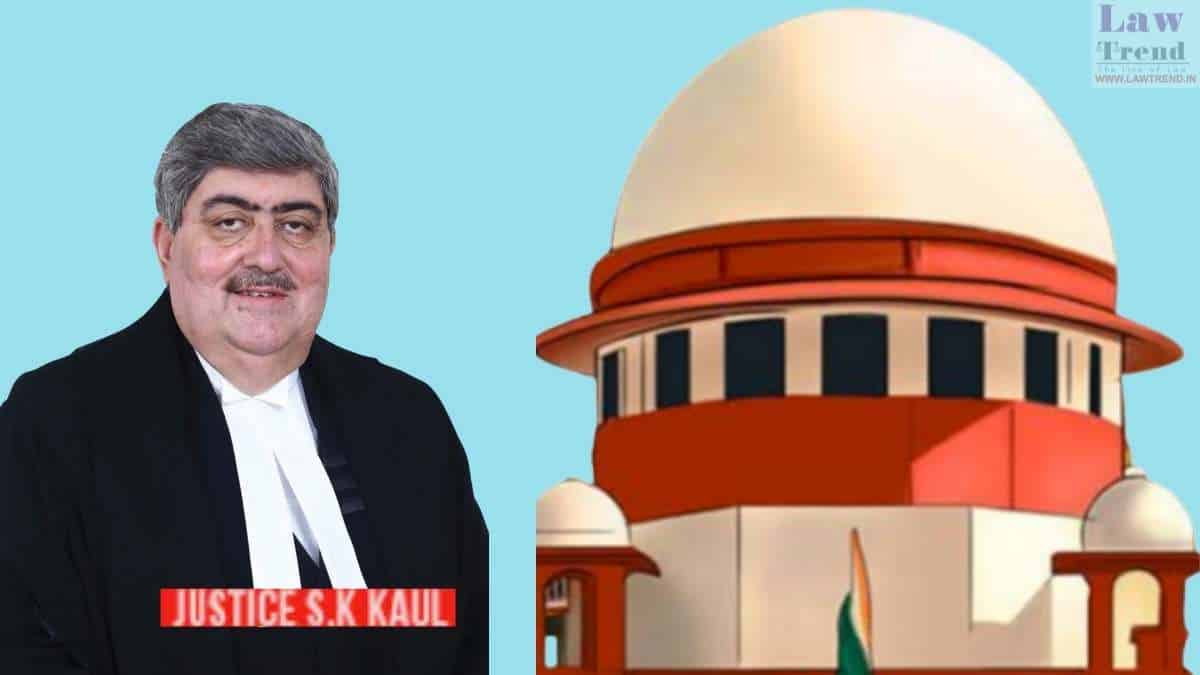
In a major step towards resolving a century-old religious dispute, the Supreme Court on Wednesday appointed former apex court judge Justice Sanjay Kishan Kaul as the principal mediator to facilitate an amicable settlement between the Vadakalai and Thenkalai sects of the Sri Vaishnava tradition. The conflict centres around the performance of rituals at the historic Sri Devarajaswamy Temple in Kanchipuram, Tamil Nadu.
A bench led by Chief Justice Surya Kant and Justice Joymalya Bagchi passed the order while hearing an appeal filed by one S. Narayanan, challenging a Madras High Court judgment that had dismissed the Vadakalai sect’s plea seeking permission to recite their prayers inside the temple’s sanctum sanctorum.
“Senior counsel on both sides have graciously agreed to mediation so that the day-to-day rituals can be performed in an amicable manner,” the CJI recorded in the order. The court appointed Justice Kaul—who also served as Chief Justice of the Madras High Court—as mediator and authorised him to select two additional members proficient in Tamil, Sanskrit, temple rituals, and religious history to assist in the process.
The dispute traces back over 120 years and involves exclusive ritual rights claimed by the Thenkalai sect under the hereditary Adhyapaka Mirasi system. The Vadakalai sect has argued that its members, as a recognised religious denomination, are being denied the right to participate in temple recitations, violating their constitutional rights under Article 25.
In December 2023, the Madras High Court had upheld the Thenkalai sect’s exclusive right to conduct rituals, dismissing Vadakalai challenges. The division bench ruled that the petitioners’ attempts would upset judicially recognised traditions and risk public disorder. The court also relied on historical decrees affirming the hereditary nature of Adhyapaka Mirasi worship.
Senior advocates C.S. Vaidyanathan, Satish Parasaran, and Arvind Datar appeared for the Vadakalai petitioners, arguing that the High Court judgment leaned heavily on pre-Constitution decisions and failed to account for the Tamil Nadu Hindu Religious and Charitable Endowments (Amendment) Act, 1971, which abolished hereditary religious service. They asserted that the High Court’s view conflicted with the constitutional guarantee of religious freedom.
Appearing for the Thenkalai side, the respondents’ counsel stressed the historical continuity of their rituals, said to be in practice for over three centuries. Arvind Datar suggested that judicial resolution may not foster long-term harmony and urged the bench to promote a spirit of fraternity between the sects.
He also informed the court that during the COVID-19 pandemic, a brief compromise had been reached, wherein each sect was allowed 20 seconds to chant their respective mantras. However, this practice was later abandoned, and the temple administration reverted to permitting only the Thenkalai recitals.
The Supreme Court has posted the matter for further hearing on March 13, 2026, and expressed hope that the mediation led by Justice Kaul would help both sides arrive at a respectful and lasting resolution.