

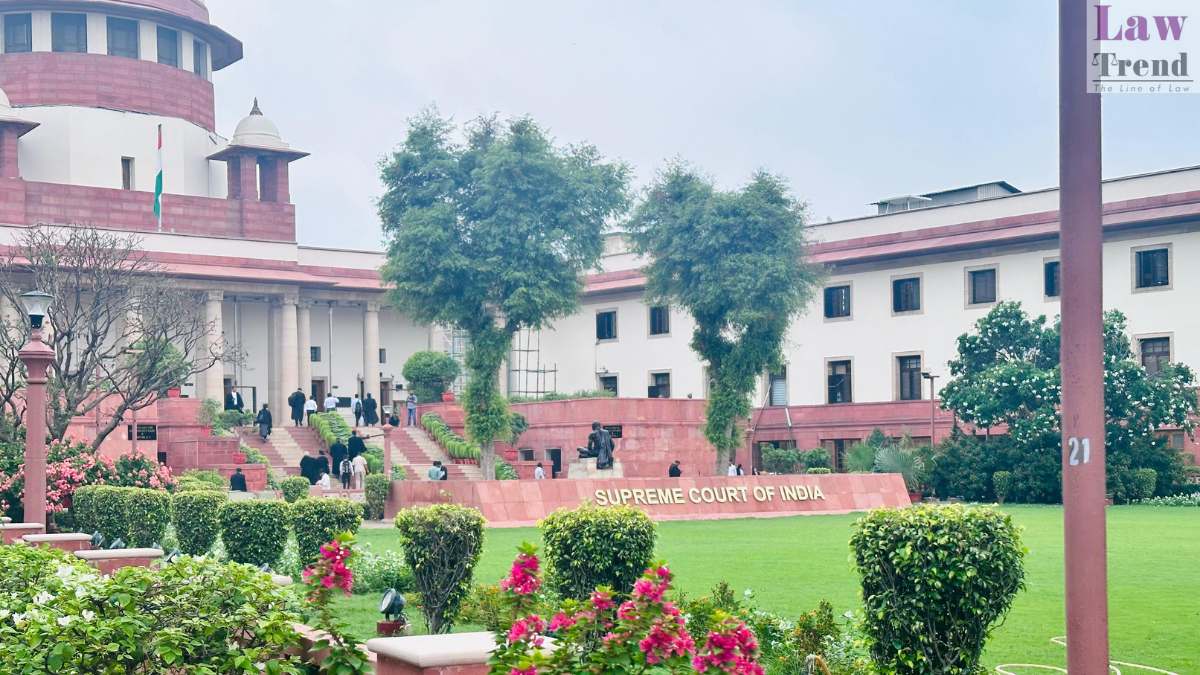
The Supreme Court on Wednesday allowed Delhi government authorities to take coercive action against older vehicles that do not meet Bharat Stage-IV (BS-IV) emission norms, narrowing the protection it had earlier granted against age-based enforcement. The clarification came in the long-running MC Mehta air pollution case, as the court recalibrated its August 12 order.
A bench led by Chief Justice Surya Kant, along with Justices Joymalya Bagchi and Vipul M Pancholi, ruled that the earlier restraint on coercive measures applies only to vehicles that are BS-IV compliant or newer. Vehicles running on older standards, including BS-III and earlier models, can now face regulatory action even if the enforcement is not solely on the basis of age.
The court accepted submissions made by Additional Solicitor General Aishwarya Bhati for the Delhi government, who argued that older vehicles with inferior emission standards contribute disproportionately to air pollution. “Older vehicles have very poor emission standards and they are adding to pollution,” Bhati told the bench. Senior advocate Aparajita Singh, assisting the court as amicus curiae, supported the position, noting that BS-IV norms were introduced in 2010 and vehicles manufactured before that fall into more polluting categories.
Clarifying its stance, the bench said its August 12 order was being modified to this extent: no coercive steps shall be taken against owners of BS-IV and newer vehicles merely because diesel vehicles are over 10 years old or petrol vehicles are over 15 years old. The protection, the court emphasized, does not extend to vehicles that fail to meet BS-IV standards.
The August relief had been granted while the Supreme Court was considering a plea seeking recall of its October 29, 2018 order that upheld a National Green Tribunal (NGT) directive banning diesel vehicles older than 10 years and petrol vehicles older than 15 years from plying in the National Capital Region. The NGT’s earlier directions, issued on November 26, 2014, applied across categories—two-wheelers to heavy vehicles, commercial or otherwise—and allowed seizure under the Motor Vehicles Act for non-compliance.
The Delhi government had approached the court against what it described as a blanket age-based ban, arguing that owners were forced to sell vehicles regardless of actual usage. During the hearings, it cited examples of privately used vehicles clocking as little as 2,000 kilometres over a decade yet facing prohibition. The plea also sought a comprehensive assessment by the Centre and the Commission for Air Quality Management on whether emission-based criteria deliver greater environmental benefits than age-based restrictions.
Wednesday’s order strikes a middle ground, maintaining protection for cleaner, BS-IV-compliant vehicles while permitting authorities to act against older, more polluting models, against the backdrop of persistent air quality concerns in Delhi and adjoining regions, particularly during winter.




