

Supply of Relied-Upon Documents Is an Essential Requirement of Natural Justice; Removal of Mathadhipati Without Fair Opportunity Invalid: Supreme Court
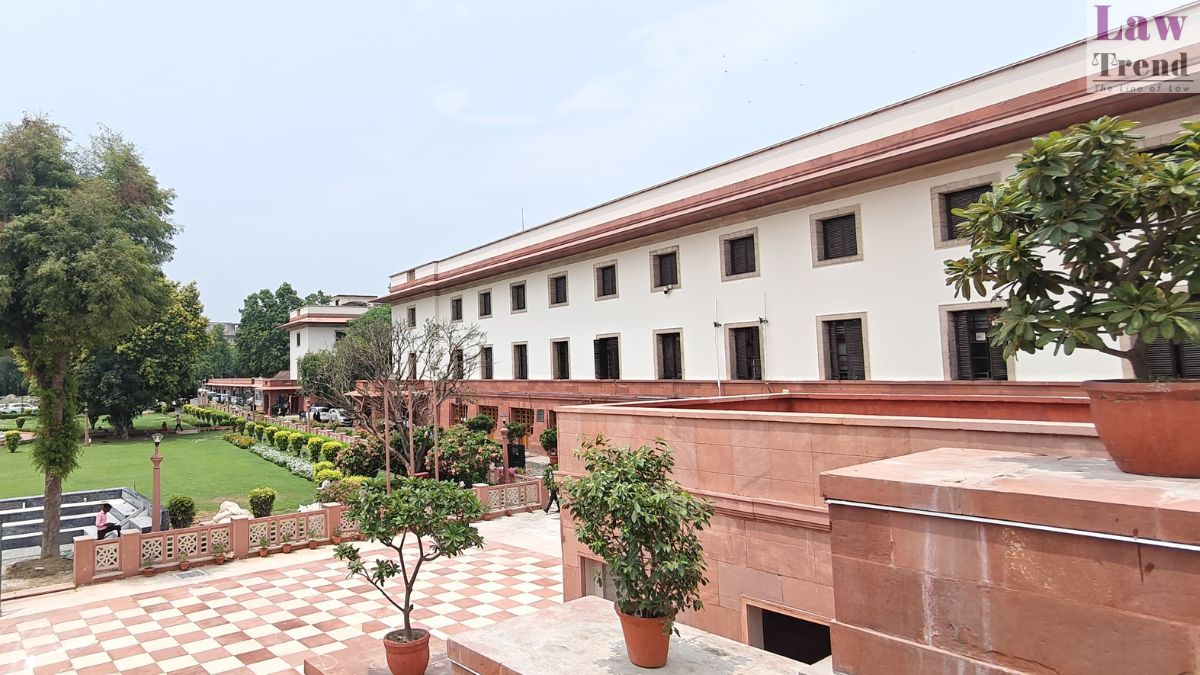

The Supreme Court of India has set aside the removal of Arjun Dass as the Mathadhipati of Sri Swamy Hathiramji Mutt in Tirupathi, holding that the disciplinary inquiry and subsequent removal order were vitiated by multiple violations of the principles of natural justice. A division bench comprising Justice J.K. Maheshwari and Justice Atul S. Chandurkar observed that the non-supply of the charge memo and relied-upon documents, combined with a predetermined inquiry process, rendered the removal proceedings legally unsustainable. Rather than remanding the dispute to the state-governed Dharmika Parishad, the bench invoked its plenary powers under Article 142 of the Constitution to establish an independent One-man Enquiry Committee and a supervisory Administrative Committee, thereby restoring the appellant to his spiritual office.

Factual Background of the Dispute

The case originates from Sri Swamy Hathiramji Mutt, an institution of immense religious, cultural, and historical significance located in Tirupathi, Andhra Pradesh. The appellant, Arjun Dass, who has been associated with the Mutt since 1970 and served as a disciple of his Guru, Sri Devender Dassji Varu, was appointed as the permanent Mahant of the Mutt on July 6, 2000, under Section 53(1) of the Andhra Pradesh Charitable and Hindu Religious Institutions and Endowments Act, 1987 (the “1987 Act”).

Soon after his appointment, the appellant initiated writ proceedings to compel the state’s Endowments Department to handover the secular affairs of the Mutt, which sparked a decades-long saga of litigation and suo motu revisionary interventions by state authorities. Although a learned Single Judge of the High Court of Andhra Pradesh directed the handover of secular affairs to the appellant in 2006, the state authorities preferred writ appeals, which remain pending.

In December 2017, following local newspaper reports alleging misconduct, the state initiated an inquiry against the appellant. While multiple rounds of writ petitions challenging suspension and inquiry notices were pending, the state government constituted the Dharmika Parishad on August 13, 2022, under Section 152 of the 1987 Act, consisting entirely of ex-officio state functionaries and government nominees.

On May 9, 2023, the newly formed Dharmika Parishad passed a resolution directing its legal advisor to prepare charges and suspension proceedings against the appellant. Consequently, on June 8, 2023, the Dharmika Parishad simultaneously issued three orders: framing 16 charges of financial mismanagement, moral misconduct, and statutory violations against the appellant; suspending him from office; and appointing an administrative “Fit Person.” On the same day, the Endowments Department physically seized the Mutt office and the appellant’s residence.

The state’s three-member Enquiry Committee proceeded with the investigation, serving notice to the appellant through WhatsApp. Despite written requests from the appellant’s advocate for a copy of the relied-upon documents and an extension of time to submit a defense, the Committee proceeded ex-parte and concluded on August 1, 2023, that all 16 charges were proved. On November 24, 2023, the Dharmika Parishad passed a final order removing the appellant under Section 51(2) of the Act, which was later confirmed by the State Government. The appellant’s challenge before the High Court of Andhra Pradesh was dismissed on May 9, 2025, prompting the present appeal before the Supreme Court.

Arguments Advanced by the Parties

Senior Counsel Mr. Puneet Jain, representing the appellant, argued that the entire inquiry was a sham. He contended that the 27-page charge memo and 29 supporting documents spanning over 600 pages were never served on the appellant. The state’s claim of service by “affixation” on the door of the Mutt was an empty technicality, as the department had already dispossessed the appellant from the premises before pasting only six pages of the “Fit Person” order. He further argued that the email service was directed to the Mutt’s institutional email address, which was already in the custody of the state-appointed Fit Person. Finally, the appellant claimed a severe breach of the rule against bias (nemo judex in causa sua), noting that the inquiry committee consisted of members of the very Dharmika Parishad that had predetermined his guilt and authorized his suspension on May 9, 2023.

READ ALSO  Ad hoc Employee Cannot be Replaced by Another Ad hoc Employee: J&K&L HC

On the other hand, Senior Counsel Mr. Sidharth Luthra, appearing for the respondents, submitted that the charge memo and relied-upon documents were properly served through multiple channels, including affixation, email, and as annexures to additional counter-affidavits filed in subsequent writ petitions. He argued that the appellant suffered no prejudice, as his detailed reply to the show-cause notice demonstrated familiarity with the evidence. He maintained that the inquiry committee was validly constituted under Rule 26 of the 2009 Rules and that the appellant had deliberately chosen not to participate, attempting to seek adjournments through an unsigned WhatsApp message. He further argued that any procedural lapses were cured by the extensive personal hearings subsequently granted by the Dharmika Parishad before issuing the final removal order.

The Court’s Analysis of Natural Justice and Procedural Fairness

The Supreme Court rejected the state’s contentions, affirming that the removal of a Mathadhipati involves substantive civil and religious rights and must comply with the strict constitutional standards of procedural fairness. Citing Canara Bank v. V. K. Awasthy, the Court observed:

“The adherence to principles of natural justice as recognised by all civilised States is of supreme importance when a quasi-judicial body embarks on determining disputes between the parties, or any administrative action involving civil consequences is in issue. These principles are well settled. The first and foremost principle is what is commonly known as audi alteram partem rule. It says that no one should be condemned unheard.”

The Court emphasized that the right to be heard is meaningless without the supply of underlying materials. Referring to Kashinath Dikshita v. Union of India, the Court reiterated:

READ ALSO  Supreme Court Questions Delhi HC's Takedown Order Against Wikipedia

“no one facing a departmental enquiry can effectively meet the charges unless the copies of the relevant statements and documents to be used against him are made available to him. In the absence of such copies, how can the concerned employee prepare his defence, cross-examine the witnesses, and point out the inconsistencies with a view to show that the allegations are incredible?”

Analyzing Section 51(2) of the 1987 Act, the Court held that the phrase “opportunity of meeting such charge” implies a mandatory duty to supply the allegation of imputation and the supporting evidentiary material. The Court dismissed the respondent’s “no prejudice” argument, noting that while State of U.P. v. Sudhir Kumar Singh established that not every infraction leads to invalidation, an exception exists for mandatory statutory procedures designed in the public interest.

“Where procedural and/or substantive provisions of law embody the principles of natural justice, their infraction per se does not lead to invalidity of the orders passed. Here again, prejudice must be caused to the litigant, except in the case of a mandatory provision of law which is conceived not only in individual interest, but also in public interest.”

Addressing the service of notice, the Court characterized the state’s claim of service by affixation on a dispossessed property as a “legal absurdity.” Referring to M/S Neerja Realtors Pvt. Ltd. v. Janglu (Dead) Through LR, the Court held that substituted service is invalid if the individual has been ousted from the premises and has no access to the property.

The Court also took serious note of the systemic bias in the proceedings, pointing out that the three members of the Enquiry Committee were part of the very Dharmika Parishad that collectively resolved to charge and suspend the appellant on May 9, 2023, prior to any charges being framed. This predetermined approach violated the rule against bias, as the adjudicating authority cannot double as the investigator and decision-maker.

The Ultimate Decision and Plenary Directives Under Article 142

The Supreme Court allowed the appeal, setting aside the High Court’s judgment, the removal order of the Dharmika Parishad, the state government’s confirmation order, and the ex-parte enquiry report.

Rather than remanding the matter back to the state-controlled Dharmika Parishad—which the Court found structurally compromised and lacking clear statutory procedural rules—the Court invoked its plenary powers under Article 142 of the Constitution to do complete justice. The Court drew guidance from Delhi Judicial Service Association v. State of Gujarat, Union Carbide Corporation v. Union of India, Supreme Court Bar Association v. Union of India, Vineet Narain v. Union of India, and BCCI v. Cricket Association of Bihar, noting that Article 142 is designed to bridge structural gaps where existing frameworks are unfit to deliver a fair trial.

Moreover, the Court emphasized the unique legal nature of the office of a Mathadhipati, referencing The Commissioner, Hindu Religious Endowments, Madras v. Sri Lakshmindra Thirtha Swamiar of Sri Shirur Mutt and Sri Sri Sri Lakshmana Yatendrulu v. State of A.P.. The Court observed:

READ ALSO  AP High Court Imposes Rs. 25,000 Costs on Advocate for Misrepresenting Facts to Secure Urgent Hearing

“in the conception of Mahantship, both the elements of office and property, of duties and personal interest, are blended together and neither can be detached from the other.”

To balance the need for accountability with the preservation of religious offices, the Supreme Court fashioned a specialized, one-time mechanism:

  1. Independent One-man Enquiry Committee: The Court appointed Mr. Boddepalli Rama Rao, a retired District Judge, to conduct a fresh, independent inquiry into the charges. The inquiry is to be held in Tirupati within the premises of the court complex provided by the Principal District Judge of Chittoor, with all expenses defrayed from the Mutt’s funds. The appellant is to be supplied with all charges and documents within two weeks, followed by a minimum of four weeks to prepare his defense, with full rights of cross-examination.
  2. Administrative Committee: To supervise the secular affairs and preserve the extensive properties of the Mutt during the transition, the Court constituted a six-member Administrative Committee. The committee will be headed by Justice (Retd.) Duppala Venkata Ramana as Chairman and will include Swami Madhav Prapanna Charya, Mr. Manish Kapooria (retired IPS officer), Mr. Y.V. Raviprasad (Senior Advocate), Mr. Manish Taskar (Chartered Accountant), and a nominee of the Endowments Department.
  3. Restoration of Appellant: The appellant is restored as the Mathadhipati of the Mutt and is permitted to perform all religious and spiritual activities. However, his administrative decisions are subject to the binding oversight of the Administrative Committee, and he is strictly prohibited from alienating or mortgaging Mutt properties without its prior permission.

This arrangement will remain in effect until the Enquiry Committee submits its report (mandated within one year) and the Endowments Department renders a final, reasoned decision in accordance with law.

Case Details:

Case Title: Arjun Dass v. The State of Andhra Pradesh and Ors.
Case No.: Civil Appeal No. of 2026 (Arising out of SLP (Civil) No. 38500 of 2025)
Bench: Justice J.K. Maheshwari, Justice Atul S. Chandurkar
Date: May 29, 2026

Law Trend
Law Trendhttps://lawtrend.in/
Legal News Website Providing Latest Judgments of Supreme Court and High Court

Related Articles

Latest Articles

