

Superficial Changes Facilitating Use Do Not Amount to ‘Manufacture’; Excise Duty Cannot Be Levied Absent Emergence of a Distinct Product: Supreme Court
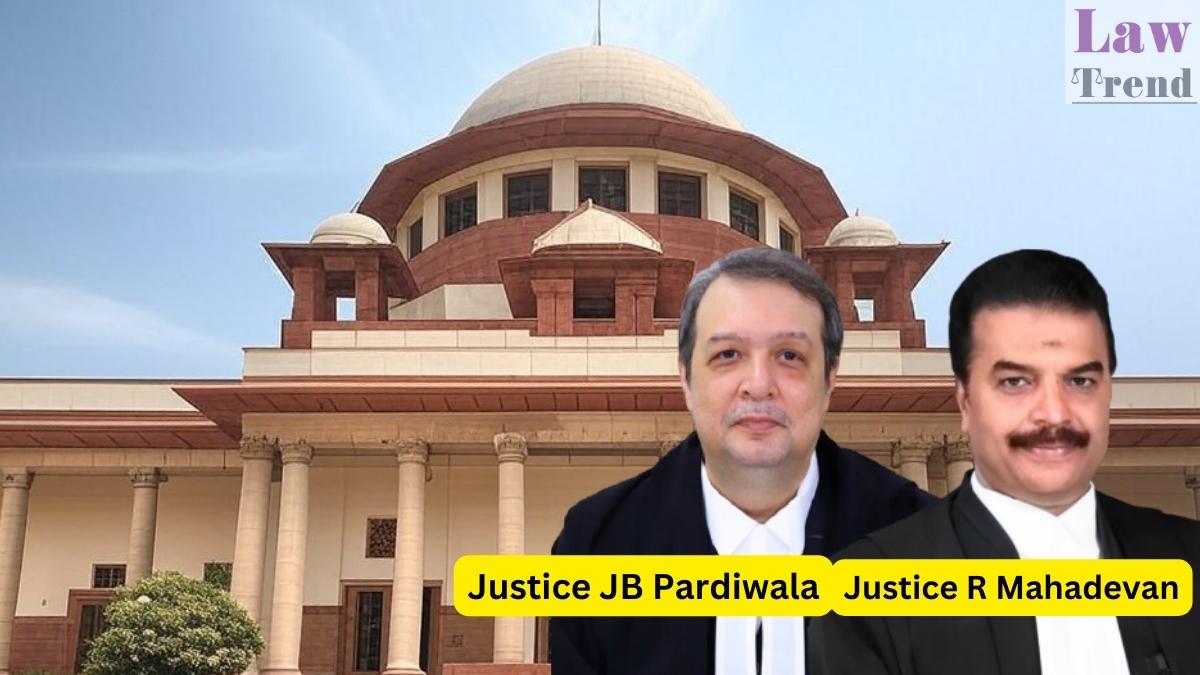
The Supreme Court of India has ruled on two significant legal questions regarding the appellate jurisdiction of High Courts in excise matters and the legal definition of “manufacture” under excise law. A division bench of the Supreme Court of India, comprising Justice J.B. Pardiwala and Justice R. Mahadevan, held that the High Court does not have the jurisdiction to decide questions of excisability under Section 35G of the Central Excise Act, 1944, as such issues are intrinsically linked to the “rate of duty” and “assessment,” which fall under the exclusive appellate purview of the Supreme Court. Furthermore, the Court held that the process of cutting, grooving, and bending Aluminium Composite Panels (ACPs) to facilitate cladding on buildings does not amount to “manufacture” under Section 2(f) of the Act, as it does not result in the emergence of a new and distinct commercial product, and the Revenue failed to discharge its burden of proving the marketability of the processed panels.

Background of the Case

The appellant, M/s Alupro Building Systems Pvt. Ltd., is a construction contractor engaged in fixing Aluminium Composite Panels (ACPs) on the exterior façades of buildings and structures according to customer designs. ACPs are composite products consisting of a rigid polyethylene core sheet bonded on both sides to aluminium sheets.

To perform this work, the appellant imported pre-coated ACPs in various standard sizes, paid the applicable customs duties, and transported them to its premises. The appellant then cut the imported ACPs into rectangular or square panels of required sizes and made grooves on the back of the panels (a process known as routing/grooving) to enable them to be fixed onto buildings. The cut and grooved panels were then taken to the site, where the appellant erected a main frame and fixed the panels using angles, clamps, and fasteners, sealing the gaps with appropriate weather-sealants.

Prior to April 2002, the appellant paid excise duty on the cutting and grooving of ACPs. However, the appellant subsequently discontinued paying the duty under the belief that these activities did not amount to “manufacture” under Section 2(f) of the Central Excise Act, 1944. On September 14, 2004, the Revenue issued a Show Cause Notice (SCN) demanding excise duty of Rs. 21,46,437/- for the period from April 2002 to December 2003, along with interest and penalties, on the grounds that the cutting, grooving, and assembling of ACPs amounted to “manufacture.”

The appellant responded that the process was only undertaken to provide functional utility and did not bring into existence a new product with a distinct name, character, or use. Although the appellant paid the demanded duty and interest under protest, it challenged the assessment.

The Additional Commissioner of Central Excise confirmed the demand, interest, and penalty. On appeal, the Commissioner (Appeals) set aside the penalty and interest but upheld the order finding that the appellant’s activities constituted “manufacture.” The appellant then appealed to the Customs, Excise and Service Tax Appellate Tribunal (CESTAT), which allowed the appeal. CESTAT held that the process did not bring into existence a new product and that the Revenue had failed to discharge its burden of proving that the processed items were marketable as separate goods.

The Revenue challenged the CESTAT order before the High Court of Karnataka under Section 35G of the Act. The High Court answered the substantial question of law in favor of the Revenue, holding that the cutting and grooving of the purchased ACPs created a commercially identifiable and distinct product, which amounted to manufacture and was therefore dutiable. Aggrieved by this, the appellant approached the Supreme Court.

READ ALSO  Refusing to Marry After Physical Relationship is not Cheating- Bombay HC Acquits Young Man

Arguments of the Parties

Submissions on Behalf of the Appellant

Ms. Charanya Lakshmikumaran, appearing for the appellant, raised a two-fold argument:

  1. Jurisdictional Bar: Under Section 35L(1)(b) of the Act, the jurisdiction to decide the taxability or excisability of goods lies solely with the Supreme Court. Section 35G explicitly precludes the High Court from deciding any issue relating to the “determination of any question having a relation to the rate of duty of excise or to the value of goods for purposes of assessment.” She relied on the decision in Navin Chemicals Manufacturing & Trading Co. Ltd. v. Collector of Customs.
  2. No Manufacture: The process of cutting, routing, or grooving does not amount to “manufacture” under Section 2(f) because no distinct product with a separate name, character, and use emerges. The essential characteristics and end-use of the ACPs remain unchanged before and after the process. She placed reliance on the decisions in Union of India v. J.G. Glass Industries Ltd. and Servo-Med Industries (P) Ltd. v. CCE.

Submissions on Behalf of the Respondent

Mr. N. Venkataraman, the Additional Solicitor General, and Mr. G.S. Makker, appearing for the respondent-Revenue, argued:

  1. Irreversible Change: When a generic product is cut into various shapes and sizes and routed, an irreversible change is made to suit the specific requirements of a consumer.
  2. Manufacturing Test Met: Tampering with the generic end-use to make the product compliant for a specific customer satisfies the legal test of “manufacture” because it brings about an integral change in the product. They relied on Servo-Med Industries (P) Ltd. and Quippo Energy Ltd. v. CCE.

Court’s Analysis

The Supreme Court divided its analysis into two primary categories: the jurisdictional maintainability of the appeal before the High Court, and the definition of “manufacture” under Section 2(f) of the Act.

A. Jurisdiction of the High Court under Section 35G

The Court first examined the language of Section 35G(1), highlighting the bracketed portion which excludes specific disputes from the High Court’s jurisdiction: “(not being an order relating, among other things, to the determination of any question having a relation to the rate of duty of excise or to the value of goods for purposes of assessment)”.

Justice Pardiwala, writing for the bench, noted that the words “any” and “among other things” indicate a wide jurisdictional exclusion, meaning even peripheral questions touching the rate of duty or valuation fall within the bar. The Court rejected the argument that “excisability” is distinct from “rate of duty,” holding that the two are sequentially and logically interdependent. The decision on whether goods are excisable at all is a necessary precursor to determining the rate of duty for the purpose of assessment.

The Court referred to:

  • CST v. Ernst and Young (P) Ltd., where the Delhi High Court held that disputes regarding whether an activity is non-taxable fall within the “rate of tax” category and are not maintainable before the High Court.
  • CCE v. Reliance Media Works Ltd. (Full Bench of the Bombay High Court), which held that “assessment” is a comprehensive term encompassing the entire process of ascertaining liability, including the determination of excisability.
  • Commr. of Customs v. Motorola (India) Ltd. and Munshi Ram v. Municipal Committee, Chheharta.

The Court then addressed whether sub-section (2) of Section 35L—which was inserted in 2014 to explicitly state that “rate of duty” includes the determination of taxability or excisability of goods for the purpose of assessment—applied retrospectively. The Court observed:

“The true test of whether an amendment is clarificatory is not dependent on the label that the legislature attaches to it, but whether the amendment, on a purposive and contextual reading, does no more than make explicit what was already implicit in the original provision.”

The Court held that the 2014 amendment did not create a new right of appeal or a new jurisdiction but merely clarified what was already the statutory scheme. Relying on CIT v. Podar Cement (P) Ltd., M. Rajendran v. KPK Oils & Protiens India (P) Ltd., and University of Kerala v. Merlin J.N., the Court concluded that the amendment is clarificatory and retrospective. Therefore, the Revenue’s appropriate remedy was to appeal the CESTAT order directly to the Supreme Court under Section 35L, and the High Court lacked the jurisdiction to entertain the appeal under Section 35G.

B. Meaning, Scope, and Application of “Manufacture”

To determine if the appellant’s activities constituted “manufacture” under Section 2(f), the Court applied the established two-fold test:

  1. The Transformation Test: Whether a process results in distinct commercial goods with a new identity, character, or use.
  2. The Marketability Test: Whether the transformed goods are marketable or capable of being marketed.
READ ALSO  Mere Recovery of Blood-Stained Weapon Matching Victim’s Blood Group Not Sufficient to Prove Murder: Supreme Court

The Court observed that under the transformation test, the process of cutting, grooving, and bending did not change the fundamental nature or material properties of the ACPs. What entered the process was an ACP, and what emerged was still an ACP, merely sized and adapted for installation as cladding. The subsequent steps of erecting a frame and fixing the panels with sealants were designated as unambiguous installation activities.

The Court supported this conclusion by citing:

  • Bharat Forge and Press Industries (P) Ltd. v. CCE, where cutting, hammering, and pressing steel pipes into pipe fittings was held not to be manufacture because their essential character and use remained the same.
  • CCE v. S.R. Tissues (P) Ltd., where cutting jumbo tissue rolls into napkins or toilet rolls was held not to be manufacture.
  • Aman Marble Industries (P) Ltd. v. CCE (referencing Rajasthan SEB v. Associated Stone Industries), which held that cutting marble blocks into slabs was not manufacture because the end product remained stone.
  • Bheraghat Mineral Industries v. Divisional Deputy Commissioner of Sales Tax, which held that crushing dolomite lumps into chips and powder was not manufacture.
  • Quippo Energy Ltd. v. CCE (referencing categories from Servo-Med), noting that processing which leaves goods essentially the same does not constitute manufacture.
READ ALSO  PC Act | State Anti-Corruption Bureau Can Investigate and Prosecute Central Government Employees: Rajasthan High Court

On the second limb of the test, the Court reiterated that marketability is a sine qua non for levying excise duty. The goods must be capable of being bought and sold in the market as distinct, independent products in their transformed state. The Court noted that under:

  • Moti Laminates (P) Ltd. v. CCE, even goods specified in the excise tariff schedule must be shown to be marketable to be excisable.
  • Union of India v. Sonic Electrochem (P) Ltd., the essence of marketability is the commercial identity of the articles known to the market for being bought and sold.

The Supreme Court emphasized that the burden of proving marketability lies entirely on the Revenue, and this burden must be discharged through objective evidence. Previous conduct, such as the appellant paying excise duty in the past under a mistaken belief, cannot serve as evidence of marketability, as established in Union Carbide India Ltd. v. Union of India. The Court also referred to CCE v. Ambalal Sarabhai Enterprises (P) Ltd., CCE v. United Phosphorus Ltd., Hindustan Zinc Ltd. v. CCE, Gujarat Narmada Valley Fertilizer Co. Ltd. v. Collector of Excise & Customs, and Cipla Ltd. v. CCE.

To describe the standard of proof required by the Revenue to establish marketability, the Court cited Lord Denning in the case of Bater v. Bater:

“I do not think that the matter can be better put than it was by Lord Stowell in Loveden v. Loveden (1810) 2 Hagg. Con. 1, 3. “The only general rule that can be laid down upon the subject is, that the circumstances must be such as would lead the guarded discretion of a reasonable and just man to the conclusion”.”

Applying these principles, the Court concluded that because the ACPs did not undergo any commercial transformation to emerge as a distinct product, the question of their marketability pales into insignificance.

Decision of the Court

The Supreme Court concluded that the process of cutting, routing, and grooving ACPs to make them suitable for fixing on building façades does not result in a new and distinct commercial product. Consequently, the process does not amount to “manufacture” under Section 2(f) of the Central Excise Act, 1944.

The Court allowed the appeal, set aside the impugned judgment of the Karnataka High Court, and disposed of any pending applications.

Case Details:

Case Title: M/s Alupro Building Systems Pvt. Ltd. v. Commissioner of Central Excise, Bangalore-II
Case No.: Civil Appeal No. 8030 of 2010
Bench: Justice J.B. Pardiwala, Justice R. Mahadevan
Date: May 27, 2026

Law Trend
Law Trendhttps://lawtrend.in/
Legal News Website Providing Latest Judgments of Supreme Court and High Court

Related Articles

Latest Articles
