

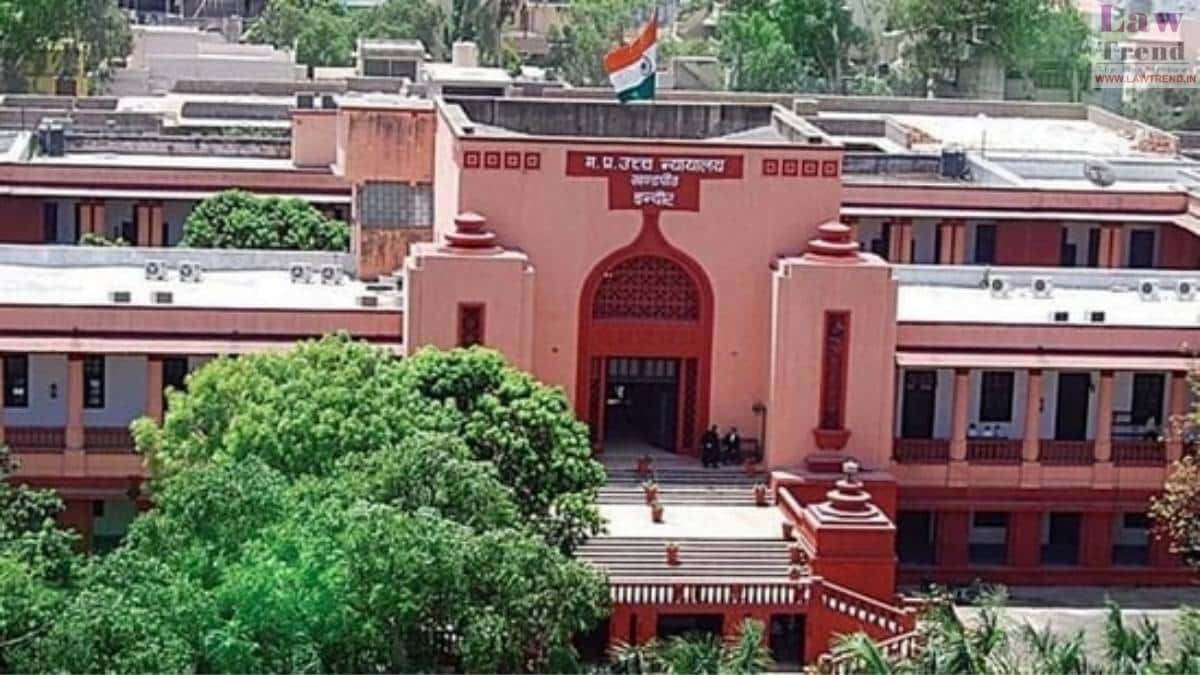
The High Court of Madhya Pradesh at Indore has allowed a civil revision petition and rejected a plaint for partition and declaration filed after a delay of nearly 40 years. The court observed that the plaintiff had used “clever drafting” to create an “illusion of a cause of action” to bypass the law of limitation.
Justice Binod Kumar Dwivedi, while setting aside a trial court order, held that the suit was “manifestly vexatious and meritless” and emphasized the duty of courts to “nip in the bud” frivolous litigation that wastes judicial time.
Background of the Case
The dispute centered on several parcels of agricultural land in Village Nipania, Indore. The original owner was Sardar Singh Rajput, who was succeeded by his sons, Bapusingh and Nihalsingh. The plaintiff, Smt. Shayarabai (Respondent No. 1), claimed to be the daughter of Bapusingh, who passed away on November 14, 1980.
In 2020, Shayarabai filed a civil suit (RCSA 623/2020) seeking a $1/5^{th}$ share in the properties through partition and possession. She challenged mutation entries made in favor of her brothers in 1984-85 and subsequent sale deeds, including one executed in favor of Anwar Patel (the applicant/defendant No. 5) under Section 190 of the Madhya Pradesh Land Revenue Code (MPLRC).
The applicant filed an application under Order VII Rule 11 of the Code of Civil Procedure (CPC) for rejection of the plaint, arguing it was barred by limitation and lacked a cause of action. The trial court dismissed this application on July 31, 2025, leading to the present revision petition.
Arguments of the Parties
For the Applicant (Anwar Patel): Senior Counsel Shri Veer Kumar Jain argued that the plaint was “hopelessly barred by time” as it challenged mutations from 1984-85 and sale deeds from decades ago. He contended the plaintiff suppressed the date of her father’s death to create a “cloud over limitation.” He further argued the suit was barred by Sections 31 and 34 of the Specific Relief Act and failed to comply with Section 94 of the M.P. Cooperative Society Act regarding notice to a housing society defendant.
For the Respondent (Shayarabai): Counsel for the plaintiff argued that she only gained knowledge of the alleged fraud on January 1, 2020, upon perusing another civil suit (No. 884/2017). They contended that the mutations were done behind her back through conspiracy and fraud, and these issues required a full trial on evidence rather than a summary rejection.
Court’s Analysis and Observations
The High Court scrutinized the plaint and documents, focusing on the limitation period under Articles 58 and 59 of the Limitation Act, which prescribe a three-year window for declarations and canceling instruments.
1. On “Clever Drafting” and Illusion of Cause of Action: The court observed that while the plaintiff claimed the cause of action arose in 2020, the facts revealed a different reality.
“If clever drafting has created the illusion of a cause of action, it has to be nipped in the bud at the first hearing by examining the party searchingly under Order 10, CPC. An activist Judge is the answer to irresponsible law suits.”
2. On Limitation and Fraud (Section 17): The court rejected the plaintiff’s attempt to claim the benefit of Section 17 of the Limitation Act (extension due to fraud). It noted that mutation records are in the public domain and open to inspection.
“Failure to take any step to challenge the mutation proceedings undertaken in the year 1984-85, for over thirty six years no action has been taken by the plaintiff… a bare and unparticularized allegation of fraud is insufficient to attract the benefit of Section 17.”
3. On Constructive Notice of Registered Documents: Citing Dahiben vs. Arvindbhai Kalyanji Bhanusali and Uma Devi v. Anand Kumar, the court held that registration of a document gives notice to the world.
“Applying this settled principle of law, it can safely be assumed that the predecessors of the plaintiffs had notice of the registered sale deeds… The plaintiffs cannot reignite their rights after sleeping on them for 45 years.”
4. On Non-Joinder and Partial Partition: The court further noted that the suit was seeking partition but failed to include all joint properties of the deceased Bapusingh and failed to implead all interested parties, making it legally unmaintainable.
The Decision
The High Court concluded that the suit was “meaningless and bound to prove abortive.” It held:
“The whole purpose of conferment of such power is to ensure that a litigation which is meaningless, and bound to prove abortive, should not be permitted to waste judicial time of the court… The sword of Damocles need not be kept hanging over his head unnecessarily without point or purpose.”
The court allowed the Civil Revision, set aside the trial court’s order, and allowed the application under Order VII Rule 11 of the CPC. The plaint filed in the Trial Court stands rejected, entailing the dismissal of the suit.
Case Details
- Case Title: Anwar Patel vs. Smt. Shayarabai and Others
- Case No.: Civil Revision No. 1004 of 2025
- Bench: Justice Binod Kumar Dwivedi
- Date: March 25, 2026




