

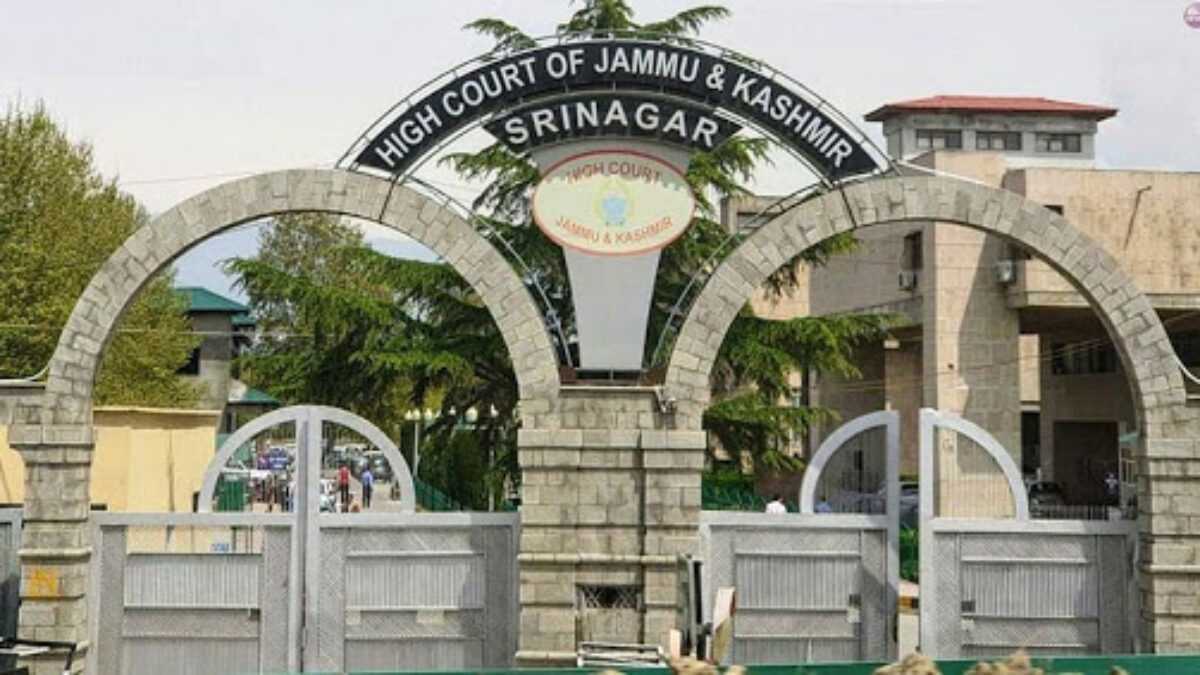
The Jammu and Kashmir and Ladakh High Court has ruled that the government cannot bypass statutory compensation when running public water infrastructure through private property, affirming that public welfare and private property rights must be balanced under the law.
In an order delivered on September 29, Justice Wasim Sadiq Nargal held that while the administration is legally obligated to provide water as an essential public necessity linked to human dignity and the right to life, it cannot force individual landholders to absorb the cost of public utilities without lawful authority and fair compensation. The court also rejected the state’s contention that property owners lose their right to claim compensation if utility works were installed prior to their purchase, stating that continuous pipeline operations represent an ongoing interference with ownership rights rather than a single past event.
Committee Ordered to Inspect Site and Evaluate Losses
Rather than assessing monetary damages directly, the high court instructed the Chief Engineer of the Public Health Engineering Department in Kashmir to set up a dedicated committee within two weeks of receiving the order.
The committee has been directed to perform an on-site physical inspection, review departmental and revenue records, calculate the exact area occupied by the pipes and installations, and assess any damage inflicted on the land. The court also mandated that the property owners or their authorized representative be given a formal opportunity to be heard during the process.
Under the ruling, the administration has six weeks from the date of the committee’s formation to finalize the inquiry. If any compensation awarded is not released within the stipulated timeframe, the outstanding sum will accrue annual interest at the rate of 6 percent.
Assessment of Rental Dues and Acquisition Options
The court further held that if the state intends to keep operating the supply network across the private parcel, authorities must examine the owners’ entitlement to reasonable rent or occupation charges. Justice Nargal specified that this financial review should cover the entire period from the date the petitioners acquired the property in 2012, subject to statutory limits.
Alternatively, if the department intends to retain permanent possession of the land for public use, officials were instructed to evaluate whether formal land acquisition or requisition proceedings must be initiated under relevant statutes.
Dispute Over Water Supply Network in Pattan
The decision arises from a petition filed by two women who hold title to 10 kanals and 16 marlas of land situated at Mouza Dewar within Pattan tehsil. The owners approached the court requesting that the government either dismantle the pipelines and above-ground fixtures, pay rent and compensation for using the parcel, or initiate statutory acquisition proceedings.
According to a departmental survey, the infrastructure serving nearby villages includes one 150-millimeter pipeline, two 100-millimeter pipelines, and two sluice chambers. These installations feature both subterranean and surface-level conduits alongside concrete control units. The landowners asserted that the presence of these works substantially curtailed their ability to utilize and develop their property. They initially submitted a formal grievance to authorities on December 26, 2013, followed by a formal legal demand notice on February 23, 2018.
Statutory Framework and Safeguards
In its defense, the Public Health Engineering Department maintained that the pipeline network had been laid decades earlier when the tract was vacant. State counsel argued that because the petitioners purchased the holding in 2012, they ought to have known about the existing infrastructure, adding that the regional water act did not entitle owners to automatic compensation merely because pipes traversed their parcel.
Justice Nargal dismissed this defense after reviewing the Jammu and Kashmir Water Resources (Regulation and Management) Act of 2010. While the statute grants the government power to lay water supply pipes through or across private land, the court emphasized that this authority is conditioned on specific statutory protections.
The act requires authorities to issue at least 15 days of advance written notice before initiating work, lay lines deep enough underground to avoid interfering with land use, and provide compensation for any physical damage caused. Concluding that the continued presence of the network constitutes an ongoing occupation, the court ruled that the petitioners’ claims remain legally valid regardless of when the pipelines were first laid.




