

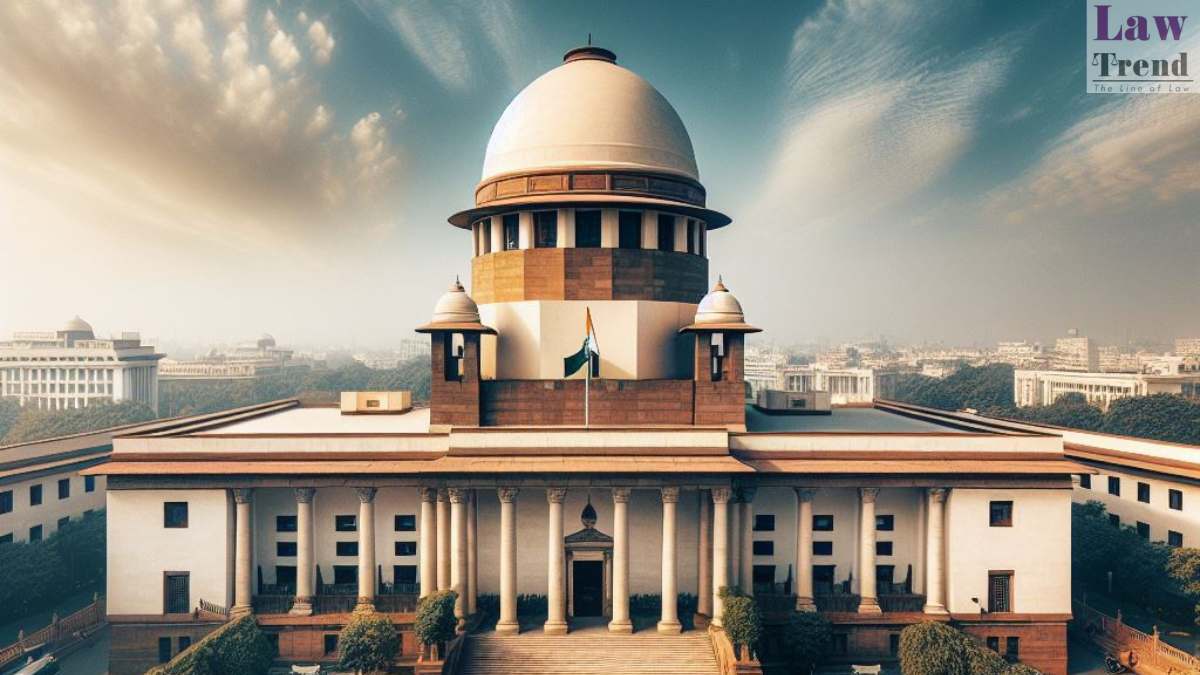
The Supreme Court of India on Monday issued notice to the Central Government on a Public Interest Litigation (PIL) challenging specific provisions of the Digital Personal Data Protection (DPDP) Act, 2023. The petitioners allege that the new data law severely dilutes the transparency framework established under the Right to Information (RTI) Act, 2005.
A bench comprising Chief Justice Surya Kant and Justice Joymalya Bagchi sought responses from the Ministry of Personnel, Public Grievances and Pensions (Department of Personnel and Training) and the Ministry of Law and Justice. The court’s action follows submissions made by Senior Advocate Shyam Divan, representing the petitioners, who argued that the legislative changes infringe upon fundamental rights.
The legal challenge centers on Section 44(3) of the DPDP Act, 2023. This provision substitutes the original Section 8(1)(j) of the RTI Act, which previously provided a balanced exemption for personal information. The original clause allowed for the disclosure of personal data if it had a relationship to public activity or interest, or if it would not cause an unwarranted invasion of privacy.
The petitioners—comprising the Mazdoor Kisan Shakti Sangathan (MKSS) and renowned activists Aruna Roy, Nikhil Dey, and Shankar Singh Rawat—argue that the amendment effectively creates a blanket shield for personal information, hindering social audits and public accountability.
The plea seeks a declaration striking down Section 44(3) of the DPDP Act as “unconstitutional and void,” asserting that it violates Articles 14 (Equality), 19(1)(a) (Freedom of Speech and Expression), and 21 (Right to Life) of the Constitution of India.
A significant portion of the petition highlights the potential dismantling of “proactive disclosure” architectures. The petitioners have urged the court to ensure that the mandate under Section 4 of the RTI Act—which enables the public disclosure of beneficiary data, muster rolls, and social audit records—remains unaffected by the DPDP Act.
The plea specifically mentions the Jan Soochna Portal (Rajasthan) and similar accountability platforms. It seeks directions to restrain authorities from “dismantling, restricting, or abridging access to information” currently available through these portals, which are vital for ensuring that rights under Article 21 are protected for the most vulnerable citizens.
Beyond striking down the amendment, the petitioners have requested:
- The restoration of the original Section 8(1)(j) of the RTI Act, including its proviso, with retrospective effect from November 13, 2025.
- A declaration that the State is constitutionally obligated to maintain and operationalize proactive disclosure systems that affect the rights of citizens.
Taking note of the significance of state-level transparency portals, the Supreme Court bench also directed that the State of Rajasthan be impleaded as a party to the proceedings.




