

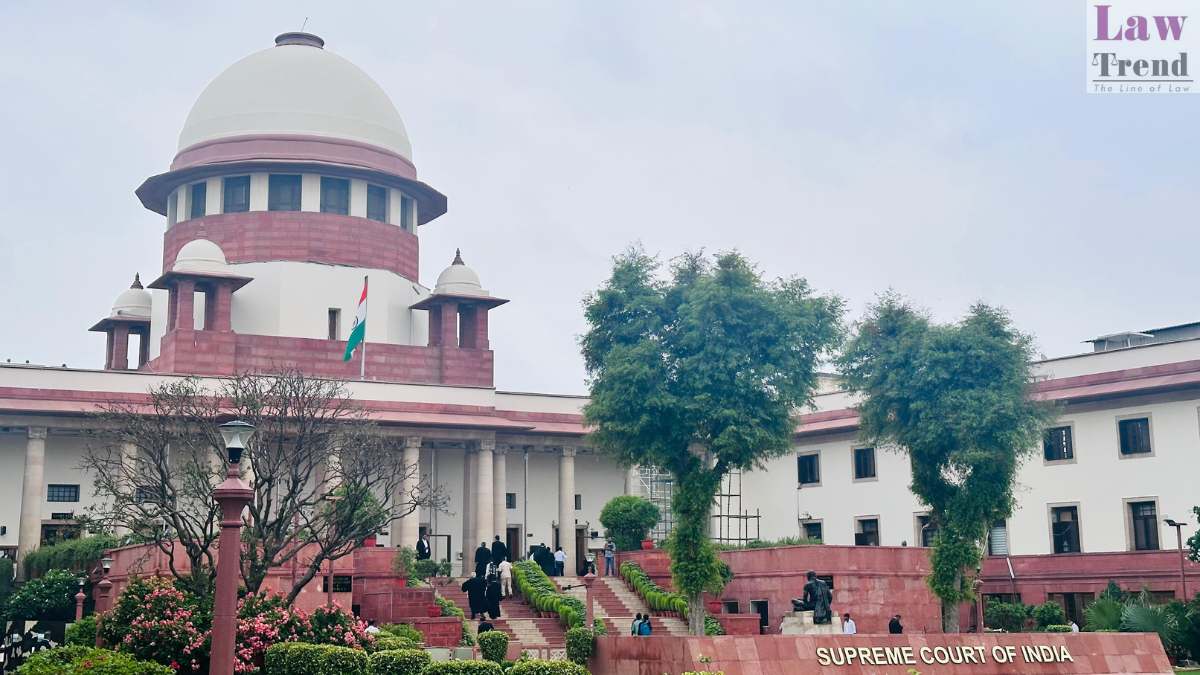
The Supreme Court on Thursday emphasised the need for judicial prudence while deciding matters with potentially far-reaching consequences for national development and environmental integrity. Hearing pleas related to the contentious issue of retrospective environmental clearances, a three-judge bench headed by Chief Justice Surya Kant underscored that the apex court must strive to minimise the risk of judicial errors that could have “a devastating effect on the growth of the nation.”
The bench, also comprising Justices Joymalya Bagchi and Vipul M. Pancholi, expressed concern about the perception of unpredictability in the judicial process.
“We should also see the implications and consequences on the country as a whole. In the highest court, let us minimise the scope of committing any mistake which may have a far-reaching, devastating effect on the development, on the growth of the nation or the environment,” CJI Surya Kant observed during the proceedings.
The observations came against the backdrop of the Court’s own conflicting rulings in the matter of retrospective environmental clearance.
- On May 16, 2025, a two-judge bench of the Court had barred the Ministry of Environment, Forest and Climate Change (MoEFCC) from granting retrospective clearances to projects that violated environmental norms.
- However, on November 18, 2025, a larger three-judge bench reversed that view, permitting retrospective clearances subject to imposition of heavy penalties.
That judgment noted that disallowing such regularisations could result in the demolition of public infrastructure worth nearly ₹20,000 crore — a loss the Court found too steep to ignore.
During the Thursday hearing, senior advocate Gopal Sankaranarayanan submitted that the November judgment, passed on a review petition, had addressed the merits of the case despite being technically in the nature of a review.
Responding to these submissions, the bench stressed the importance of institutional consistency and maintaining public trust:
“There should not be any wrong impression to any stakeholder that the court does not consider all things while passing the order. There is a judgment given on the review petition. That bench heard the matter at length and they have taken a view. We should respect that view also,” the bench said.
It reiterated that a sense of certainty and predictability must prevail in the judicial system, and conveyed that any impression of inconsistency or arbitrariness in rulings should be avoided.
Several interlocutory applications were also mentioned during the hearing. The bench clarified that it would take them up for hearing along with the main matter on Monday.




