

Same Evidence Assigning Similar Roles to All Accused Cannot Justify Convicting Some and Acquitting Others Without Reasons: Supreme Court
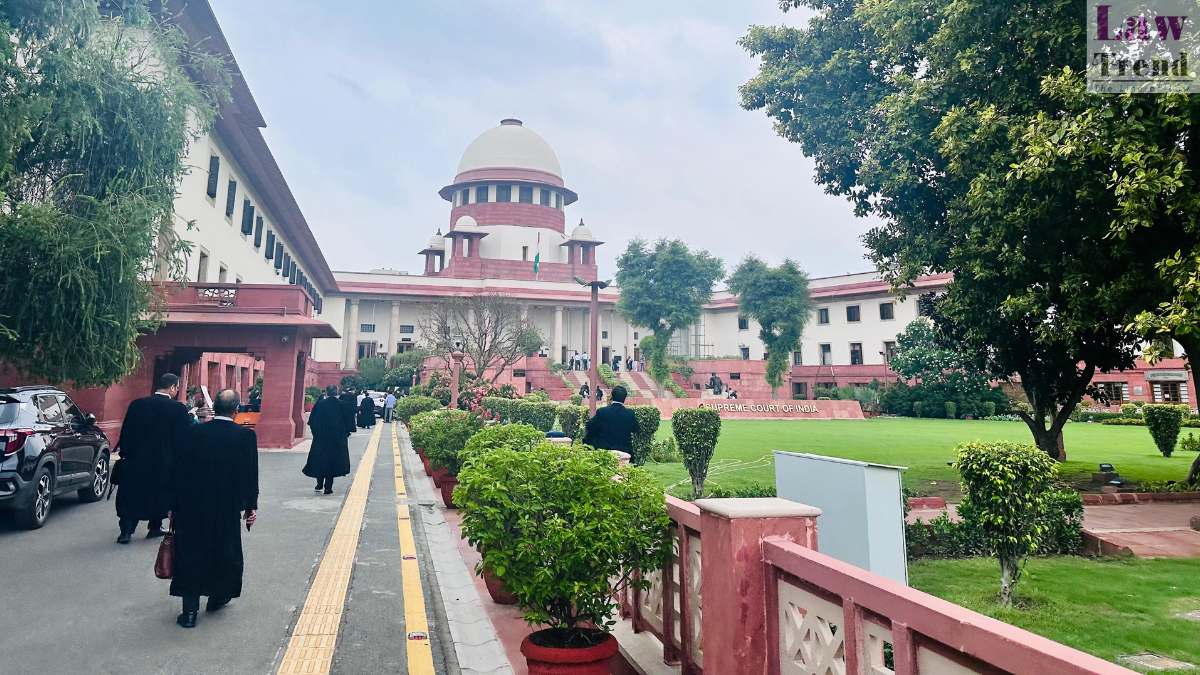

The Supreme Court, comprising Justice Sanjay Karol and Justice Augustine George Masih, has set aside the conviction of Nepal Singh in a 1993 murder case, holding that on the exact same set of depositions assigning similar roles, lower courts cannot convict certain accused while acquitting others without providing distinct reasoning. Allowing the appeals, the apex court observed that the prosecution’s key eyewitness testimonies were fraught with mutual contradictions, embellishments, and lacked credibility.

Case Background

The case arose from First Information Report (F.I.R.) No. 6/1993 registered at Police Station Hatta, District Damoh, Madhya Pradesh, under Sections 147, 148, 149, and 307 of the Indian Penal Code, 1860 (IPC). According to the prosecution, on January 6, 1993, six accused persons formed an unlawful assembly with a common object, armed with deadly weapons, and inflicted injuries on Gaflu and Bharat Singh, leading to Gaflu’s death.

A challan was presented against 11 accused persons. To prove its case, the prosecution examined 17 witnesses. Following the trial, the trial court acquitted five accused—Jhallu, Karodi, Sanju, Ujju @ Ujiyar, and Hannu @ Hanumat—while one co-accused, Prakash Pateriya, passed away during trial. The remaining five accused, including the appellant Nepal Singh, were convicted under Sections 148, 324 read with 149, and 302 read with 149 of the IPC.

The State of Madhya Pradesh did not challenge the acquittal of the five co-accused. However, the convicts filed an appeal, which was dismissed by the High Court of Madhya Pradesh at Jabalpur on March 8, 2018 (Criminal Appeal Nos. 1272 of 1995 and 1327 of 1995), upholding the trial court’s order.

Court’s Analysis and Observations

The Supreme Court noted that while the death of Gaflu due to injuries was established on record through the medical deposition of Dr. P.D. Kargaiyan (PW-14), the core issue was determining who was actually involved in the crime.

READ ALSO  सुप्रीम कोर्ट ने धारा 376DA IPC की वैधता को चुनौती देने वाली याचिका में नोटिस जारी किया, जिसमें बिना छूट के अनिवार्य आजीवन कारावास की सजा का प्राविधान है

To establish the convicts’ involvement, the prosecution relied on PW-6 (an injured eyewitness and son of the deceased) and PW-7 (wife of the deceased). While their examination-in-chief suggested an unprovoked assault by the perpetrators, the bench observed that a careful perusal of their cross-examinations revealed serious mutual contradictions and embellishments that rendered their testimony unworthy of credence.

During cross-examination, PW-6 admitted to prior disputes and revealed that the deceased Gaflu was himself an accused in an earlier incident involving the parties. PW-6 claimed he lost consciousness upon receiving the first blow, yet purported to describe which assailant inflicted subsequent blows and with what weapons. Crucially, PW-6 admitted:

READ ALSO  Approval Without Application of Mind is Unacceptable: Allahabad High Court Quashes Income Tax Reassessment Notice

“I did not personally witness my father being struck by the farsa”

Similarly, PW-7 contradicted her initial claim of being an eyewitness by admitting during cross-examination:

“On the day of altercation, I was at home feeding my children when I heard a commotion inside the house indicating that my husband and son had been assaulted in the field. I immediately ran towards the scene accompanied by many villagers”

The Court noted that PW-7 arrived only after her husband was already placed on a cot, disproving her claim of having seen the assault take place. Furthermore, the bench observed that PW-8 and PW-9, who also allegedly witnessed the incident, appeared to have been planted by the prosecution upon cross-examination.

Addressing the recovery of weapons such as lathi, farsa, and ballam, the Supreme Court stated that mere recovery of weapons cannot establish a link with the accused, as such items are commonly found in rural households. Given the pre-existing land dispute where the complainant party had previously assaulted the landowner whose fields were tilled by the convicts, the Court held that the possibility of false implication could not be ruled out.

Highlighting a primary legal flaw in the lower court judgments, the bench emphasized that on the same set of facts and depositions assigning similar roles, either all accused should have been convicted or all acquitted. The High Court offered no explanation as to why the reasoning used to acquit five co-accused was not extended to the convicts.

READ ALSO  Injunction for Peaceful Possession Cannot Be Granted When Plaintiff Admits Defendant is in Possession: Supreme Court

Court Decision

Holding that the prosecution testimonies failed to inspire confidence, the Supreme Court set aside the conviction of appellant Nepal Singh. The bench quashed the High Court judgment dated March 8, 2018, and directed that the accused be set free immediately if in jail, with bail bonds cancelled.

Case Title: Nepal Singh v. The State of Madhya Pradesh

Case No.: Criminal Appeal Nos. 2239-2240 of 2026

Bench: Justice Sanjay Karol and Justice Augustine George Masih

Date: August 17, 2026

Law Trend
Law Trendhttps://lawtrend.in/
Legal News Website Providing Latest Judgments of Supreme Court and High Court

Related Articles

Latest Articles

