

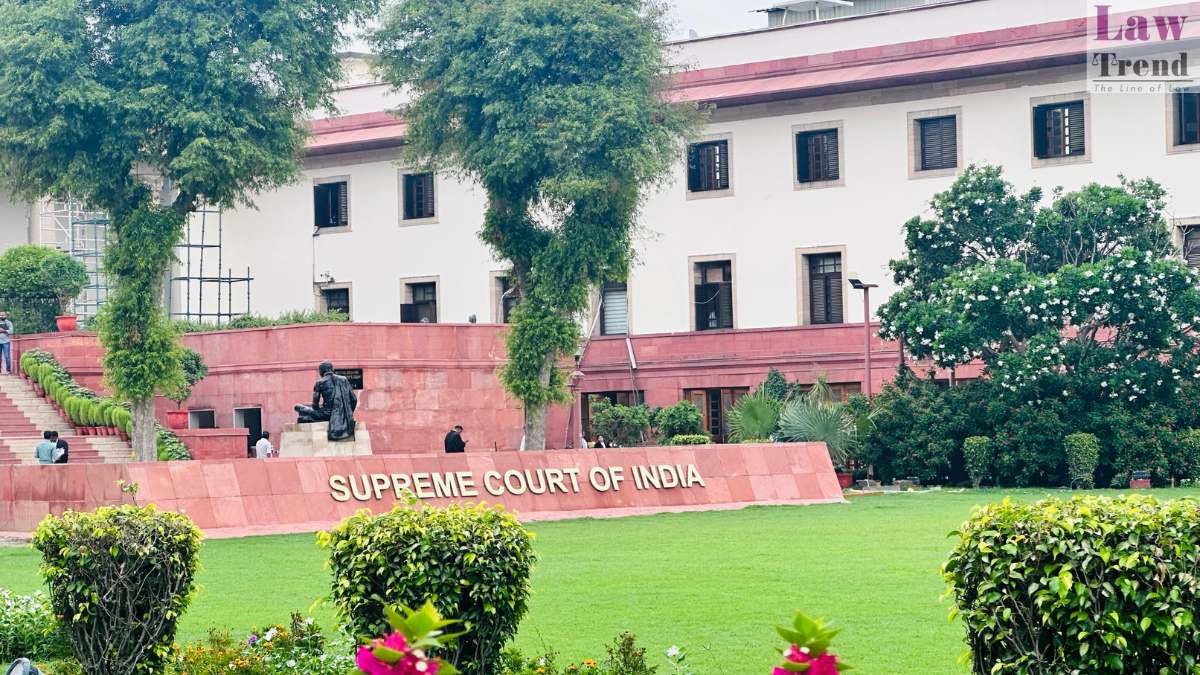
In a significant judgment addressing the growing concerns over misuse of child protection laws, the Supreme Court on Friday urged the Centre to consider introducing a “Romeo-Juliet clause” under the Protection of Children from Sexual Offences (POCSO) Act to protect genuine adolescent relationships from criminal prosecution.
A bench comprising Justices Sanjay Karol and N Kotiswar Singh observed that the law, though solemn in its objective to protect children, is increasingly being invoked to settle personal scores, especially in cases involving consensual teenage relationships.
“Repeated judicial notice has been taken of the misuse of these laws,” the court said, directing that a copy of its judgment be forwarded to the Law Secretary, Government of India, to consider reforms, including the proposed exemption clause and legal mechanisms to penalise those misusing the statute.
The apex court also set aside an order by the Allahabad High Court that had directed police to mandatorily conduct medical age determination tests of alleged victims in all POCSO cases at the time of bail hearings.
Calling the direction an overreach of jurisdiction under Section 439 of the Code of Criminal Procedure (CrPC), the bench ruled that:
“The High Court, while exercising statutory power under the CrPC, cannot impose a mandatory investigative protocol, especially when it amounts to conducting a mini-trial.”
The court clarified that while the bail court may peruse documents submitted to prove age, the correctness or otherwise of such records must be determined during the trial, not at the pre-trial stage.
The verdict came in response to a special leave petition filed by the Uttar Pradesh government challenging an order of the Allahabad High Court. The high court had granted bail to an accused in a sexual assault case under the POCSO Act, but while doing so, also issued sweeping directions requiring medical age tests in all such matters.
The Supreme Court upheld the grant of bail but struck down the additional directions issued by the high court as beyond its statutory powers.
While reaffirming the Act’s significance in protecting children, the top court acknowledged a disturbing trend of its misuse in cases involving consensual adolescent relationships.
“When an instrument of such noble and basic good intent is misused, misapplied, and used as a tool for exacting revenge, the notion of justice itself teeters on the edge of inversion,” the bench observed.
It noted a “grim societal chasm”—with the law failing to protect vulnerable victims in some cases due to stigma and poverty, and at the same time, being manipulated by the privileged to serve personal vendettas.
The judgment also served as a reminder of the ethical role that legal professionals must play.
“Lawyers are not just advocates, they are gatekeepers of justice. They must act against frivolous or vindictive litigation,” the court said, warning that unchecked misuse of laws like POCSO could erode public trust in the justice system.
- A copy of the judgment will be circulated to the Secretary, Ministry of Law, for consideration of legislative reform.
- The Supreme Court directed its registrar to forward the verdict to the registrar general of the Allahabad High Court and all trial courts for appropriate follow-up.
- It reiterated that courts must not conduct “mini-trials” during bail hearings and must avoid procedural overreach.
This ruling marks a significant intervention by the apex court to balance the strong protective intent of the POCSO Act with the rights of the accused and the need to prevent systemic abuse of law in adolescent love cases.




