Release on Probation Under Offenders Act Does Not Obliterate Stigma of Conviction: Supreme Court
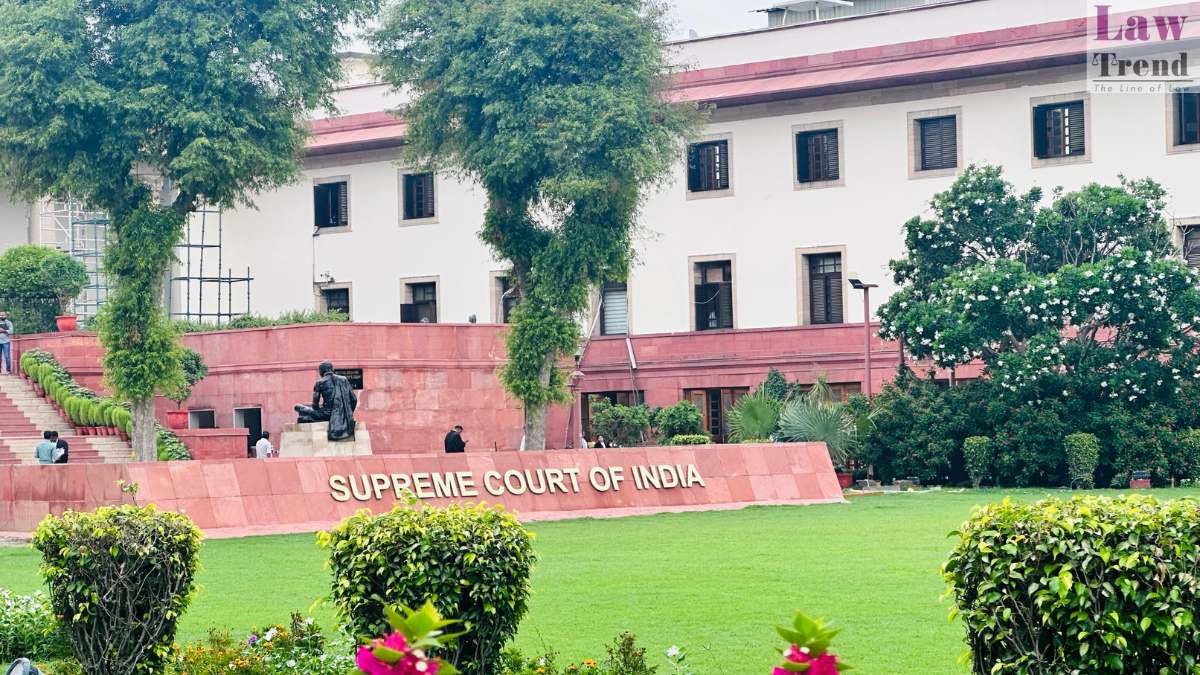
The Supreme Court of India has ruled that the release of an offender on probation under the Probation of Offenders Act, 1958, does not obliterate the stigma of conviction. The Apex Court held that while probation substitutes the sentence, the conviction and the finding of guilt remain untouched, allowing departments to take disciplinary action for misconduct leading to such conviction.

A Bench comprising Justice Prashant Kumar Mishra and Justice N.V. Anjaria clarified this legal position while deciding an appeal filed by the Superintending Engineer of the Electricity Board. Although the Court corrected the erroneous legal interpretation made by the Madras High Court, it declined to interfere with the relief granted to the respondent-workman solely because he had passed away during the pendency of the litigation.

Background of the Case

The case stemmed from disciplinary proceedings initiated against a workman who was initially engaged as contract labour and later absorbed as a Helper on April 6, 1998, by the appellant-Electricity Board.

Subsequent investigations revealed that the workman had submitted a bogus educational certificate. It was found that his original name was ‘Thiru. P. Palaniappan’, but he had impersonated his brother, ‘Thiru. P. Thangaiyan’, and used his brother’s educational certificate to secure employment. Following a domestic inquiry into these allegations, the workman was dismissed from service vide an order dated January 31, 2005.

The workman challenged his dismissal before the Labour Court, Madurai. In its award dated May 11, 2009, the Labour Court modified the punishment of dismissal to a “reduction of pay and increment cut for a period of three years which will operate for future increments.”

READ ALSO  जयपुर विस्फोट: बरी करने के आदेश पर रोक लगाने की याचिका अनसुनी, यह देखने की जरूरत है कि क्या हाई कोर्ट का आदेश विकृत था, सुप्रीम कोर्ट ने कहा

The Electricity Board challenged this award in a Writ Petition. The learned Single Judge of the High Court confirmed the Labour Court’s award. On further appeal, the Division Bench of the High Court modified the punishment from an increment cut to compulsory retirement.

The Division Bench’s decision was primarily based on the fact that in the parallel criminal proceedings regarding the forgery, the workman was granted the benefit of the Probation of Offenders Act, 1958. The High Court reasoned that since he was released on probation, he was never sentenced for the guilt of forging the certificate, and thus, the conviction should not disqualify him from service.

Arguments of the Parties

The appellant-Board approached the Supreme Court challenging the High Court’s order.

Learned counsel for the appellant argued that the High Court had erred in its interpretation of the law. Relying on the Supreme Court’s earlier judgment in Union of India Vs. Bakshi Ram (1990) 2 SCC 426, the counsel submitted that the release of an offender on probation “does not obliterate the stigma of conviction.”

The counsel contended that as long as the conviction stands, the mere release of the workman on probation could not be a valid ground for substituting the punishment of dismissal with compulsory retirement.

However, the counsel also fairly submitted that since the respondent-workman had died, the Board did not wish to unsettle the financial benefits that had accrued to his legal heirs. The primary objective of the appeal was to correct the wrong interpretation of law by the Division Bench so that it does not “operate as a precedent in similar cases arising in future.”

READ ALSO  [BREAKING] Supreme Court Quashes Maratha Reservation, Declares it Unconstitutional

None appeared for the respondents despite service of notice.

Court’s Analysis and Observations

The Supreme Court accepted the submission of the appellant, observing that the High Court’s view ran contrary to settled law.

The Bench extensively quoted from the judgment in Union of India Vs. Bakshi Ram, reiterating that Section 12 of the Probation of Offenders Act does not wipe out the disqualification attached to a conviction for the purpose of departmental punishment.

Referring to the observations made in Bakshi Ram, the Court noted:

“In criminal trial the conviction is one thing and sentence is another. The departmental punishment for misconduct is yet a third one. The court while invoking the provisions of Section 3 or 4 of the Act does not deal with the conviction; it only deals with the sentence which the offender has to undergo… The conviction however, remains untouched and the stigma of conviction is not obliterated.”

The Court further observed that Section 12 of the Act “does not preclude the department from taking action for misconduct leading to the offence or to his conviction thereon as per law.” The provision was not intended to exonerate a person from departmental punishment.

READ ALSO  Supreme Court Transfers CPI(M) Plea on Removal of Political Flagpoles to Another Bench

The Bench held that the High Court “fell into error by observing that the conviction of the workman herein shall not be a disqualification and this conviction alone is not a ground to remove the workman from service.”

Decision

The Supreme Court set aside the specific observation made by the High Court in paragraph 14 of the impugned order, which had held that the conviction would not act as a disqualification due to probation.

The Court stated:

“In our considered view, the observation made by the High Court runs contrary to the law laid down in Bakshi Ram (Supra)… and [we] reiterate the law laid down in Bakshi Ram (Supra).”

However, considering the peculiar circumstance that the respondent-workman had expired, the Court decided not to reverse the modification of punishment granted by the High Court.

“Considering the fact that respondent-workman has died, we are not interfering with the modification of the punishment as made by the High Court in the impugned judgment,” the Bench ordered.

The Civil Appeal was disposed of with the clarification of the legal position.

Case Details:

  • Case Title: The Superintending Engineer vs. The Labour Court Madurai & Ors.
  • Case Number: Civil Appeal No. of 2026 (Arising out of SLP(C) No. 23418/2025)
  • Coram: Justice Prashant Kumar Mishra and Justice N.V. Anjaria

Law Trend
Law Trendhttps://lawtrend.in/
Legal News Website Providing Latest Judgments of Supreme Court and High Court

Related Articles

Latest Articles