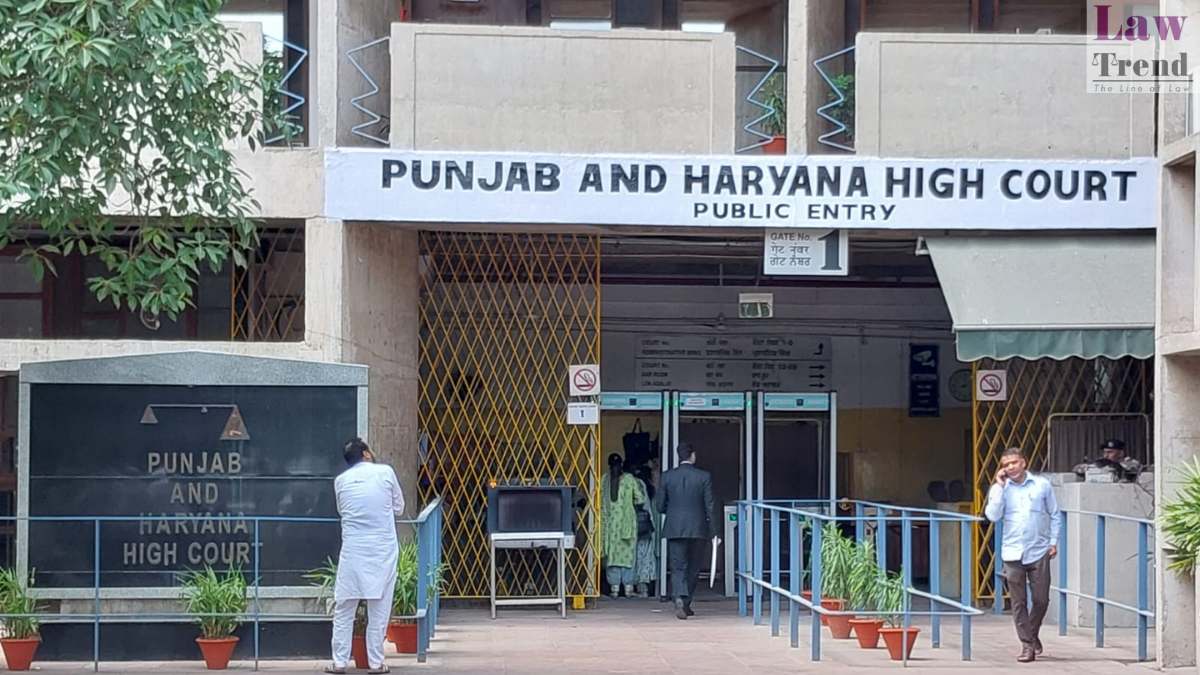
Four years after a Jhajjar court sentenced a man to death for the rape and murder of a five-year-old girl, the Punjab and Haryana High Court has quashed the conviction and ordered a fresh trial, citing “serious procedural irregularities” that violated the accused’s right to a fair trial under Article 21 of the Constitution.
A division bench of Justice Anoop Chitkara and Justice Sukhvinder Kaur found that the trial court had failed to comply with mandatory safeguards under Section 313 of the Code of Criminal Procedure, 1973, which requires that all incriminating evidence be put to the accused so they may explain or rebut it.
Vinod, a 32-year-old plumber, was convicted by a trial court in Jhajjar on December 21, 2021, for kidnapping, raping, and murdering the minor daughter of his tenant, a migrant labourer. The incident allegedly occurred on December 20, 2020. According to the prosecution, Vinod took the child to his house nearby while under the influence of alcohol, assaulted her, and left her dead. Her body was recovered shortly after police arrived.
The trial court sentenced him to death. The matter had also been sent for confirmation to the High Court, as required in cases involving the death penalty.
While hearing the appeal, the High Court found significant flaws in how the trial had been conducted, especially during the recording of Vinod’s statement under Section 313 CrPC. The court noted that:
- Statements made by the victim’s parents during trial were not individually and adequately put to the accused for his response.
- Crucial documents like the DNA report and toxicology analysis were never brought to the notice of the accused in the questionnaire.
- The questionnaire itself was poorly structured. For instance, an entire testimony was condensed into one question, followed by a general statement that the mother’s deposition was “similar.” The court observed that such lengthy and complex questioning “would be incomprehensible for ordinary people” and defeats the purpose of Section 313.
“This report is the most crucial document, and if it is read in evidence without affording an opportunity to the accused to explain the same, it is most likely to cause prejudice to the convict,” the court stated.
The bench highlighted that Section 313 is not just a statutory obligation but a constitutional safeguard ensuring that the accused gets a chance to contest the evidence against them. Failing to adhere to this requirement, particularly in a capital punishment case, severely compromises the fairness of the trial.
“The only option available with this court to do justice to the accused and the victim and her family is to remand the case back to the trial court to begin the trial from the stage of recording the statement of the accused,” the court ruled.
The trial court has been directed to:
- Resume the trial from the stage of recording the accused’s statement under Section 313 CrPC.
- Frame the questionnaire in short, clear questions based on specific pieces of evidence.
- Ensure that all material evidence, including expert reports and key witness testimonies, are properly put to the accused.
- Give the accused an opportunity to produce defence evidence, if any.
The High Court emphasized that only by following due process could justice be done — not only to the accused but also to the victim and her family.