

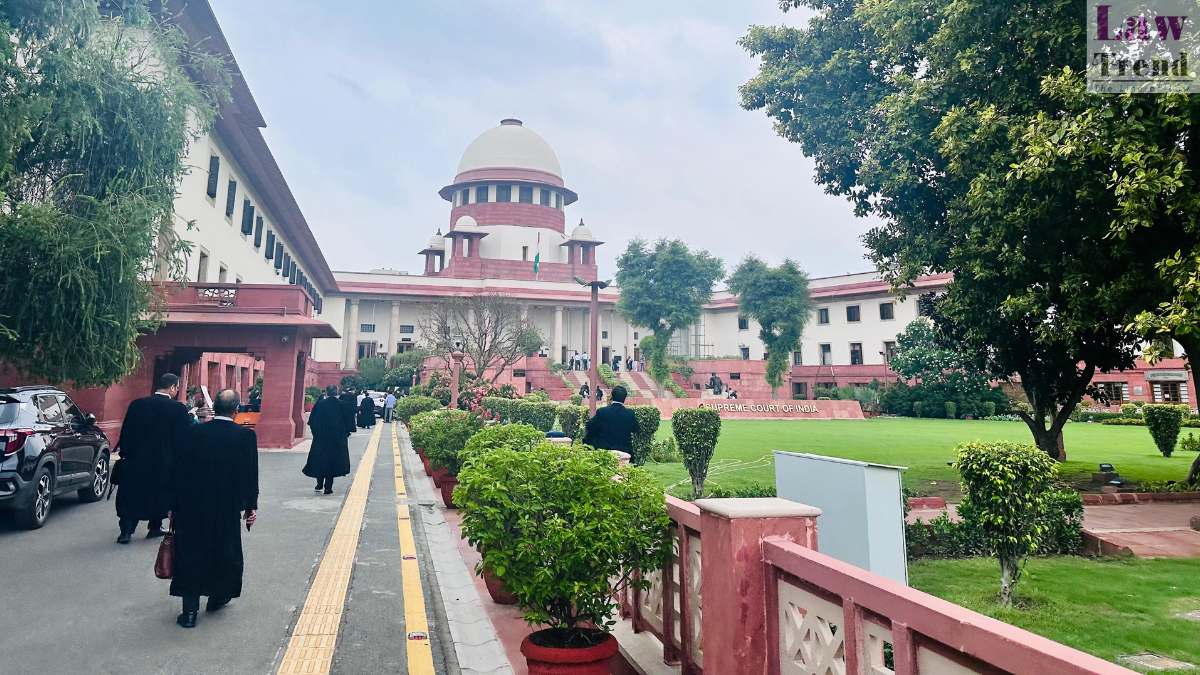
The Supreme Court of India on Friday declined to entertain a plea by Santosh Kumar Singh, the convict in the infamous 1996 Priyadarshini Mattoo rape and murder case, challenging the denial of his parole extension. The court directed Singh to approach the Delhi High Court, where his main petition regarding premature release is currently pending.
A bench comprising Justices B.V. Nagarathna and Prashant Kumar Mishra noted that the Delhi High Court is scheduled to hear the matter on May 18. While refusing to interfere with the High Court’s recent order requiring Singh to surrender, the bench granted him the liberty to request an earlier hearing and an expeditious disposal of his case.
“It is needless to say that if such a request is made, the High Court shall consider it, having regard to the facts of the case that the incident occurred on January 23, 1996, and the petitioner has been in jail for 31 years, including remission,” the bench observed, requesting the High Court to dispose of the matter at the earliest in accordance with the law.
The legal battle intensified on March 19 when the Delhi High Court directed Singh to surrender to prison authorities. This order came after Priyadarshini Mattoo’s brother strongly opposed Singh’s plea for premature release. The High Court had clarified that it would only consider the merits of Singh’s remission plea once he returned to custody.
During the Supreme Court proceedings, Singh’s counsel argued that the surrender order was “drastic.” The counsel highlighted that Singh had been serving his sentence in an “open jail,” a facility that allows convicts to leave the premises between 8:00 AM and 8:00 PM for gainful employment—a privilege granted based on reformative conduct.
Singh, who was granted parole last year, had managed to secure multiple extensions from the High Court while his remission plea remained under deliberation.
The case dates back to January 23, 1996, when 25-year-old law student Priyadarshini Mattoo was raped and murdered in her Delhi residence. Santosh Kumar Singh, then a fellow law student at Delhi University and the son of a former IPS officer, was the primary accused.
- 1999: A trial court initially acquitted Singh, citing a lack of evidence.
- 2006: The Delhi High Court overturned the acquittal, convicting Singh and sentencing him to death, citing the “shocking” nature of the crime.
- 2010: The Supreme Court upheld the conviction but commuted the death penalty to life imprisonment.
The core of Singh’s current legal push involves his plea for premature release (remission). In July 2023, the Delhi High Court set aside a decision by the Sentence Review Board (SRB) that had rejected Singh’s release.
The High Court criticized the SRB for failing to consider Singh’s “demonstrable reformative progress,” which included obtaining advanced educational qualifications and maintaining good conduct. The court noted that his placement in an open prison was a “critical indicator of reform” that the board had ignored.
However, the SRB subsequently reviewed the case again in 2024 and maintained its recommendation against his premature release, leading to the current stalemate. Singh has now served 31 years of his sentence when including earned remission.




