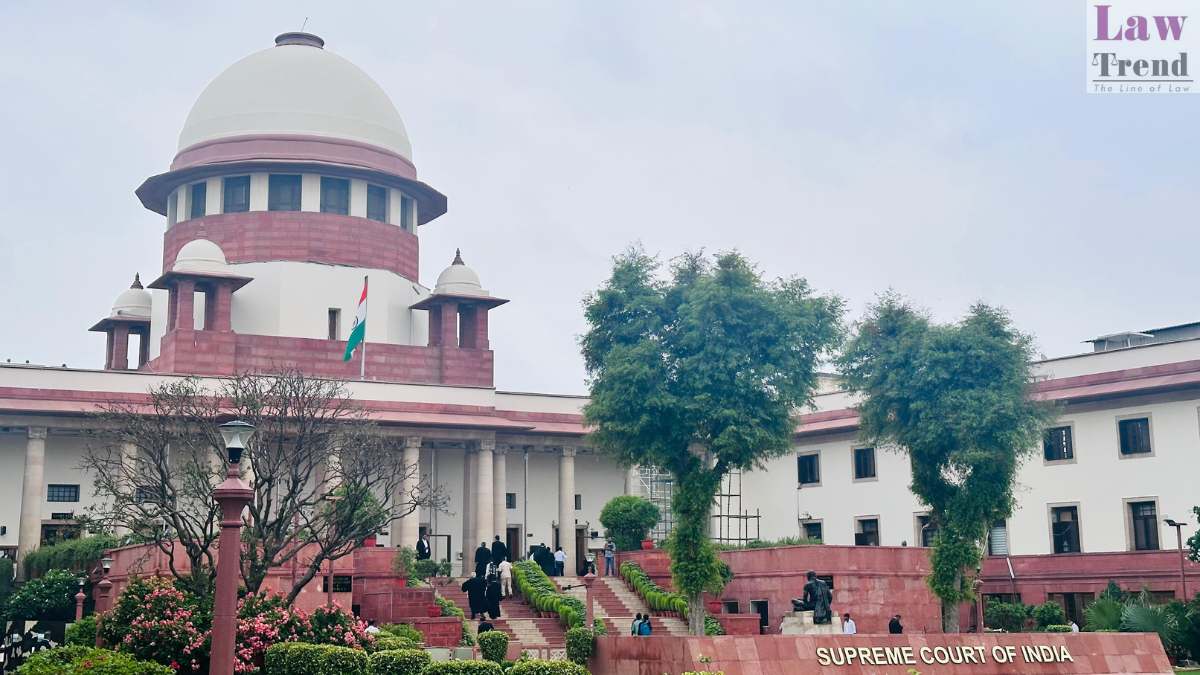
The Supreme Court on Monday disposed of the Telangana government’s writ petition challenging the Centre’s assistance and approvals for Andhra Pradesh’s Polavaram Multipurpose Irrigation Project, but left the door open for fresh litigation under Article 131 of the Constitution.
A bench led by Chief Justice of India Surya Kant and Justice Joymalya Bagchi ruled that the petition, filed under Article 32, was not maintainable as the dispute involved multiple states and legal rights between them and the Union government. The Court, however, granted Telangana the liberty to initiate a new original suit under Article 131, which provides the apex court exclusive jurisdiction in Centre-state and inter-state disputes.
During the hearing, the bench noted that the writ petition failed to include necessary stakeholders like Maharashtra and Karnataka, despite their involvement in the project planning and approval stages. This omission, the court pointed out, further undermined the maintainability of the petition.
Senior Advocate Abhishek Manu Singhvi, appearing for the Telangana government, informed the court that the state’s legal team was already prepared to file a suit under Article 131 and would do so shortly. The government, he argued earlier, had challenged the Centre’s financial assistance to Andhra Pradesh for the Polavaram project expansion, the grant of environmental clearance, and the alleged violations in the revised Detailed Project Report (DPR), which, according to Telangana, flouts Central Water Commission (CWC) guidelines.
Singhvi also contended that the matter did not qualify as a “water dispute” requiring adjudication by a tribunal under the Inter-State Water Disputes Act.
The bench had earlier suggested mediation as a possible means to resolve the multi-state issue. On January 5, it had also indicated that a lawsuit under Article 131 would be more appropriate than a writ petition under Article 32, which is meant for enforcement of fundamental rights.
Senior Advocate Mukul Rohatgi, representing Andhra Pradesh, told the court that the DPR was approved only after consulting all stakeholders, including Telangana. He pointed to the award by the Central Water Commission, which permits diversion of up to 80,000 TMC to the Krishna river. Telangana, however, alleged that the expansion plans proposed a diversion of 200 TMC, which was unauthorized and lacked environmental and inter-state approvals.
Following the hearing, Telangana Irrigation Minister Uttam Kumar Reddy said the apex court had given the state a fair and detailed hearing and advised it to pursue the correct constitutional remedy. He reiterated that Telangana would continue to oppose the expansion of the Polavaram project in its current form.
Article 131 of the Constitution allows the Supreme Court to exercise original jurisdiction over disputes between:
- The Government of India and one or more states, or
- Between two or more states
Such disputes must relate to legal rights and not political disagreements. The provision ensures that sensitive federal disputes are resolved by a single authoritative forum.